Revolutionary CNC Grinding Wheel Dresser
Transform your grinding operations with precision wheel dressing technology that delivers unmatched accuracy, reduces downtime, and maximizes productivity.


In the aerospace industry, without a doubt, precision and performance come first, and every component has to be of the highest quality. Machine wheels are indispensable in the processes of production, and their precision will have a direct effect on the quality of produced items. A wheel dresser is here—an important device whose main purpose is to keep and bring back the best condition of grinding wheels. The article is about the cutting-edge technology that is behind the wheel dressers and mainly how they will be strengthening efficiency, precision, and longevity in the aerospace applications. Even if you are an industry professional or just curious about the new technologies in the manufacturing domain, you will be surprised to know the essential part that dressing machines have played in the transformation of innovation and the high standards of aerospace engineering.
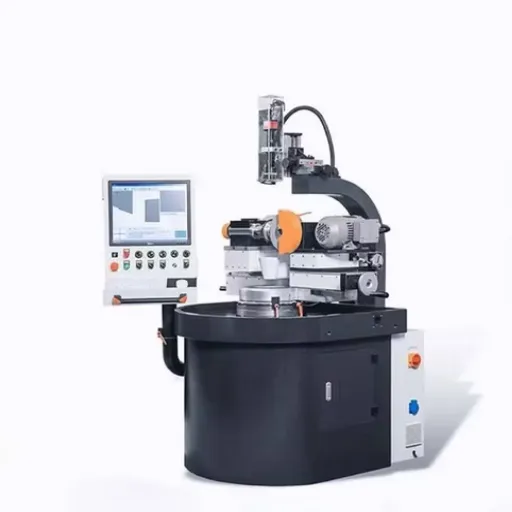
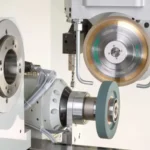
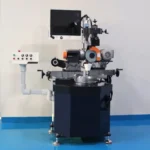
A wheel dressing machine is a professional apparatus that is only made for the proper up-keeping and the restoration of the grinding wheel’s surface. It keeps grinding wheels efficient and accurate during machining operations as they are, for instance, the case of a metal part being ground to a very precise shape and size. The grinding wheels become less precise and their cutting ability also decreases when they are either de-shaped with continuous use or are getting debris accumulation. Wheel dressing machines are responsible for making the grinding wheel take the form of a brand new one and for making it clean, thus they can be worked for a longer period.
The machines used for dressing the wheel cutting have their functions defined with a process that is controlled and involves taking away worn or uneven sections of the grinding wheel. This procedure keeps the grinding surface sharp and continuous, which is extremely crucial for getting accurate results in the manufacturing sector. The machine is capable of reviving grinding wheels that are damaged and this considerably lowers waste because of the reduced frequency of wheel replacements, thus making the entire operation both cost-effective and eco-friendly.
In industries where high precision is the major requirement, for instance, aerospace, automotive, and medical equipment manufacturing, the use of wheel dressing machines is a must. By keeping the grinding wheels of optimal quality for their intended operations, these machines play a significant role in the efficiency, quality, and reliability of production processes, especially in the case of applications with tight tolerances and high-performance standards.
Wheel dressing is a non-negotiable step in the process of aerospace manufacturing since it makes sure that grinding wheels are in good shape, that they remain sharp and that they are still efficient. The components for aerospace applications are usually of very high precision and they come with soft tolerances that are very strict. Dressed wheels play the major role in the grinding process by not just making the cutting and grinding actions of the tools very accurately and smoothly but also creating splendid, flawless, and uniform surfaces on critical components such as turbine blades and engine parts.
More importantly, however, the wheel dressing process prolongs the life of the grinding wheels since it gets rid of the accumulated material and opens up the new abrasive grains. The grinding steps then become more efficient and the resultant downtime from wheel changeover is greatly reduced. All this is highly beneficial for companies engaged in the production of aerospace components because they can easily plan and stick to their project timelines while also saving money.
Finally, the practice of dressing the wheels regularly has a direct impact on safety and reliability, as it is quite synonymous with consistent performance. When manufacturing parts for the aerospace industry, one of the great challenges that are constantly faced is that the components may even operate in very extreme conditions, and as such, any inaccuracies in the manufacturing process can lead to mechanical failures. Through wheel dressing, the manufacturers not only have gained the assurance of the required perfect accuracy in making the parts last longer but also the quality of the parts being among the best in the class where the high-performance aerospace parts are concerned.
A CNC wheel dresser is made up of several main components that provide the grinding wheel maintenance of the highest standards and efficiency, thus increasing its performance and durability.
It is the combination of these components that leads to CNC wheel dressers being able to achieve high precision, limited downtime, and longer grinding wheels’ life, thus making them indispensable in the area of high-performance manufacturing.
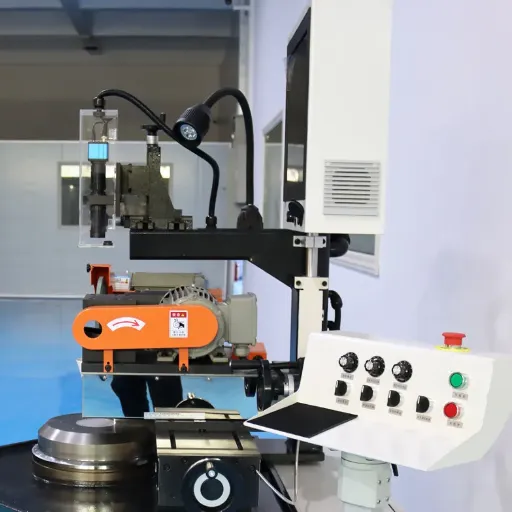
Precision plays a crucial role in the safety of the aerospace industry as it affects the performance and reliability of the aircraft components directly. All parts of the airplane, starting from the landing gear to the engine turbines, must be manufactured to very precise specifications to make sure they can work without a hitch in harsh conditions. Errors as small as one thousandth of an inch in the tolerances allowed in the process of making parts could pose a huge risk, for instance, through mechanical failure or the cutting down of effectiveness during the use of the aircraft.
CNC wheel dressing machines are essential in the aerospace production processes at this level of precision. They are the machines that are responsible for molding the grinding wheels and keeping their form, which in turn results in the production of aerospace parts with very accurate dimensions. The advanced control systems that are incorporated into the CNC wheel dressers not only guarantee consistent output but also ensure that the most demanding quality and safety standards of the aerospace industry are constantly met.
By being so precision-oriented, the manufacturer does not only enhance security but also helps the aircraft parts to last longer and work more efficiently. When parts are manufactured to extremely high tolerances, the distribution of forces within the parts is reduced, thus, leading to higher performance and a lower probability of failure in the course of time. It is this connection between the use of precision manufacturing technologies and the ultimate goal of safeguarding the lives of both passengers and crew that still holds today in the aerospace industry.
The production of aerospace components mistakes can have consequences that are extremely severe and wide-reaching. One of the main risks is the possibility of the structural or mechanical failure of the aircraft. Since aerospace systems are subjected to harsh conditions, even the smallest defects in the components might lead to the whole system’s failure, thus risking the lives of the passengers and the crew. These failures can occur due to various reasons like mistakes in machining, handling materials improperly, or defects that have not been detected, thus underlining the urgent requirement of accuracy during the production processes.
Another major impact that can be pointed out is the financial loss involved with the defective aerospace components. Faulty parts can lead to expensive recalls, repairs, or replacements requiring the production schedules of the companies to be extended and the supply chains affected. Such mistakes can also disrupt the operations of both the airlines and the aerospace companies, thus making the situation worse for the whole industry. To illustrate, grounding an entire fleet because of component problems can not only reduce the income but also lose the customers’ trust and ruin the brand’s reputation.
Production errors, in the last place, can slow down the progress in aerospace technology and innovation. Mistakes in manufacturing could enhance the time of waiting for the new systems and features that are supposed to impress the performance, safety, and efficiency of the product. The rigorous attention to quality control and the use of specialized equipment, like precision wheel dressing machines, will be the cornerstone of preventing these mistakes. The manufacturers can set the highest standards of safety and reliability in modern aerospace engineering by assuring the exactness and consistency in component production.
One of the main functions of wheel dressing is making sure that the grinding wheels are in perfect condition by taking care of their shape, sharpening, and cleaning. Gradually, the grinding wheels can get blocked or lose their cutting power because of the wear and tear that makes them incapable of producing inaccuracies and inconsistent results. Dressing helps the wheel get back to its best condition thus ensuring smoother runs and higher precision levels.
This procedure also makes it possible for the grinding wheel to keep the same shape constantly, which is very important in getting the tightest tolerances in component manufacturing. The slightest change in the shape of the wheel can cause the product made to be of incorrect size. Manufacturers can keep getting the same amount of contact between the wheel and the material being worked on by constantly dressing the wheel, leading to high-quality and dependable outputs.
Moreover, wheel dressing minimizes the possibility of surface defects or uneven finishes on the components during production. This is especially critical in the aerospace industry, as a tiny imperfection can be a major safety or functionality issue. By improving the performance of the grinding wheel dressing, not only does it provide the required precision but also assists the manufacturers to fulfill the quality standards of the critical applications which are always high.
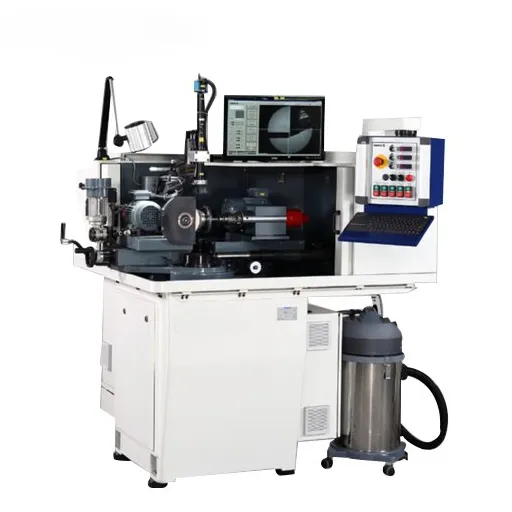
The modern day wheel dressing process is undergoing a transformation with the help of automation and AI. Precision and efficiency are among the major benefits of the new technology. The use of automated wheel dressing machines means that a large part of the manual intervention is eliminated, and consequently, the chance of human error is greatly reduced. Besides, the machines are outfitted with sensors and have monitoring capabilities that help in the dressing process being done at its best, and thus getting steady results, and at the same time saving time and labor.
The use of AI is a big leap towards the direction of making the machines more flexible and smart. Machine learning algorithms are one of the main components that allow AI systems to work correctly by analyzing massive amounts of process data in real-time and adjusting the parameters like pressure, speed, or angle in an autonomous manner. Now, the dressing process can be very uniform even if the variables like material type or wear on the grinding wheel change. Moreover, AI-supporting systems are also capable of forecasting maintenance needs, which in turn adds up to the machine’s health and efficiency by reducing the downtime and prolonging the life of both the wheel and the machine.
Bringing together automation and AI in the wheel dressing process not only results in higher quality but also assists manufacturers in scaling up production. Since such technologies are very accurate and their outputs are consistent, they are able to satisfy the tough requirements of the aerospace or automotive sectors, whereby the accuracy of the components is crucial. Besides, the manufacturers will be happy with the lower cost of production and the environment will also benefit from less resource usage and waste. These advances serve as a proof of how modern technology is changing the face of traditional manufacturing processes.
Superabrasive materials have been responsible for major changes in the manufacturing of tools, especially in aircraft industry where precision and durability are the most important factors. Materials like cubic boron nitride (CBN) and polycrystalline diamond (PCD) are made for performing excellently even under harsh conditions. Their supreme hardness and thermal stability allow the extremely accurate machining of parts, thus complying with the very restrictive standards of the aerospace engineering.
The application of superabrasive materials in the wheel dressing machines is one thing to note. These machines are very important in aerospace manufacturing because they guarantee that the grinding wheels keep their shape and sharpness, making it possible to accurately machine the aircraft parts. The superabrasive materials have advanced the wheel dressing machines to a point where they can work with a lot of efficiency, very little wear, and general performance that is better than ever before. This practice does not only increase the number of parts produced but also improves the quality of the parts, which is a requirement for applications where safety is at risk.
Another point to note is the impact of superabrasive materials on the environment, which is a positive one. The main advantage of the use of these materials is the reduced number of tool life; hence, waste is minimized due to no or fewer replacements. They also make machining more efficient as less energy is used during the grinding process. All these developments position them as the manufacturers’very possible suppliers at the same time they can be truly eco-friendlyas they fulfill the wholeindustry standards and environmental goals. The aerospace industry is still reaping the benefits of these developments that enable manufacturing of components with extremely high levels of accuracy and quality.
The future of CNC grinding in the aerospace industry is on the verge of noteworthy progress, which will be mainly due to the increasing precision, efficiency, and sustainability demands. CNC grinding technology is reshaping itself to the requirements of the aerospace sector that has the need for extremely tight tolerances and outstanding surface finishes through the latest advancements in automation, software integration, and ecological practices. These automated systems are coming into the picture more and more to support and increase productivity, thus achieving stability in results, and at the same time, decreasing operational downtimes.
Moreover, one of the most significant changes taking place is the application of cutting-edge software, artificial intelligence, machine learning among others, within the CNC grinding process. The machines become smarter and adjust themself on the move based on machine learning and other algorithms, allowing the grinders to use parameters that lead to the highest efficiency, reducing the amount of material that is wasted, and at the same time, the quality of the components gets better. It is such a high level of accuracy that one can not only think of meeting the aerospace standards but also the production of lighter, stronger materials for better aircraft performance.
Sustainability is yet another aspect that has a strong impact on making CNC grinding its future. The manufacturing sector is implementing eco-friendly practices through the use of biodegradable coolants and energy-efficient machines in order to lessen their environmental impacts. Because of the blending of advanced technology with green practices, CNC grinding is going to be an essential ingredient for the aerospace industry in the realization of its precision, efficiency, and environmental responsibility goals, hence, it will continue being part of the manufacturing process.

Wheel dressing machines are very important in aerospace manufacturing as they provide the precision and efficiency needed for sophisticated parts. These devices are responsible for the maintenance and restoration of the grinding wheels’ cutting surfaces, which are indispensable for working on materials such as superalloys and composites that are widely utilized in aerospace. Properly dressed wheels impart consistent part quality and reduce the likelihood of defects thus complying with the rigid standards of the aerospace domain.
One of the foremost applications is in the manufacturing of turbine blades where dimensional accuracy and surface finish are of utmost importance. By employing wheel dressing machines, the manufacturers are able to realize the very fine tolerances, which are significant for the performance of the turbine and consequently the efficiency of the engine. Likewise, these machines are indispensable in the production of landing gears and structural parts, where precise machining is a requirement for the durability and safety under extreme conditions.
Besides, wheel dressing machines are helping to develop sustainable manufacturing procedures as they will prolong the service life of the grinding wheels and at the same time there will be less material waste. This is in line with the aerospace industry’s innovative yet environmentally responsible approach. By ensuring the performance of the cutting tools and the minimal downtime, the systems of wheel dressing are also facilitating the production flow thereby securing both the efficiency and the high-quality output in the challenging aerospace manufacturing processes.
The introduction of automatic wheel dressing systems is an obvious instance of increased productivity in aerospace manufacturing. These systems take care of the cutting tools with great precision, thereby lessening the need for human involvement and consequently, cutting down on downtimes. Production flow is thus automated, and with that, efficiency gains and lead time reductions are directly connected.
Another promoter of productivity and quality is the advanced monitoring and feedback systems. The said systems are constantly monitoring the performance and the state of the tools and when the need arises, the operator gets an alert immediately so that the adjustment can be made. This not only minimizes errors but also prolongs the life of the tools and maintains the standard of quality that is demanded by aerospace manufacturing.
The application of new materials and mass production techniques is the last but not least area that has resulted in noticeable product quality enhancement. The makers are able to produce parts that are superior in terms of longevity, precision, and performance, by employing materials that are tailored for the aircraft industry specifically. These improvements not only fulfill but also surpass the tough criteria that the aviation sector imposes on it, thus affirming its pledge to quality and trustworthiness.
The aerospace industry has witnessed the successful implementation of wheel dressing machines by virtue of their precision enhancement in sharpening operations. The grinding wheels that shape high-performance components in aerospace are of great importance in this aspect, so wheel dressing machines manage to keep their quality up to the standards by maintaining the grinding wheels four times a day. These machines not only assist in meeting the stringent tolerances of aviation components but also give a big push to the whole manufacturing process by their consistent maintenance.
The second success story revolves around the significantly reduced production downtimes. The wheel dressing machines taking care of aerospace applications have remarkably reduced the wearing of the equipment and thus prolonging the operational cycles. It brings not only efficiency but also less overhead, since the machines and the tools are subjected to less frequent damages or replacements.
In conclusion, the use of these machines has resulted in increased safety and reliability during the manufacturing process of aerospace parts. Keeping a precise and consistent performance, the wheel dressing machines actually make it possible to produce parts that meet even the unyielding safety standards. Thus, the final products are those that can be trusted to perform perfectly under the most extreme conditions, which is, in fact, the very reason for their existence in the field of aerospace engineering.

The manufacturing of aerospace components high-quality final products is indirectly done through wheel dressing machines to the extent that they assist in the precise shaping and conditioning of grinding wheels. The machines make certain that every component gets the exact design tolerances required. Precision grinding made possible through advanced wheel dressing technology can, according to experts from the industry, manage tolerances as tight as 0.0001 inches, thus ensuring perfect surface finishes and exact geometrical accuracies.
An analysis of aerospace manufacturing trends done recently shows that automated wheel dressing systems have outperformed human intervention by as much as 30% in terms of errors when compared to the conventional methods. The reliability of components, which are already less than jet engines and spacecraft, is further increased by this improvement in manufacturing efficiency. in addition, modern dressing machines are equipped with real-time monitoring and AI integration that can dynamically adjust parameters, thus reducing tool wear and at the same time extending production uptime. All of these contributions are not just improvements in the quality of the aerospace components but also in the trust of the aerospace components as they are reinforced to operate in the most extreme and difficult environments.
In aerospace manufacturing, the foremost technique for the reduction of downtime is the use of predictive maintenance and automation. Predictive maintenance employs data analytics and real-time monitoring to predict potential equipment failures before they happen. This practice reduces the number of unanticipated breakdowns, allowing the machines to work longer, thereby leading to increased efficiency in production.
Furthermore, automation aids efficiency as it takes over the repetitive tasks and optimizes the production flow. The systems that have been automated can perform the manufacturing processes even if they are complex with high accuracy and uniformity. This will not only lessen the chance of errors but also the time spent on manual adjustments. Therefore, it will not only be a case of the product getting better but also the production timelines getting faster.
On the whole, the combination of predictive maintenance and automation is a great help for the efficiency of aerospace manufacturing processes. By directing attention to anticipatory measures and utilizing upgraded technology, the industry would be able to cut down on downtime, prolong the life of machines, and produce at a steady, dependable rate—factors which are critical for the aerospace industry attaining its high standards.
It is the precision and durability of advanced wheel dressers that make them a very cost-effective option for manufacturing processes. These tools make it possible to dress grinding wheels to perfection, resulting in very good and consistent quality of the products, as well as the reduction of material waste. Through the minimization of errors and the maintenance of top-performing tools, manufacturers will be able to avoid expensive rework, save on raw materials, and, thus, reap the financial benefits of efficiency.
Moreover, the pairing of advanced wheel dressers with grinding wheels brings about an additional factor that leads to the saving of costs – the prolonged life of grinding wheels. The proper and efficient dressing process reduces wear and tear, and this means that grinding wheels will not have to be replaced as often. Thus, direct costs of replacement and the costs of maintenance related to downtime will be reduced, thus improving productivity. The gains will be substantial over time for industries that are dependent on mass production for their operations.
Furthermore, automation and the convenience that come with many advanced wheel dressers are also factors that contribute to the reduction of labor costs. Better results can be achieved by the operators with less physical effort, and the efficient process reduces the duration of production cycles. Thus, while these tools are allowing higher quality output, they are also supporting larger operational efficiency by the dressing process optimization, thus remaining the cost-effective solution in the modern manufacturing environment.
Understanding CNC wheel dressing machines – This article discusses fully automatic CNC wheel dressing machines and their applications.
Wheel Truing and Dressing Machines by Rush Machinery – Provides details on wheel dressers designed for truing and dressing various types of wheels.
Aerospace – Automated Wheel Truing & Dressing Machines – Explains the role of wheel dressing machines in maintaining grinding wheel efficiency for aerospace applications.
Superabrasive Finishing Solutions for the Aerospace Industry – Highlights the advantages of superabrasive solutions, including wheel dressing, for aerospace manufacturing.
Proe Machinery’s Aerospace Solutions – Focuses on automated wheel truing and dressing machines tailored for aerospace needs.