Revolutionary CNC Grinding Wheel Dresser
Transform your grinding operations with precision wheel dressing technology that delivers unmatched accuracy, reduces downtime, and maximizes productivity.


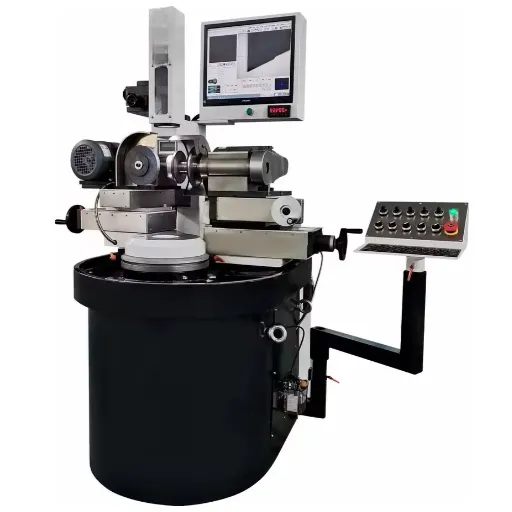
If you are working in the manufacturing industry or dealing with precision machining, keeping up the state of your diamond grinding wheels is very important if you want to have high-quality performance and extend the tools’ life. The diamond grinding wheel dress machine comes into the picture—this tool has completely changed the dressing process by making it simpler and more efficient and precise at the same time. This blog post will highlight the importance of keeping grinding wheels in good condition, the benefits that come with using a diamond grinding wheel dress machine and how it can actually change your machining operations. So, continue reading and find out the reasons why this breakthrough technology has been the one for the skilled workers who have been looking for regular results and perfect performance in all their work.

One of the most modern industry-wide critical challenges is the precision in manufacturing. The output of the machines and tools must be perfect, with no deviation at all, to get consistent and accurate results. Eventually, even little defects can cause huge delays, material wastage, and poor-quality products if not accompanied by maintenance and calibration of the machines or tools.
The grinding wheels are one of the key factors in keeping the precision, as they are absolutely needed for the shaping and finishing of materials. Grinding wheels lose their balance or get filled with dirt gradually. This, in turn, lowers the grinding operators’ effectiveness and may even endanger the precision of the whole production process. The surface of the wheels does not need to be dressed more than once if the wheels’ condition is kept up with and the right dressing method is used, which is suitable for the wheels in question. Techniques that are capable of producing accurate results keep them sharp, clean, and dressed. The regular dressing of the wheels not only improves the quality of the end product but also aids in prolonging the lifespan of the tools, thereby reducing the long-term costs.
Diamond grinding wheel dress machines are among the most powerful and trustworthy tools available to cope with this challenge. By providing very accurate and uniform dressing techniques, these machines allow the manufacturers to keep the required accuracy in their production processes. What is more, the machines need less manual work, and mistakes are minimized while the same quality is maintained across several operators. The technology upgrade has made it easier to tackle the precision problem in an efficient, environment-friendly, and, most importantly, modern manufacturing way.
A wheel dressing machine is one of those specialized devices that are used to groom and refresh the cutting and precision of the grinding wheels. The grinding wheels, like all tools, lose their effectiveness when subjected to continuous use, and at this time dressing comes into play to clear the clogged or worn-out area with abrasive and make it possible for the wheel still to have its cutting efficiency and original profile. This treatment is of utmost importance in keeping a uniform grinding quality and at the same time increasing the grinding wheel’s life span.
The mechanism makes use of dedicated tools or specialized devices to perform the task of reshaping or cleaning the grinding wheel surface with precision. This guarantees that the grinding wheel does not deviate from its intended form and size which is critical in achieving accuracy and consistency in production. Wheel dressing machines have the capability of executing these tasks with a high degree of accuracy thus lessening mistakes and maximizing efficiency.
These machines make the dressing process automatic and fast, one of their contributions to improved productivity in industrial applications. Manual labor is therefore less needed, safety is increased, and grinding operations have repeatable, high-quality results. In short, wheel dressing machines are an important factor of modern manufacturing as they assist precision machining tasks and at the same time cut operational downtime.
The dressing of wheels is a significant process in the grinding operations since it keeps the abrasive wheel sharp, smooth, and efficient. The grinding wheels can absorb the material from the workpiece or create irregularities that lower their cutting efficiency during the grinding process. By dressing the wheel, these imperfections are eliminated, and the wheel’s shape, surface texture, and performance are restored. This has a direct effect on the quality of the grinding process and assures a cleaner, more exact finish on the workpiece.
Dressing the wheel is another important aspect that plays a major role in prolonging the life of the grinding wheel. Regular dressing helps to avoid excessive wear and tear, causing expensive replacements or losing production time. Moreover, keeping the wheel in good condition prevents the grinding process from being overheated and damaging the workpiece, which can happen if an uneven or a clogged wheel is used.
Lastly, wheel dressing aids in operational efficiency by maintaining consistency and repeatability in the grinding processes. A perfectly dressed wheel has a constant rate of material removal which results in predictable and high-quality outcomes. The consistency that this gives reduces the downtime, waste, and assures a higher production rate in the manufacturing sector. In conclusion, wheel dressing is indispensable for achieving the quality, efficiency, and reliability of grinding applications.
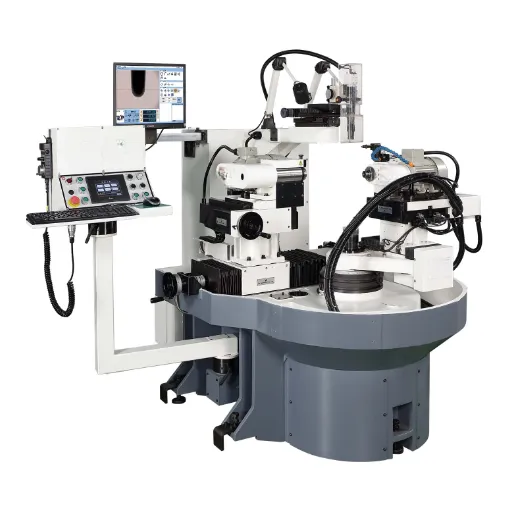
CNC Wheel Dressing Machines are equipped with the latest computer numerical control technology that automates the entire dressing process of grinding wheels with unbelievable precision. These machines not only give the amount of the process but also their consistency, which makes them indispensable in the booming manufacturing industries, namely, aerospace, automotive, and precision engineering, where high-quality materials are needed. The use of CNC systems makes it possible to create highly detailed and complex wheel profiles, which require little manual work and therefore the production is enhanced.
The main benefit of CNC wheel dressing machines is their capability of prolonging the life of grinding wheels by making sure of even wear and the best surface conditions. A recent development has been the introduction of the DM9B and its clones, which can dress grinding wheels with a precision down to a micrometer and are capable of supporting dressing for various materials, like aluminum oxide and the toughest one cubic boron nitride (CBN). Also, the most advanced CNC machines nowadays can do in-process measurement of the wheel and thus make instant adjustments during the operation, which cuts down the waste and so the productivity goes up.
One of the recent trends in manufacturing is that the use of CNC wheel dressing machines has helped manufacturers to cut down their production time by as much as 30% and at the same time consistent removal of material has led to better quality of finished components. The ability of this technology to manage complicated profiles of the wheel and to adjust to different grinding needs has assured its place as a critical factor in modern machining solutions.
Manual wheel dressers are the cutting-edge tools of the grinding industry that are quite straightforward to use. In other words, they are the best way to keep grinding wheels working perfectly by using them to remove debris and refine the wheels. The precise form of the wheel is maintained, thus allowing for the necessary machining to be done accurately. They are usually operated manually, and so are the best economic solution for smaller operations or even for tasks that do not have very complex dressing requirements.
Nevertheless, manual wheel dressers present their own set of difficulties. The latest reports indicate that their application frequently leads to longer setup and operating times when compared to automated alternatives. They do need skilled personnel to ensure that the dressing process is precise and consistent. Manual dressing, in turn, does not allow for the development of intricate wheel profiles, which modern manufacturing, where high precision and flexibility are the main requirements, will not find it worthy.
Still, the manual wheel dressers are considered to be a simple, cheap and energy-saving operation widely used in workshops, and for that, the use of non-advanced CNC dressing machinery may not be justified. The evolution of manual wheel dresser designs has given rise to even better ergonomic handles, and stronger dressing materials which have made them more user-friendly and efficient thus keeping them as a relevant tool in some machining scenarios.
The single-point dresser features a single diamond or diamond cluster placed at the end of the tool. The use of single-point dressers, which allow a high degree of accuracy and a fine finish, is very nice in grinding wheel shaping, truing, and dressing. Single-point dressers’ major advantage is that they have very precise control but at the same time slower than the other dressing methods. They are also economical because of their uncomplicated structure but may be less durable as compared to the others when it comes to heavy-duty applications.
Conversely, the multi-point dresser, as the name implies, has several diamonds mounted on the working surface distributed over it. The design allows for dressing to be done more quickly because the dresser has more contact area with the grinding wheel. Multi-point dressers are particularly well adapted to high-volume production environments where efficiency is critical. They also tend to last longer because the load is shared among the various points, which makes them a strong solution for frequent and heavy use.
A recent market analysis disclosed that multi-point diamond dressers are becoming more and more popular in the industrial sector because of their long life and good performance. However, single-point dressers are still indispensable for small workshops and according to precision tasks due to their reliability and affordability.
This difference indicates clearly how important it is to choose the right dresser according to the requirement, and that a compromise among precision, cost, and operation scale needs to be made in order to reach the performance that is optimal.
Rotary dressers are cutting-edge devices that are typically employed in high-volume or industrial-scale operations, given their effectiveness and durability. They make use of a rotating tool to reshape and sharpen the grinding wheels and hence, maintain their performance even after a long time of operation. Rotary dressers are used for complex and detailed profiles and deliver superb accuracy and repeatability. Recent research has shown that rotary diamond dressers can increase the grinding wheel’s lifetime by 50% and simultaneously cut down on downtime by roughly 30% because of their sturdy construction and adaptation for heavy-duty use.
Stationary dressers, on the flip side, are attractively priced and extremely dependable for tasks that are of lesser volume or where precision is the main criterion. The operation of these heavy-duty dressers, which are fixed in one position during the dressing process, does not require skilled workers and that is why maintenance is simpler. Being easier to handle they are predominant in small workshops or performing tasks that require high precision. Although stationary dressers are unable to compete with the speed or consistency of rotary dressers in large-scale production, they are still the choice for low-cost applications and simpler profiling purposes.
How well these tools are combined depends on the particulars of the operation. For instance, in industries where high-volume and quick turnover are production requirements requiring daily-hour operation, the rotary dressers are the mainstay of the industry owing to their efficiency and lifespan. On the other hand, for small workshops or projects with a low budget, stationary dressers are a must-have for maintaining cost-effectiveness without compromising precision. The selection of rotary or stationary dressers is not simply a matter of technicality but calls for a meticulous evaluation of issues like operational scope, financial limitations, and accuracy levels to be able to yield the best possible output.

Diamond grinding wheel dress machines mainly improve accuracy by promoting consistent and uniform grinding wheel profiles. The machines adorn diamond-coated grinding and, thereby, refresh, grind, and purify wheels to give a high degree of precision in the operations of the industry. Industry reports indicate that the use of diamond dressers alone can up to 25% enhance overall precision by lessening variation and defects in the final products, thereby giving a better output.
In addition, cutting down on scrap is a very good consequence of the direct link between reduced scrap and improved accuracy. By keeping the grinding wheel in its best condition through dressing machines, fewer irregularities and deviations occur during the process of machining. It has been found through research too, that the companies that have put into practice diamond grinding wheel dress machines have seen a reduction in their scrap rates of up to 30% thus reaping considerable profits and being resource efficient. This trustworthiness has made them vital in fields such as aerospace, automotive, and manufacturing, where precision and material savings are important.
The application of diamond grinding wheel dress machines has, among other things, an unstoppable impact where grinding wheels go in the direction of operations in several industrial sectors where they are allowed. This is because precision machining processes are involved here, and so the grinding wheels by maintaining their shape and sharpness greatly serve here. The machining process accuracy level of the machines is such that it results in skimming off of all the above-mentioned terms, redoing, reducing and burning of the material, non-consuming, hence making it.
Additionally, with the aid of these machines, the tools are kept at their optimum lifespan, as the dressing that is done regularly prevents the grinding wheels from wearing out unevenly or getting clogged with dirt. The fact that the tool is used for a longer time than anticipated means that the company has to spend less on maintenance and replacement in general. Moreover, the machine’s longevity in terms of quality is what contributes, in part, to the product’s being up to the standard of adhering to strict industry norms and meeting customer expectations.
Finally, the boosted operational efficiency has its main implication in the form of shorter manufacturing lead times, which is further highlighted by the fact that it enables the company to deliver on urgent orders and also cope with the larger quantity of production expected without any quality of output being diminished. The virtues that are aerospace, automotive and manufacturing all continue through these sectors, the necessity for going the way of technological solutions that are both precise and resource-efficient.
Machines for wheel dressing are most important in keeping tools up to date and the grinding process efficient and effective, cutting. The idea behind these machines is to first remove the worn materials and through that reshape the grinding wheels, then restore sharpness and precision. The very act of dressing the wheel not only wipes away the machine’s waste but also smooths out imperfections that if not dressed, would cause more wear on the cutting tools, resulting in shortening their life.
The direct connection between the tool life and cost in the manufacturing process is that when the tools’ lifespan is increased, the cost of the process is reduced. For example, using well-dressed grinding wheels, manufacturers will have fewer tool changes, machine downtimes and production quality will be uniform, thus keeping all costs low. However, this is very good news as it not only means cutting daily operational costs, but also great productivity and very low wastage due to less frequent tool replacements.
Moreover, dressing machines will assist in getting the grinding that is very precise and uniform which is the primary requirement in industries like aerospace and automotive that need very high accuracy. Preserving the integrity of tools by dressing and at the same time considering cutting has very good qualities in preventing both quality control and resource management problems hence making them indispensable in the modern manufacturing systems.
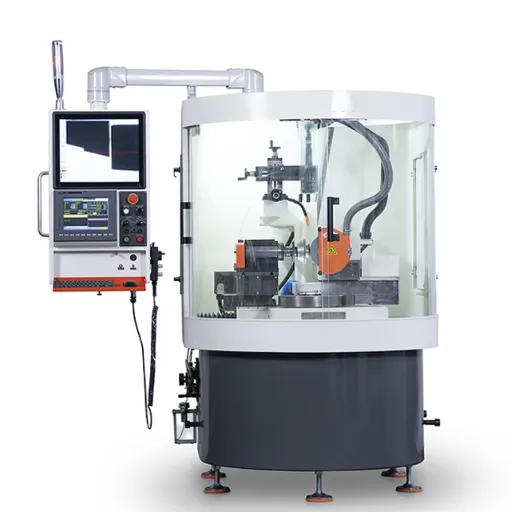
Proper maintenance of wheel dressing machines is essential to maintain their precision and efficiency in modern manufacturing environments. Below are some critical routine checks and maintenance practices that ensure optimal performance:
Daily Inspections:
Lubrication:
Alignment Checks:
Weekly Maintenance:
Periodic Calibration:
The replacement of dressing tools is an essential maintenance activity that improves the quality, lifetime, and performance of all machined parts. There are several different types of dressing tools available, including diamond dressers and abrasive wheels, and they will all eventually wear down if they are continually used. Their progressive wearing can pose a problem to the accuracy of the machined parts and also to the surface finish and so on, and so it is better to act quickly before this happens.
When to Replace Dressing Tools:
To understand when dressing tools should be replaced, the following signs can be observed:
Steps for Proper Replacement:
The operators need to follow all the steps and utilize the latest technology to greatly enhance productivity and still keep the machining processes very precise.
Calibration is indeed a vital procedure to secure the accuracy and steadiness of machining operations. This refers to the calibration in making the machine tools perform as per the standard specifications and the subsequent checking of their accuracy against recognized benchmarks. Proper calibration makes it sure that the tools work within the limits set for them, which in turn minimizes errors and contributes to the quality of the product.
Recent investigations reveal a direct correlation between calibration and machining errors. Up to 20% for the former and 15% for the latter are the percentages of benefits coming from. Regular calibration is now a common practice also in industries that heavily rely on that. One way that is done is the utilization of advanced technologies like AI and machine learning. These technologies help one in dispensing data patterns to deduce the timing and the actual extent of deviations. thereby, one can prolong the equipment’s lifetime while at the same time limiting the operations’ downtime.
To illustrate this, laser calibration systems have been adopted as the norm in the majority of present-day factories equipped with the latest technology. These systems are capable of achieving linear positioning, pitch, yaw, and roll tolerances of up to a few microns. The literature reports a figure of around 30% for improvement in the accuracy through the use of laser interferometers. Besides, the automated calibration systems today are so advanced that they allow the operators to select the timing of the routine checks virtually, which in turn means that consistent performance is maintained with very little manual intervention.
Establishing a solid calibration practice along with the contemporary technology not only enhances the quality of the output but also guarantees adherence to the industry-standard certifications such as ISO 9001. This, in turn, generates and maintains clients’ and stakeholders’ trust while in the long run; it becomes cost-effective in terms of the operations.

The grinding wheel’s material and shape are very important when it comes to the selection of a wheel dressing machine, as they affect the performance, the durability and the precision of the machine. The wheel dressing machine’s compatibility with different wheel materials like aluminum oxide, silicon carbide or diamond decides its ineffectiveness or effectiveness for various applications. For example, diamond grinding wheels are extensively used for precision grinding tasks, therefore, machines are designed specifically to the hardness of the diamonds, and at the same time, they need to take extra caution not to damage them while the dressing process.
The grinding wheel’s shape carries a lot of weight too. Flat wheels, cup wheels and cylindrical wheels are types of shapes where each has its own purpose and a certain dressing tool is necessary to be employed in order to keep that geometry. For instance, cup wheels are mostly used for grinding the harder materials such as concrete and stones and therefore require very precise dressing so as to keep the edges effective for the removal of material.
The production volume and the required precision of a grinding process are interdependent to a great extent on the tools and methods employed. In the case of high-volume production, tool and technique quality should warrant such performance and durability so that the operation can be continued for a long time. Automated systems, such as CNC (Computer Numerical Control) grinders, are frequently utilized in such instances to uphold accuracy and productivity while allowing very little downtime for the production of large amounts of stock.
On the other hand, if the precision is of utmost importance, then the grinding machine and its settings will quickly become a decisive factor. Low-volume, high-precision production means very close attention to detail, and use of the finest grinding wheels and dressing tools. The tools used will need to keep their dimension and also their sharpness for a long time because they will work with applications like aerospace components or medical instruments that require accuracy such as ±5 microns. Continuous verification of the output precision through integration of sophisticated measurement systems is also a part of the process.
It is a matter of opportunities and carefully selecting the materials, tools and operational strategies accordingly to get the best results. Factors like the hardness of the grinding material or the method of positioning the workpiece have an influence on the outcome. In the end, the grinding process will be a success if the application’s priorities are understood and the parameters optimized not only for the production size but also for the precision of the results desired.
In the decision-making process regarding the acquisition of a wheel dressing machine meant for the cutting tool and grinding sector, it is necessary to not only consider but also to harmonize the budget constraints imposed with the overall value of the machine. A cost-benefit analysis should revolve around the machine’s effectiveness, precision, robustness, and long-term impact on the operation. Machines that maintain high precision over time can also lessen the amount of material wasted and the extent of rework, thus the cost savings realized can be significant in the long run. Accordingly, it is a matter of paramount importance to pick up at least a model that is within the financial range with the desired performance attributes.
It is a wise move to assess the operational costs of the given machine involving maintenance, energy consumption, and even consumables that might be needed. The comparison of these costs with benefits like improved productivity and the reduction in downtime helps pinpoint whether the investment is still under the financial limit or not. In addition to that, take into account the future demands for production in line with the capacity of the equipment—choosing a machine that can expand with you will save you from having to make expensive upgrades later on.
Last but not least, it is advisable to give priority to the machines that yield the best return on investment (ROI) rather than those having the lowest initial cost. A higher initial outlay may be turned into a profitable venture if it translates into better accuracy, Elevated Production rates, and the reduced cost operations scenario from the machine’s entire service life. The decision-makers should also have a close look at warranty terms and after-sales support so that they are assured of protection for their investment and that the machine will continue to be a dependable asset in the long run.
Q: What is the purpose of a wheel dressing machine in cutting tools & grinding?
A: A wheel dressing machine with cutting tools & grinding makes an instrument that keeps thresholds and illuminates wheels. They may, therefore, be dubbed and dressed to ensure they are perfectly operational for several grinding operations, for instance, surface or precision machining.
Q: How is a diamond wheel different from a silicon carbide grinding wheel?
A: An industrial diamond wheel is supposed to be used for grinding hard materials because of its very hard consignee and its long life on the disc; a silicon carbide wheel is popularly the best material for grinding softer ones. A diamond wheel often comes with a variety of grit size and a double angle–specifically meant for machine shop applications.
Q: Why is wheel truing and dressing so critical?
A: Wheel truing and dressing are very significant for preserving the flatness and dimensional tolerance of a grinding wheel. The same process guarantees the elimination of any irregularity, the optimum operation of the wheel, and the production of steadfast finishes on a workpiece. Checking the wheel condition during or after dressing is important.
Q: Can a CNC grinding wheel dressing machine customize the wheel profile?
A: Yes, a CNC grinding wheel dressing machine has features that allow customization of the profile to create different shapes, radii, and angles using precision programming. This capability allows for the manufacture of specialized wheels for various grinding applications according to requirements.
Q: What should I be looking for while searching for a wheel dressing machine?
A: While selecting, look into an array of utmost essential features: a digital display screen to observe settings, adjustable rotation speeds for changing speeds, and guided linear guides to keep movement extremely accurate. An optional attachment device such as a tilt fixture, can extremely enhance the machine’s versatility.
Q: What is the value of grit regarding grinding-well?
A: The importance of grit in the wheel can be measured by characteristics such as how abrasive the material within the wheel is. Grit size determines cutting capability and surface finish. Finely ground finishes are from fine-grit wheels, and coarse wheels can handle material faster. The choice of the grit is critical to meet requirements for the given tool’s grinding applications.
Q: How do I calculate the optimal diameter for a grinding wheel?
A: To calculate the optimal diameter of a new grinding wheel, the specific application, designated duty requirements of the machine, and the type of material to be processed must be taken into account in applying addressed values for wheel speeds and cutting effectiveness. A balanced, good diameter means improved surface quality at the cost of productivity.
Q: Why do flat surfaces matter when grinding?
A: Once the surface becomes flat and simple, finishing it will have the best accuracy and durability for future applications. If a wheel with a fresh plate does not dress well, operating with this flat surface for a day will be best for many applications where cutting tools are manufactured.
Offline CNC Grinding Wheel Dresser Improves Grinder Efficiency – Discusses the DM-9CNC Wheel Dressing Machine and its features for contour dressing.
Top 5 Grinding Wheel Dressers for the Tool and Die Industry – Highlights different types of grinding wheel dressers and their applications.
Which Bench Grinder Wheel Dresser? – A forum discussion on various types of wheel dressers and their uses.
Universal Wheel Dresser for Dressing Grinding Wheels Into Various Shapes – Details a universal wheel dresser adaptable for surface grinding machines.
How to Dress Your Diamond Grinding Wheels – A guide on techniques for dressing and truing diamond grinding wheels.