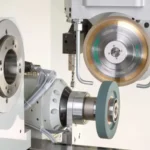
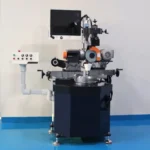
Revolutionary CNC Grinding Wheel Dresser
Transform your grinding operations with precision wheel dressing technology that delivers unmatched accuracy, reduces downtime, and maximizes productivity.


One important processing stage for making automotive, electronics, and machine component parts is the process of surface grinding. With technological advancement, the demands for more sophisticated grinding wheel dressing machines have increased. These machines maintain the sharpness and shape of grinding wheels and eventually improve the quality of the products discussed above. The following lines explain some of the top 15 wheel dressing machine manufacturers in reference to their special contributions to wheel dressing and grinding technology:

Highly specialized equipment is used in this category of machines to restore profile and sharpness to grinding wheels that constitute essential components in machining operations. Dressing and truing are processes carried out on grinding wheels to ensure that these grinding wheels are efficient and precise. Often equipped with CNC technology, many dressing machines accomplish truing with very high accuracy and repeatability. A wide array of designs are there to meet the different applications within the industry. Some of the types of dressing machines include:
These choices range from solutions aimed at small workshops to those geared for heavy-scale industrial production. Thus, choosing the right wheel dressing machine is really crucial for ensuring maximum grinding performance and maximum grinding wheel life.
From the good precision of the machining operation, the grinding wheel must be intact in CNC grinding. Dressing involves reshaping and sharpening the grinding wheel to render it functional for grinding. During dressing, the wheel’s cutting action suffers enhancement, which also increases work-life and thereby reduces operational costs. The use of the wheel dressing machine gives the manufacturer a consistent surface finish with tight tolerances required by high-precision industries. Regularly dressing will also reduce the instances of wheel breakage, which mean lost production time and damage to machines.
The evolution of wheel dressing technologies has enabled major improvements in efficiency and accuracy in grinding operations. Traditional manual methods passed down through generations sit at one end of this wide gamut of technologies; the other end is occupied by sophisticated computer-controlled grinding wheel dressing machines. The modern ones mostly have diamond and CBN (cubic boron nitride) wheels as they need to be more hard and resilient for truing and dressing purposes. Advanced systems implement other features such as automatic inspection during or after the dressing process to confirm adherence to high quality standards. These technologies lend greater accuracy to grinding operation, thereby enhancing productivity and decreasing wastages.
Targeted at industry professionals such as engineers, procurement managers, and production supervisors, the article is designed for those engaged in the selection and application of wheel-dressing machines. The article’s scope includes an exhaustive journey into the major manufacturers and their technological innovations related to wheel dressing and grinding. By shedding light on the special strengths and areas of application for each company’s offering, the article sets towards equipping the reader with information that shall aid in deciding. Through in-depth analysis, experienced professionals shall develop the insight needed to see how advanced wheel dressing technologies might benefit their grinding operations.

Year Founded: [Information not available]
Introduction: PROE Machinery is a leading innovator in the wheel dressing machine industry, known for its advanced automation and precision solutions.
Main Products: Automatic wheel dressing machines.
✓ Advantages:
✗ Disadvantages:
Website: PROE Machinery
Year Founded: 1983
Introduction: Rush Machinery specializes in wheel truing and dressing machines, offering durable and precise solutions for various industries.
Main Products: FC-350W, FC-700W, FC-350EX, FC-700EX.
✓ Advantages:
✗ Disadvantages:
Website: Rush Machinery
Year Founded: 1952
Introduction: Glebar provides both CNC and manual wheel dressing machines, focusing on efficiency and minimizing downtime.
Main Products: DM-12 CNC, DM-9CNC, DM-9B.
✓ Advantages:
✗ Disadvantages:
Website: Glebar
Year Founded: 1965
Introduction: Kanehira is a Japanese leader in grinding and dressing machines, recognized for its high-precision equipment and global reach.
Main Products: SAF-series (CNC), DFM-series (manual), RTG-series (tool grinding).
✓ Advantages:
✗ Disadvantages:
Website: Kanehira
Year Founded: [Information not available]
Introduction: Tridex Technology, a division of Glebar, specializes in electrochemical grinding and wheel dressing machines.
Main Products: DM-12 CNC, DM-9CNC.
✓ Advantages:
✗ Disadvantages:
Website: Tridex Technology
Year Founded: 1977
Introduction: A German manufacturer specializing in diamond tools and dressing systems for grinding wheels.
Main Products: Diamond dressing tools, rotary dressers.
✓ Advantages:
✗ Disadvantages:
Website: Dr. Kaiser
Year Founded: 1665 (Parent company)
Introduction: A global leader in abrasives, offering a range of grinding and dressing solutions.
Main Products: Norton dressing tools and systems.
✓ Advantages:
✗ Disadvantages:
Website: Saint-Gobain Abrasives
Year Founded: 1926
Introduction: A Japanese manufacturer of grinding and dressing machines, known for precision and reliability.
Main Products: CNC grinding and dressing machines.
✓ Advantages:
✗ Disadvantages:
Website: Okamoto
Year Founded: 1946
Introduction: Amada offers a range of grinding and dressing machines for industrial applications.
Main Products: CNC grinding and dressing systems.
✓ Advantages:
✗ Disadvantages:
Website: Amada Machine Tools
Year Founded: 1906
Introduction: A Swiss company specializing in grinding and dressing solutions for high-precision applications.
Main Products: Grinding wheels, dressing tools.
✓ Advantages:
✗ Disadvantages:
Website: Winterthur Technology
Year Founded: 1912
Introduction: A Swiss manufacturer of grinding and dressing machines, part of the United Grinding Group.
Main Products: CNC grinding and dressing machines.
✓ Advantages:
✗ Disadvantages:
Website: Studer
Year Founded: 1812
Introduction: A global industrial engineering group offering grinding and dressing solutions.
Main Products: Landis grinding and dressing machines.
✓ Advantages:
✗ Disadvantages:
Website: Fives Group
Year Founded: 1788
Introduction: A Swiss company specializing in gear grinding and dressing machines.
Main Products: Gear grinding and dressing systems.
✓ Advantages:
✗ Disadvantages:
Website: Reishauer
Year Founded: 1974
Introduction: An Australian company known for its CNC tool and cutter grinders, including dressing solutions.
Main Products: CNC grinding and dressing machines.
✓ Advantages:
✗ Disadvantages:
Website: ANCA
Year Founded: 1941
Introduction: A Japanese manufacturer offering a range of grinding and dressing machines for industrial use.
Main Products: CNC grinding and dressing systems.
✓ Advantages:
✗ Disadvantages:
Website: Toyoda

CNC grinding wheel dressing machines mark one of the last technological improvements in precision grinding technology. With such machines, CNC is utilized to automate the dressing process, which yields repeatability and precision. Using a set of advanced machinery ensures the manufacturers can manage intricate wheel shapes and maintain tight tolerances. CNC integration allows for multiple wheel packs to be handled downhill grinding processes, thus reducing the downtime required for the machine to take a new charge of wheels. This class of dressing machines finds its popularity in industries that demand very high levels of accuracy and repeatability, thus providing very stiff solutions for solving almost any complex problem in tool grinding and machining.
Being the key to the wheel dressing process, diamond wheel dressers are extremely hard and durable. They are designed to reshape and sharpen diamond grinding wheels so that they perform optimally. Besides longer tool life, higher accuracy, and enhanced surface finishes are the benefits of employing diamond wheel dressers. They work best where there are high material removal rates and fine finishing needs. Major industries which rely on diamond wheel dressers to keep their grinding operations up to speed showing that these dressers play a significant role in present manufacturing environments.
CBN, or cubic boron nitride dressers, are known for offering superior performance for very precise grinding operations. They withstand very high temperatures and highly abrasive conditions; hence, they are used in dressing operations that involve hard materials such as cast iron. Benefits offered by CBN grinding wheel dressers include a long service life, less frequent dressing of grinding wheels, and more exact holding of wheel shapes. The industries where the dressing process finds use are those requiring very careful machining, such as tool and die making, where tight tolerances are immensely important. CBN dressers can be used to improve both the quality and productivity of the grinding process.
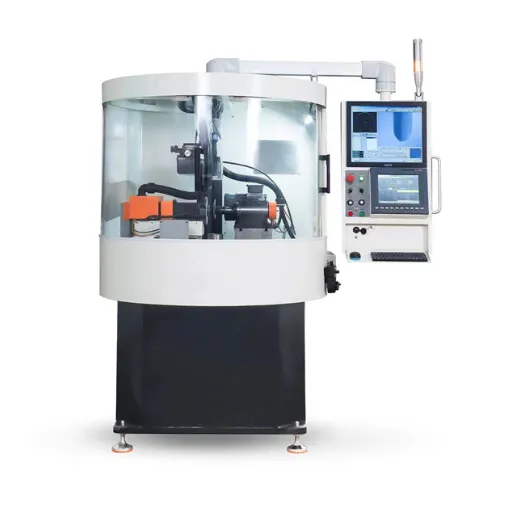
The coming of automation and smart technology in wheel dressing represents an industry change. With state-of-the-art automation systems, modern CNC grinding wheel dressing machines provide efficient and precise dressing. These systems enable real-time monitoring and control, allowing manufacturers to maintain the wheel’s optimal shape for every grinding operation. Smart technologies, such as adaptive control and predictive maintenance, empower dressing machines by minimizing downtime and increasing grinding wheel lifespan. This evolution in technology supports industries in achieving greater productivity and quality standards.
Grinding wheel dressing is becoming an ecological discipline and, therefore, environmentally friendly innovations are competing in this area. Suppliers are generally offering diamond and CBN grinding wheels with much longer lifespans and less waste. Further, designing energy-efficient CNC grinding wheel dressing machines results in less energy consumption and fewer emissions. Biodegradable coolants and lubricants are also used in the dressing process for dressing, thus reducing environmental impact. These alternatives parallel global environmental standards while also cutting costs, which, without doubt, attract industries with the wish to become low-impact industries while still maintaining high-standing precision and efficiency.
The future of CNC grinding and dressing technologies will see magnificent progress with continuing research and development. Emerging technologies such as machine learning and artificial intelligence are said to have reshaped the precision grinding wheel dressing process; machines will learn to adapt to specific working conditions. With the development of advanced sensors and computerized data analysis, the grinding machines will be capable of making real-time adjustments to maintain peak performance and precision. With the improvement in materials and techniques, systems for dressing grinding wheels will be improved to achieve new standards of manufacturing excellence.

A glance at the leading manufacturers in wheel dressing confirms an ever-present spirit of innovation and quality consciousness. Enhancements in CNC technology, automation, and material science are being utilized by manufacturers to achieve superior operational performance and extreme precision in grinding wheel dressing machines. Emphasis on the use of diamond and CBN grinding wheels with highly advanced inspection systems is what guarantees these machines to adhere to the highest industry standards. Research and development have become the prime focus of these companies, allowing them not only to address the existing problems but also to take the present and prospective direction of wheel dressing and grinding technologies.
Going forward, technological advancements will keep on transforming wheel dressers and grinders. With the IoT-enabled devices and AI-driven analytic tools online, they will continue optimizing the dressing process. Keeping the environment in mind will drive manufacturers toward sustainable practices and in reducing resource consumption and waste. In parallel, hybrid grinding wheel dresser machines combining multiple technologies will provide better flexibility and efficiency. These trends will thus ensure that wheel dressing machines are established as critical components of every high precision manufacturing setup.
To remain competitive, it remains imperative for industry professionals to keep the latest trends and technologies in wheel dressing and grinding up to date. With the constant evolution of CNC grinding wheel dressing machines and other related technologies, many opportunities to improve productivity and product quality are presented. Funding in state-of-the-art machinery coupled with sustainable practices will, therefore, further place these professionals ahead of the ranking of manufacturing processes. It will take cooperation among manufacturers and engineers, as well as procurement managers, to utilize the entire potential of the evolving technology.