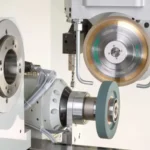
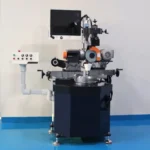
Revolutionary CNC Grinding Wheel Dresser
Transform your grinding operations with precision wheel dressing technology that delivers unmatched accuracy, reduces downtime, and maximizes productivity.


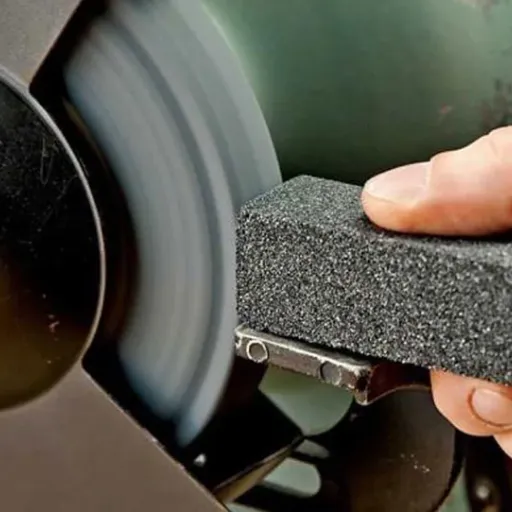
Two words frequently associated with grinding-wheel maintenance are truing and dressing. They are sometimes used synonymously, but there is indeed some distinction between truing and dressing, and these distinctions affect the grinding process. This article seeks to clear the fog in defining these operations and their relevance to precision and efficiency. To a seasoned machinist or a newbie working on grinding wheels, understanding the subtle distinctions between truing and dressing will greatly assist in tool maintenance and quality results. Read to find out how these two maintenance procedures aid in improving grinding-wheel performance and longevity.
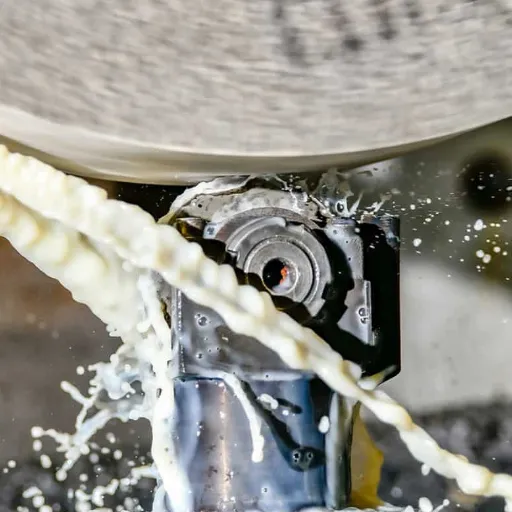
A grinding wheel is a cutting tool that consists of abrasive grains glued or bonded together in a wheel shape. The wheels are put into grinding operations to remove material from the workpiece, shape the parts, or finish surfaces to specification. The abrasive grains act as cutting edges, working mostly through friction that causes the worn-down state of the material for fine surface finish and quality in various machining uses.
In general, the basic parts of a grinding wheel are abrasive grains, a bonding medium, and pores. The type of abrasive determines the cutting ability of the wheel: common abrasives include aluminum oxide, silicon carbide, and diamond. The bonds hold the abrasive grains together and give the wheel strength and dispersive power. The pores between the grains are useful to retain cooling airflow during the grinding process and also facilitate the removal of debris from grinding so that the wheel remains effective.
Grinding wheels play a vital role in many industries, including manufacturing, automotive, and construction. They are very important for shaping hard materials, surface finishing, grinding down surfaces, and maintaining accurate dimensional tolerances of an item. They, in fact, offer great versatility in the machining operations; thereby, making grinding wheels one of the very important tools used to bring out the best performance and quality during machining.
Truing and dressing are employed as maintenance operations for grinding wheels so they function at their best and at optimum precision during machining operations. The particular processes ensure that the wheel maintains its shape, is cut, and remains effective, while wear-and-tear gradually takes its toll on the wheel’s efficiency.
Truing refers to the restoration of a grinding wheel to its original shape and ensuring that it runs true to its axis. After being in use for some time, a grinding wheel may either become unbalanced or develop some irregularities on the surface. When such a wheel is trued, these abnormalities are removed so that the grinding wheel has a uniform and concentric surface needed for precision work.
Dressing is aimed at rejuvenating the abrasive surface of the wheel. During the use of a grinding wheel, abrasive grains can be dulled due to friction, or debris may clog them, reducing the wheel’s cutting efficiency. Dressing is the procedure of removing these dull abrasive particles and bringing into view new sharp abrasive grains so that the abrasive wheel can continue its normal cutting operation, thereby ensuring smooth and accurate work during machining.
Both processes are equally important for prolonging the life of grinding wheels and for assuring uniform performance in industrial applications.
Dressing and truing the grinding wheels is a very crucial thing in machining and manufacturing. These processes enable efficient grinding of workpieces so that they can be accurately dimensioned and finely finished. Without proper maintenance, grinding wheels would deteriorate in their performance, resulting in erratic work and increased rejection rates out of the machined parts.
Dressing and truing increase the lifespan of grinding wheels by keeping them free of irregular wear and clogged surfaces. The less frequent the wheel replacements and/or changeout, the more time and cost is saved. Better-maintained grinding wheels also aid in reducing downtime during production, which in turn contributes towards greater operational efficiency and productivity in industrial establishments. This factor becomes especially important in maintaining the smooth flow of jobs in a high-pressure manufacturing setup.
In addition to improving wheel life and performance, these operations provide for greater machining safety. An improperly dressed and/or trued wheel is liable to get damaged or fractured during machining, which presents danger to the operator. Ensuring consistent performance through these methods increases production capability and provides a safer working environment and hence the prime importance in modern machining and manufacturing industries.
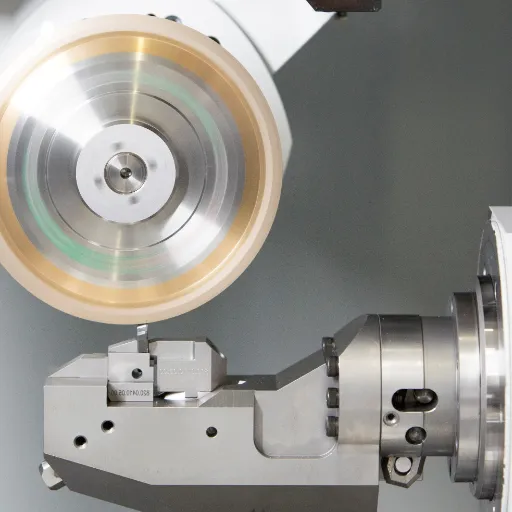
Grinding is a machining process in which an abrasive tool, typically a grinding wheel, removes material from a workpiece. These processes attain high precision dimensions and excellent surface finishes, making grinding most important in the production of components with very tight tolerances. Controlled abrasive action by grinding would cut, smooth, or sharpen materials such as metals, ceramics, and composites.
The grinding process involves abrasive particles in the grinding wheel; these particles act as small cutting edges that shear off minute chips from the workpiece. Grinding occurs as the grinding wheel rotates at a very high speed, and the abrasive particles come in contact with the surface of the material intended to be machined. Generating a lot of heat in the process makes the use of coolant systems very important to keep the material from being thermally damaged and to keep the tool from wearing out quickly. Grinding may, therefore, be classified into surface grinding, cylindrical grinding, or centerless grinding. Each category is suitable for a particular form of material and a given requirement.
The purpose of grinding extends beyond precision shaping. It may also serve as a finishing operation to give the surface quality by removing imperfections left by other machining processes. Furthermore, grinding ensures stronger and price-worthy parts, as it produces surfaces with less friction, uniformity, and resistance to wear. It has the scope to be applied in aerospace, automotive, and manufacturing industries, thereby making it a must-have manufacturing process where precision and durability come first.
Grinding performance is considered an important factor impacting the overall quality and cost of production processes. High grinding efficiency means less energy is consumed and less operational period is needed, fast output, and minimized production cost. Hence, the price and performance go side by side in such industries as aerospace and automotive manufacturing, where precision work is of paramount importance.
The grinding efficiency is mainly affected by grinding parameters, including wheel speed, feed rate, and hardness of the grinding material. The grinding operations would be smooth, i.e., tool wear would be at its minimum and would do work for a longer time, only if these parameters were set right. Accordingly, they should be backed by regular maintenance and state-of-the-art technology so that the process stays efficient.
The efficient grinding will not only guarantee better quality of products but will also minimize material wastage. All of these will lead toward some degree of sustainability in the manufacturing processes, where resources are conserved and an environmental footprint is kept to a minimum. Industries, while optimizing, will therefore be enjoying better performance (quality and environmental standards, especially).
Grinding plays a common role in various domains, offering accuracy and efficient material removal for smaller or larger operations. Important grinding applications and newer developments, along with their effects, are discussed below:

The act of dressing a grinding wheel entails a surface conditioning operation used to restore its cutting capability, shape, and precision. A grinding wheel dulls after use or gets clogged with debris; thus, its performance and its accuracy decrease. Hence, the dressing action removes the impurities from the surface and opens the abrasive particles that are sharp and capable of performing best.
Through dressing, the grinding wheel can be reshaped to attain the original geometry, or even profiles that are required for special task assignments. This operation is paramount to ensuring adherence and precision in machining and finishing. A properly dressed grinding wheel alleviates the chances of surface finish errors, thereby increasing the wheel’s functional life.
Many are tools and methods used for dressing, including diamond dressers and other mechanical methods. The method used generally varies with the type of grinding wheel, workpiece material, and finishing requirement. Regular and proper dressing of grinding wheels must be ensured to maintain efficiency, safety, and accuracy in several industrial processes.
Single-point diamond dressers are among the most common tools for dressing grinding wheels. They consist of a single diamond crystal embedded at the tip of the tool. The diamond dresser is suitable only for straight dressing and thus can resharpen the wheel to restore its shape. Their accuracy is very high, and they are used extensively in industrial and precision grinding operations. However, they may be replaced or reset upon wear.
Multi-point diamond dressers are fitted with numerous diamond crystals that distribute the workload from various points on the tool. This leads to longer tool life and is suitable for dressing larger grinding wheels or in operations requiring heavier loads. Multi-point dressers are more durable than single-point ones and can cover larger surfaces with consistency in operation.
Rotary dressers utilize an unsymmetrical rotating wheel embedded with diamond abrasives. The processing method is technically more complicated and especially suitable for high-precision work in automotive, aerospace, and tool industries. Rotary dressers yield top-quality results, ensure uniformity, and improve cycle time for dressing; however, they are costlier.
Crush rollers are mechanical dressers that press and crush the surface of grinding wheels using a diamond-impregnated roller. Considered suitable for complex profiles when specific shapes or paths must be maintained during grinding, they are highly durable and suitable for heavy-depth dressing.
Electroplated dressers are produced by coating the working surface of a tool with diamond grit via electroplating. Such dressers are more economical and work best for sharp and incisive dressing applications. They are usually preferred for high-speed operations and finishing work because of their accuracy.
Stationary dressers form the simplest and cheapest types of dressing tools. They consist of a single abrasive nib made either of a diamond or some other material. Stationary dressers are the cheapest option available for working on grinding operations and simpler shapes.
The dawn of CNC technology initiated a revolution in dressing methods. Fully programmable CNC dressers enable engineers to shape grinding wheels with repeatable automated cycles to suit any particular application. CNC dressing is required for complex geometries and tight dimensional tolerances, and its applications extend throughout high-tech industries.
Wheel dressing is the prerogative to proper grinding operation, of maintaining the grinding wheel in a sharp state, in shape, and therefore capable of doing what it is meant to do. The abrasive grains of the grinding wheel wear down and get clogged with material as the grinding process goes on, reducing its cutting power. Dressing removes the worn surface layer and exposes fresh abrasive grains that can cut or abrade efficiently to the required precision for the workpiece.
Besides that, wheel dressing comprises the grinding process in maintaining a certain degree of stability in its performance and, therefore, the exactness of taken-for-granted values of results. A properly dressed wheel would hamper the workpiece dimensions from becoming inaccurate, while the finished surface of the workpiece conforms to the specified standards that carry particular weightage in areas where tolerances are tight and even slight deviations from standard can make it secondary or unusable.
The regular dressing of grinding wheels elevates the service life of the grinding wheel and the equipment itself. Dressing, by virtue of conditioning the wheel for best performance, lessens undue wear and tear on the grinding machine, enhances the machine’s operational efficiency, and cuts down maintenance expenses in the long run. This goes to show that the dressing of grinding wheels is an indispensable operation signifying control over the quality, precision, and productivity of grinding operations in a wide variety of industries.
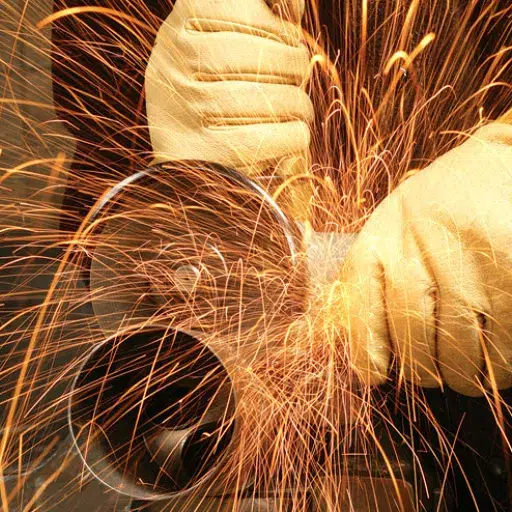
Truing and dressing are two essential operations often performed on grinding wheels to maintain their effectiveness, but they serve distinct purposes in the grinding process. Below is a detailed comparative analysis to highlight their key differences:
Truing is, therefore, performed whenever the grinding wheel loses its true shape or develops an imbalance due to extended use, mishandling, or material build-up. It is, indeed, the finest operation that gives back true precision and symmetry to the wheel, allowing it to rotate evenly without working errors due to any grinding applications. Truing is essential for all operations that precede the use of a new wheel or follow any form of severe impact that could have altered the geometrics of the wheel.
Conversely, dressing is required whenever the grinding wheel begins to lose its cutting ability, either through the clogging of abrasive grains or the glazing of the wheel surface. Dressing will renew the cutting edges of the wheel, clean away all debris and material build-up, and restore the wheel to a condition where it can efficiently carry out finish work on work pieces, first-class and smooth. More often than not, dressing is carried out quite frequently as one of the regular maintenance operations.
Sometimes it might be necessary to perform both dressing and truing operations: dressing improves the cutting ability and truing corrects the shape and balance. The decision on which operation to perform when is dictated by the grinding wheel condition and the requirements of the current work. In fact, the two operations working together bring down grinding applications to optimum performance, high precision, and efficiency.
Proper maintenance of grinding wheels such as dressing and truing contributes greatly to their performance. Dressings allow the wheel to keep on cutting by removing clogs and worn abrasives from the surface; hence, it lets the operator work with greater smoothness and accuracy. Truing, on the other hand, corrects the shape of the wheel, ensuring that it is balanced and causing less vibration during operation. Both these processes lead to increased grinding efficiency and yield better finished work from the workpiece.
If grinding wheels do not get the maintenance they need, they introduce other issues into the grinding process such as uneven wear or variation in the accuracy of machining. An unbalanced wheel increases the vibration of a machine, thereby affecting surface finish and tool stability. The failure to correct glazing or dull abrasives leads to overheating as another major concern, decreased material removal efficiency, and hence damage of the workpiece.
The operators hereby establish consistent operating conditions throughout the grinding wheel’s life by periodic dressing and truing. Dressing and truing of wheels control the rate of material removal, provide precision for the application, and add process reliability. Regular care and maintenance of the wheels enable safer and more efficient grinding operations, reducing or eliminating the possibilities of failure, leading to the failure of equipment or unsatisfactory results.
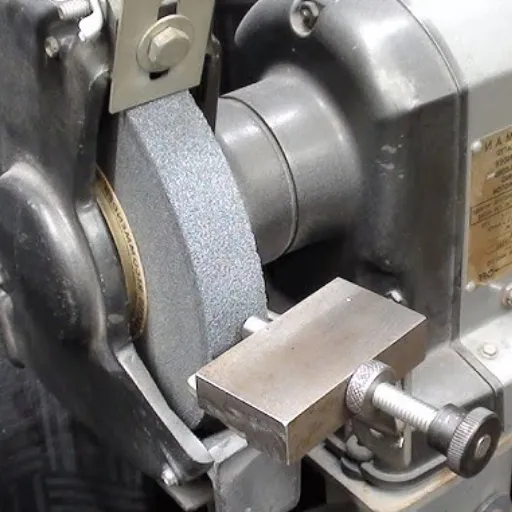
Grinding machines are precious tools in manufacturing and finishing processes. These machines are mainly used to shape, smooth, or cut materials to specifications. There are various types of grinding machines, each serving distinct purposes and providing specific capabilities. These may be divided into surface grinders, cylindrical grinders, centerless grinders, and tool and cutter grinders.
Surface grinders produce smooth, flat surfaces by allowing the grinding wheel to traverse the material’s surface. It is commonly used in industries that require tight tolerances and good finished surface conditions, such as aerospace or automotive. The cylindrical grinder, conversely, allows one to work the external or internal surfaces of the cylinder and other circular shapes; therefore, it works well on shafts, bearings, and other round components.
Centerless grinders generate an interface between the grinding wheel and the regulating wheel. This basically goes against the workholding device. This is appropriate for mass production and finishing of small cylindrical parts. In other words, tool and cutter grinders are convenient machines for sharpening and servicing cutters such as drills, end mills, and reamers so that cutting efficiency and accuracy are improved. Each type of grinding machine is an important factor in providing precision and sustaining production in manufacturing processes.
Dressing tools play a crucial role in preparing grinding wheels for work by sharpening the wheel surface and making it effective. The main types of dressing tools used in manufacturing processes are single-point, multi-point, and rotary dressers. The choice between them depends on the application requirements and the nature of the grinding task.
These are equipped with a single sharp diamond on a holder and are used for very fine dressing or any other kind of dressing that necessitates a high degree of accuracy. They are commonly used for straight dressing, as well as to generate precise profiles on grinding wheels. These dressers are applicable in scenarios demanding accuracy; however, their limited lifespan compels frequent replacement.
A multi-point dresser has several diamonds distributed along a tool, making it a stronger and longer-lasting option compared to a single-point one. Heavy dressing tasks suit multi-point dressers. Whereas rotary dressers are sophisticated tools, utilizing a rotary cutting face which, with diamonds embedded on it, constantly reshapes and resurfaces grinding wheels. Rotary dressers stand best for high production jobs because they can accurately handle complicated wheel profiles.
Choosing the right dressing tool will help manufacturers extend the life of a grinding wheel and improve wheel performance for dependable and productive grinding in varied industrial applications.
Depending on the desired output, an optax-dressing tool is selected for use with grinding wheels. Dressing tools enable the final reshaping or sharpening of the wheel, which keeps it fully operational and extends its working life. Tools like rotary dressers work better for elaborate profiles and produce in high volumes because of their precision and durability, whereas stationary dressers, for high precision reasons, suit simpler tasks and light workloads best.
When selecting your dressing tool, one must consider the demands of the particular application, the material workers are handling, the composition of the wheel, and the surface finish desired. Each affects grinding performance and the wrong tool would thus affect either grinding efficiency or in extreme cases, damage to the grinding wheel. Tough materials require hard dressing tools to operate and to last well.
The tool selection step is important. Equally important is the correct dressing technique. The wrong operation of dressing can cause uneven wear or reduce wheel performance. Constant monitoring during the dressing cycle and adjusting as per necessity will guarantee the consistent result of high quality. Manufacturers maximize productivity and tool life when they carefully analyze application requirements and use best practices.
A: The difference between grinding and dressing lies entirely in their purposes and processes. Such removal of materials from the workpiece is the process of grinding, whereas dressing is done to the wheel itself to sharpen and renew it for effective working. Dressing also smoothens the surface on the wheel so that it sharpens properly during grinding.
A: The diamond grinding wheel is set with diamond particles, which have better cutting action and hence are more durable than those made by conventional abrasive wheels such as alumina and silicon. This makes the diamond grinding capable of giving a better finish on the surface of the job and keeping numerous edges sharp for longer periods when finishing harder materials.
A: Dressing is a process to restore the grinding wheel in shape and sharpness. Sometimes in use, the surface of the grinding wheel gets loaded with a material, or it wears out to a certain extent, when grinding could present difficulties. Dressing removes the worn part of the wheel surface, exposing a new surface of abrasive grains that can perform better grinding operations.
A: A variety of tools can be used for dressing grinding wheels: a star dresser, diamond roller, and specialized wheel dressing tools. These tools help to recondition and sharpen a wheel by taking off thin layers of metal from its surface until the wheel is accepted as trued and ready for effective grinding.
A: Dressing frequency depends on the kind of material being worked, wear on the wheel, and the nature of the finish required on the workpiece. Dressing should be carried out whenever the wheel becomes dull or forms an inferior surface finish. By maintaining a regular dressing schedule, the working life of the wheel can be enhanced, producing greater consistency in grinding.
A: Yes, it can be used for both grinding and dressing purposes. It is mainly an instrument for grinding; however, dressing has to be performed on the wheel of a bench grinder so that the performance of the wheel is not impaired. When dressing the wheel properly, one ensures that the wheel is sharp enough to give a smooth finish to a workpiece.
A: Signs that a grinding wheel requires dressing include lowering of grinding efficiency, roughness of the measured surface, and high heat generation on grinding; if the wheel feels glazed or smells like burning, this also indicates that the wheel needs to be dressed to restore its cutting ability.
A: Truing the wheel means adjusting the shape and surface of the grinding wheel so that it becomes perfectly round and flat. This is done because an untrue wheel will grind unevenly and will also affect the quality of the surface finish on the work. Truing, generally, involves the use of a dressing machine or truing tools for accurate results.
A: Diamond grinding constitutes such a process whereby the diamond’s superior abrasive properties are applied to obtain the quickest material removal and finest surface finish. Being the hardest substance, diamond allows the grinding wheel to retain its shape and sharpness through a longer duration of service, thereby reducing the times of dressing and resulting in higher efficiency during manufacturing operations.
Okuma Blog – What is Dressing and Why Does Your Grinding Wheel Need It?
This source explains the importance of dressing in the grinding process and its role in maintaining surface finish and size accuracy.
CDT USA – Dressing or Truing: What’s the Difference?
This article discusses the distinction between dressing and truing, focusing on their purposes and processes.
Indiana Precision Grinding – The Importance of Dressing a Grinding Wheel
This source highlights the role of dressing in removing clogs and restoring the grinding wheel’s surface.
Norton Abrasives – Understanding Truing & Dressing
A detailed explanation of truing and dressing, including their differences and applications in grinding.
MMK Vietnam – What Is Grinding Wheel Dressing? 5 Reasons Why We Need It
This article emphasizes the importance of grinding wheel dressing in improving accuracy and prolonging equipment life.