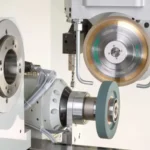
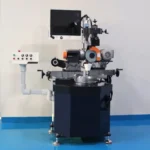
Revolutionary CNC Grinding Wheel Dresser
Transform your grinding operations with precision wheel dressing technology that delivers unmatched accuracy, reduces downtime, and maximizes productivity.


In the medical industry, precision manufacturing is a crucial aspect and one that cannot do without advanced machinery. The CNC grinding wheel dressing machines are part of the medical implants production process making sure that all the components are up to the highest standards of accuracy and quality. The article is going to look deeper into how the modern machines are changing the manufacturing process for medical implants thereby providing the industry with unmatched precision, efficiency, and reliability. These machines also help in improving the results of the patients and in cutting down the production cost. We would tell you about the major advantages and technological advances behind the CNC grinding wheel dressing technology and its influence on the medical sector.

The precision in medical implant manufacturing is essential because a slight inaccuracy could cause the malfunction of the device or complications for the patient. Implants have to pass hard medical tests before they can be implanted or used in the human body at all, functionally and structurally. Therefore, the manufacturing methods must be extremely precise so that the parts made are perfectly fitting, cause minimal wear and tear, and have no possibility of rejection or failure.
At this point, CNC grinding wheel dressing technology is very significant in attaining that level of precision. The technology that enables the constant and finely controlled shaping of the grinding wheels makes it possible to have high-quality finishes on implant components. The manufacturers are now capable of making complex geometries and microscopic tolerances that are very common in the medical field. The output is less margin for error, increased durability of implants, and improved patient outcomes.
In addition, the process of precisely working on the parts contributes to the overall efficiency and consistency of the production. Precise manufacturing means less material wasted and fewer defects which takes time and costs less in production. The reduced time, labor, and material costs are very useful when trying to keep the quality of the products while supplying the market with an increasing number of medical implants. In the end, the use of technology driven by precision like CNC grinding i,s not just a creation of new possibilities in the medical field, but a dual benefit of turning patient care and industry innovation into one through technology.
Manufacturing inaccuracies in the medical implant sector pose a major threat to patients and the industry as a whole. If the implants are poorly made, the fitting may be wrong, the functionality reduced, or in some cases, the implants might fail during use. This situation, in turn, may cause pain and complications, and even require additional surgeries; hence, the patient will undergo more physical and emotional strain. Moreover, these mistakes can erode the trust that patients have in the entire healthcare system and the manufacturers which again, may damage their reputation and credibility.
Besides, inaccuracies can inflate costs immensely for all the players involved. The manufacturers will have to deal with recalls, product liability claims, or financial penalties, which will not only interrupt their operations but also possibly cause long-term losses. Meanwhile, the healthcare facilities and patients will have to bear the considerable financial burden of dealing with the implant-related issues that, in the first place, were caused by the manufacturers’ mistakes. The issue of errors in the production of surgical implants also creates inefficiencies in the healthcare system because the resources that could have been used to better patient care are now being used to address issues that could have been prevented if quality control measures had been put in place.
To reduce these risks to a manageable level, very stringent must be strictly followed in medical implant manufacturing including the likes of CNC grinding and other precision-dominated processes. Reliable testing, regulatory compliance, and constant technology advancement are the key factors to minimizing inaccuracies. The prioritization of precision will not only mean safer outcomes for patients but also the raising of quality standards in the medical field through the cross-industry benchmark.
Regulatory standards in the medical device sector are being established to mainly support the quality, safety, and effectiveness of such products as healthcare devices. With regards to medical implants, such standards play a role in governing the manufacturing processes, which would include precision techniques such as CNC grinding and the use of specialized equipment like wheel dressing machines. By adhering to these regulations, it is ensured that implants survive the tests of heavy-duty safety and performance standards, thus lessening the potential hazards to patients.
Wheel dressing machines are indispensable when it comes to controlling precision during the implant production process. These machines are employed in the shaping and maintaining of grinding wheels, and eventually, they make sure that the cutting process is continuously performed with the same level of accuracy. Grinding within tolerances is very important as it is the only way through which implant components can realize their required dimensions and qualities of finish. Following the standard operating procedures for equipment usage and calibration, manufacturers can be assured of meeting the regulatory expectation of providing consistent quality.
Regular inspections, documentation, and running validations of manufacturing equipment such as wheel dressing machines ar,e part of the activities that are involved in adhering to these regulatory standards. One of the widely accepted international standards, ISO 13485, requires a thorough quality management system as its foundation. The system ensures that medical device production, including the manufacture of implant,s is in line with the global safety and performance criteria. Compliance not only safeguards patients but also builds up confidence and openness in the whole medical device sector.
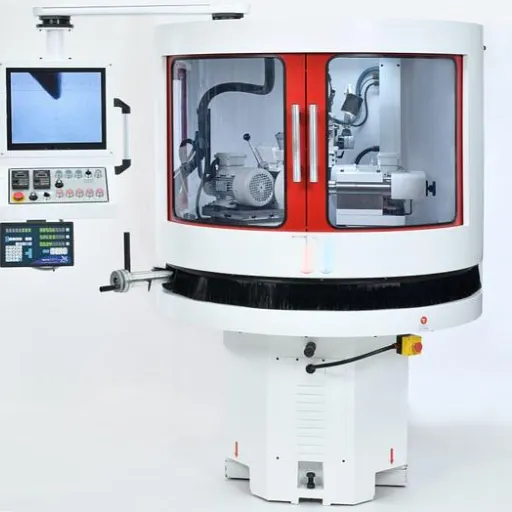
Wheel dressing is one of the processes to make the grinding wheels effective again. However, it does not only removes the worn-out material or the debris, but it also reshapes the surface of the grinding wheel. Thus, the cutting efficiency and precision of the grinding wheel are ensured during the operation. The dressing process is used mainly for correcting the wheel shape, improving the surface finish, and increasing the lifetime of the tool.
The dressing process usually uses a dressing tool or device that reshapes the grinding wheel by cutting and grinding off the irregularities or the clogged particles. This tool makes sure that the grinding wheel’s abrasive particles are correctly exposed and aligned for peak grinding performance. Depending on the application’s complexity and precision requirements, dressing could be done either manually or by using automated equipment.
Dressing done regularly narrows down the chances of defects arising during grinding operations to practically nothing; those defects could be for instance, the workpiece being cut unevenly or not having a good surface quality. The process of keeping the grinding wheel in the best condition not only increases but also enhances productivity, and reduces material waste, besides giving consistent, high-quality results in manufacturing processes.
There is a variety of wheel dressing machines on the market today, each designed for a particular grinding operation and a specific requirement of modern industries. Along with that, these machines bring about accuracy, productivity, and grinding wheels.
Manual wheel dressing machines are the most basic and ideal for those tasks that do not require much precision. The operators are in full control of the tool and they will manually do the surface and geometry restoration of the wheel. They are cheap and easy but still, they will not be suitable for more demanding applications where accuracy is required because of their lower accuracy; dependency on the operator’s skill is higher thus making them less suitable.
Single-point diamond dressers employ a single diamond tip to work on the grinding wheels. In addition to this, it is mainly for the simple changing of the wheel and it is also capable of giving good dressing results. But the diamond tip must be frequently replaced due to the wear caused by this process.
Cluster or multi-point diamond dressers contain several diamond pieces that are put together. Compared to single-point diamond dressers, they are more durable and can take a lot more of the heavier dressing tasks. On top of that, the multi-point dressers give you longer life and a consistent dressing operation, thereby cutting down on the maintenance downtime.
Rotary dressers consist of a rotating diamond roll that is brought into contact with the grinding wheel. The machines are able to perform wheel dressing with high accuracy and are ideally used for complex wheel profiles. They find their applications in high-volume production areas such as the automotive and aerospace sectors because they are quick and capable of operating at high speeds.
CNC (Computer Numerical Control) wheel dressing machines signify the highest level of technology in the field. These machines are able to provide dressing operations that are highly programmable, automated, and precise. Moreover, they can deal with complex shapes and provide huge time savings on the scale of manufacturing setups. The output quality from CNC dressers is also consistent, thus reducing the variability.
Crush dressing is a method in which a dressing roller or disc is used to crush the grinding wheel’s surface to a desired shape under pressure. This technique is very efficient for high-speed and high-volume production operations like cylindrical grinding.
the Laser dressing machines are a fast-emerging choice in the advanced manufacturing sector, which is one of the main reasons why this innovative technology employing laser beams to dress grinding wheels with unparalleled precision. The laser dressing machines have minimal wear, reduced wastage, and the ability to process superabrasive wheels like cubic boron nitride (CBN) or diamond grinding wheels.
When picking a wheel dresser for the production of medical implants, precision and reliability should be the utmost priorities. Medical implants necessitate very tight tolerances and smooth surface finishes in order to work properly and not pose a risk to the patient. It is important to choose a dressing machine that can support these requirements. Laser dressing machines are the main option in the case of high precision delivery and high-performance with less wear, which is indispensable for getting the complicated designs of implants done.
One more thing that is critical to take into account is the kind of grinding wheel that is used in the procedure. Medical implants’ production frequently involves the use of titanium or cobalt-chromium, both of which are difficult to machine. Superabrasive wheels like cubic boron nitride (CBN) or diamond are perfect for such materials. This means that the wheel dresser must be able to work with these superabrasive wheels in the first place and must also be able to keep them sharp and in the correct shape to deliver consistent performance even during long production runs.
The last thing to consider is that process efficiency and reliability are the key factors in this case. The wheel dresser that is chosen should not only be able to produce top repeatability results but also minimize the loss of time and material at the same time. The use of advanced technologies, such as automated or computer-controlled dressing machines, can help to speed up the process and keep the medical implant production at a high level of productivity. If manufacturers concentrate on these factors, they will be able to meet the tough requirements of this critical industry efficiently.
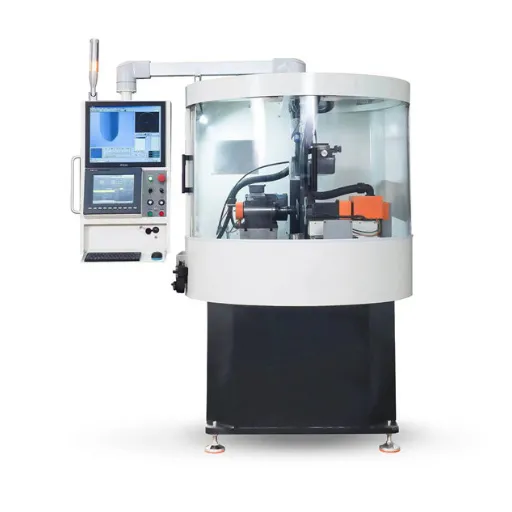
The precision needed in the production of medical implants is extremely high as they have to meet very high safety and performance standards. Wheel dressing machines are one of the key factors in getting these standards by keeping the grinding wheels used in the manufacturing process accurate. Miniature implants with perfectly dressed grinding wheels have the same shape and texture all over, leading to a reduction in defects and granting high-quality results.
The use of wheel dressing machines can be a big plus in grinding operations’ efficiency. The machines make sure that the grinding wheel holds its very best geometry and sharpness, which is so important for the grinding of medical implants with complex shapes and fine details. Such precision results not only in quality of the finished product but also in less waste of materials, greater production rates, and increased profitability of the manufacturing process.
Besides that, the advanced wheel dressing machines assist in maintaining quality during repetitive tasks. The kind of reliability created here is very important for the observance of the regulatory requirements as well as the maintenance of the trust of the medical sector. By spending on high-quality dressing processes, the manufacturer can offer implants that exactly match their specs while still being compliant with the very strict industry requirements. This not only guarantees that the patients get thebest, most reliable, and least troublesome medical devices that are designed to last and perform perfectly over time.
Manufacturing medical implants with precise technologies like wheel dressing machines requires operational efficiency and minimized downtime as the main factors. Manufacturers, by using advanced equipment, can perform their processes in an orderly manner, thus getting the same and better quality output all the time. Errors are reduced to a minimum andthe need to do things again is less because of automated features and modern wheel dressing machines’ accurate control. Consequently, time and resources get saved finally.
For the purpose of improving efficiency further, it is necessary to keep the equipment in good condition. It is through regular maintenance schedules and monitoring tools that potential issues are detected early and thus machines are kept operational for longer periods. This proactive approach not only helps to avoid costly interruptions in production but also makes the manufacturing process more reliable, especially in industries like medical implants that require precision and strict adherence to quality standards.
Furthermore, investing in training for operators and optimization of workflows may lead to a significant reduction in downtime. Hiring skilled staff acquainted with the operation of the equipment can help solve problems faster and also conduct the regular tasks easily thus ensuring uninterrupted and effective production. By adopting these measures, manufacturers can reach operational excellence—fulfilling the medical sector’s rigorous demands while being cost-effective.
The production of highly complex parts, including those used in medical implants, is a scientific-like process in which repeatability is dependent upon precision, consistency, and strict quality standards. One of the most straightforward ways to achieve this is by utilizing advanced wheel dressing machines, which keep grinding tools’ accuracy throughout the whole time of their operation. These machines make an excellent and uniform shape for each of the components by refining and restoring the wheel’s surface.
The wheel dressing machines need regular maintenance and calibration for their performance to be optimal. Manufacturers can reduce variations in the production of delicate medical components by doing frequent calibrations and thereby making the grinding process consistent. The use of effective process monitoring and automation can very much improve repeatability, as the reduction of human error in high-precision tasks is one of the advantages of the mentioned techniques.
Moreover, the application of strict inspection protocols during and after the production process is another way of reinforcing repeatability. The use of coordinate measuring machines (CMM) as measuring tools makes it possible to determine the dimensions of finished parts accurately in terms of the required specifications. The combination of systemized wheel dressing with quality control and automation allows the companies to satisfy the harshest requirements of medical implant production and at the same time gain unmatched consistency.
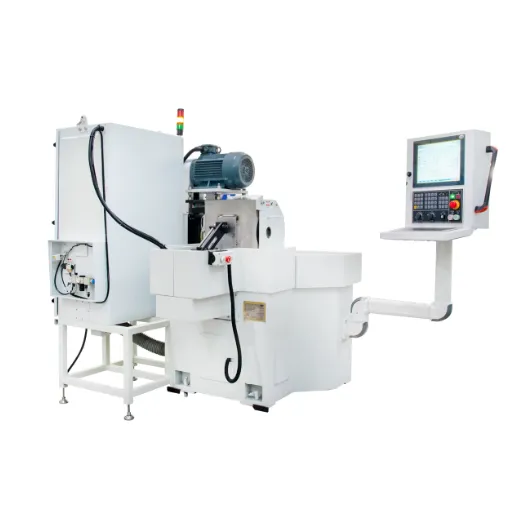
Orthopedic implants are high-tech gadgets that are indispensable in treating damaged bones and joints, allowing patients to restore their mobility and functionality. The manufacturing process of these implants needs to follow very strict quality and precision standards, since even a small deviation can have a negative effect on patient outcomes right away. The selection of materials such as titanium and surgical-grade stainless steel is based on their being biocompatible, strong, and corrosion-resistant, thus allowing the implants to be reliable performers inside the human body.
Wheel dressing machines are the key players in achieving the precision that is required for the medical implant manufacturing process. The machines are utilized for the grinding wheel shaping and maintenance that produces orthopedic implants. Wheel dressing, by providing the grinding wheels with exact surface geometry and sharpness, improves grinding accuracy and hence consistent and high-quality implant production. Besides this, using automated wheel dressing systems facilitates better control and repeatability, thus cutting down on human error and guaranteeing uniformity throughout large production volumes.
To be fit for orthopedic implants to be fit for the industry that come with stringent requirements, it is maintaining surface finish and tolerances that is the key aspect. Implant’s performance is not only supported by smooth surfaces but also by their integration with human tissue; thus the complications, if any, are reduced. The installation of sophisticated wheel dressing machines assures compliance with these requirements, thus making them an indispensable tool in the relaxation of the medical manufacturing industry. Through the combination of precision, reliability, and innovation, manufacturers can meet the demands of the global market for quality orthopedic implants.
Dental components and precision tools are some of the most important things in modern dentistry, providing not only correct treatments but also lasting results for the patients. The making of dental components calls for extraordinary precision, as these tools are being along in almost all procedures, from restorative treatments to surgical ones. Only high-quality materials and advanced machining techniques can help meet the very rigorous standards of the dental industry.
Among the precision tools that are used in dentistry can be found drills, burs, and milling instruments, all of them designed to work at their best, providing minimum discomfort to the patient at the same time. These instruments demand sharpness, toughness, and ergonomic design that are consistent in helping the dental professionals’ work become easier. The use of advanced manufacturing technologies like CNC machining guarantees that the tools will have the required accuracy and performance standards.
Moreover, dental components,s including implants, crowns, and orthodontic devices,es must be produced with utmost attention to get a perfect fit and function. Along with the use of biocompatible materials, such as titanium or ceramic, the safety and durability of the patients are assured. It is critical that production is done very accurately to get rid of mistakes, improve the outcomes and keep the patients’ confidence in dental solutions.
Wheel dressing technology has a major impact on the production of medical implants. The use of precisely shaped grinding wheels and perfectly smooth surfaces permits manufacturing parts with extremely narrow tolerances and high-quality finishes. Such accuracy is important in medicine since implants like hip replacements, dental parts, and spinal devices must be very well-fitting and functioning without issues inside the human body.
On the one hand, the wheel dressing technology guarantees that the output of the machinery is of the same quality all throughout and minimizes the risk of defects in the products. This uniformity is especially vital in the implant area since even trivial defects could lead to failure in the implant or loss of its acceptance by the body. On the other hand, the accuracy brought about by the dressing technology leads to reductions in the production of scrap, to the increase of the efficiency, and to the support of producing implants that doggedly follow the tough regulations and medical standards.
Furthermore, the wheel dressing technology makes it possible to work with hard and biocompatible titanium and ceramic materials. Owing to their strength, longevity, and compatibility with the human body, these materials are extensively used in medical implants. Proper dressing prolongs the life of the grinding wheels and consequently, the downtime is less, thus high-quality implants are produced quicker and at a lower cost—this is a win-win situation for both the manufacturers and the patients.
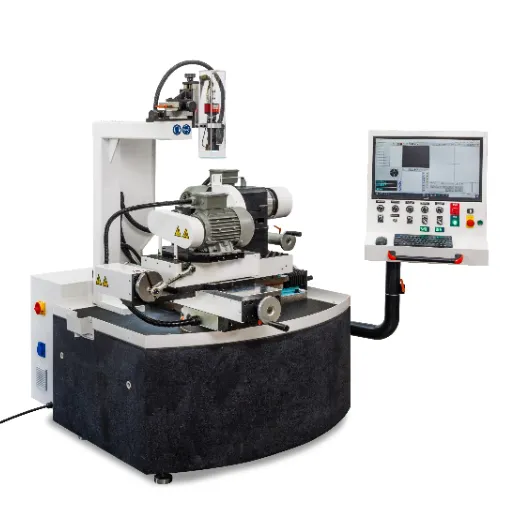
The wheel dressing machines’ automation is playing a major role in the production of medical implants. Improvement of precision, elimination of errors, and augmentation of productivity are the main benefits described. Sophisticated automated systems are applying sensors and robotics to guarantee grinding wheels that dressing will be done, hence implant production will gain both precision and uniformity. These technologies are cutting down on the manual labor, which is one of the causes of human error and wastage of time; hence, they are fast-tracking the processes of manufacturing.
The Medical field has also been looking towards technology for the sustainability of wheels dressing. The dressing process is on the spotlight as far as the reduction of waste and energy consumption goes. Sports like recycling of abrasive material and optimizing the life span of machine components are becoming common among the manufacturers. The manufacturers are not only going to get less environmental impact but also the reduced costs through these efforts which will lead to the alignment of the financial goals with the environmental responsibility.
The marriage of automation and eco-friendly approaches is a sure way to keep the wheel dressing machines for medical implants up to date with the ever-changing industry standards and requirements. The adoption of these trends gives the producers the opportunity to provide the market with quality implants in a more efficient way, with less waste and more reliability. Thus, this benefits both the manufacturers and the patients. This is a clear indication of the industry’s move towards a technological future that is more sustainable and less impacted by nature.
Aligning with industry standards and regulations is extremely critical for the safety, efficacy, and efficiency of wheel dressing machines that are used in the manufacture of medical implants. The machines have to be very much in line with the rigorous rules so that the implants can be able to pass the quality and performance criteria of the regulatory bodies. International certifications such as ISO 13485 for medical devices and ISO 9001 for quality management systems are consistent with the guarantees of the manufacturing process being maintained and being accountable to that all the time.
Apart from that, the manufacturers of medical implants also have to follow the regulations issued by the FDA (Food and Drug Administration) or similar authorities in their areas. This also entails that the implants are made of safe and biocompatible materials, with the right dimensions and surface finishes according to very strict safety and biocompatibility standards. The quality of the produced medical implants, as well as, the quantity will be highly determined by how good the wheel dressing machines are in creating the surface textures and dimensions that are required to meet the regulations thus, their performance has to be accurate and repeatable to cut down on the production errors.
The integration of audits, quality control, and technology into the wheel dressers is one of the ways to be sure that compliance is always maintained and regulatory expectations are continuously met. With the use of automated systems and sensors, the precision of the machining process can be monitored and the dressing parameters adjusted on the fly thus the incidences of deviations are greatly minimized. Proper operator training and adherence to maintenance schedules are equally important for the reliability of the operations. By meticulously aligning with these standards, manufacturers can create medical implants of superior quality that not only meet the safety and satisfaction requirements of the patients but also the manufacturers.
A: A machine for dressing grinding wheels in the production of medical implants is a piece of equipment specifically made to handle the grinding wheels used in the precision production of medical implants. It guarantees that the wheels are configured and ready for grinding, which is a necessary process for getting the right tolerances and surface finishes on implants.
A: The operation of the machine involves shaping and restoring the grinding wheels’ geometry with the help of diamond wheels or other abrasive tools. This procedure, which is referred to as wheel dressing, is a critical factor in keeping the grinding wheels that are used in the creation of medical implants working properly and lasting longer.
A: There is a whole bunch of grinding wheels being employed like, for instance, each type is selected based on the specific needs of the grinding process for different medical implant materials, which, among others, include metal-bonded grinding wheels, diamond wheels, and cbn (cubic boron nitride) grinding wheels.
A: Precision is of utmost importance because medical implants must have accurate dimensions and smooth surfaces to function properly and be compatible with the human body. Any inaccuracies can create some complications, hence the need to ensure the manufacturing process is carried out under strict controls using precision grinding wheel dressing.
A: Yes, a lot of the contemporary wheel dressing machines come with automation features. The use of automation not only gets rid of human errors but also brings consistency to the process hence efficiency in overall output during medical implant manufacturing.
A: External dressing is the term given to the process of grinding wheel dressing while the wheel is mounted on the grinding machine, and offline dressing refers to the process of dressing the grinding wheel while it is not in use. On the other hand, offline dressing provides a level of control that is more precise over the process and has the potential to increase the effectiveness of grinding.
A: The impact that dressing machines have on the quality of medical implants is profound as they not only keep the grinding wheels in their best shape but also ensure that they perform at their best. This continually translates to achieving the required tolerances and surface finishes which, in turn, are the mainstay of implants’ reliability and, ultimately, safety.
A: CNC wheel dressing machines generally come equipped with features such as sophisticated computer-controlled operations, complex contour dressing, and the application of the latest grinding technology that not only makes dressing more efficient and accurate but also improves overall dressing performance.
A: Absolutely! Besides actual wheel dressing machines, there are also specially designed ones for the production of joint replacements. The machines possess traits that enable them to process the distinctive anatomies and materials of joint implants, thus guaranteeing the grinding process to be of high precision and quality.