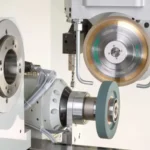
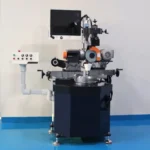
Revolutionary CNC Grinding Wheel Dresser
Transform your grinding operations with precision wheel dressing technology that delivers unmatched accuracy, reduces downtime, and maximizes productivity.


The 3C industry, including computers, communication devices, and consumer electronics, is extremely demanding in terms of manufacturing processes, where nothing less than perfect precision and efficiency is allowed. The grinding tool must be kept accurate and of high quality in the case of rapid technological advances and larger demand for smaller and more complicated components. The CNC wheel dressing machines are the ones that do the job, being the game-changers by providing excellent grinding performance along with an increase in the productivity of the entire operation. In this post, we will see how the 3C industry is being influenced by CNC wheel dressing machines, what their main advantages are, and the reason why they are so important in terms of meeting the modern challenges of precision manufacturing. It will be exciting to see how these innovations are gradually taking over the grinding process in the industrial sector and what impact it has on the future grinding tools.
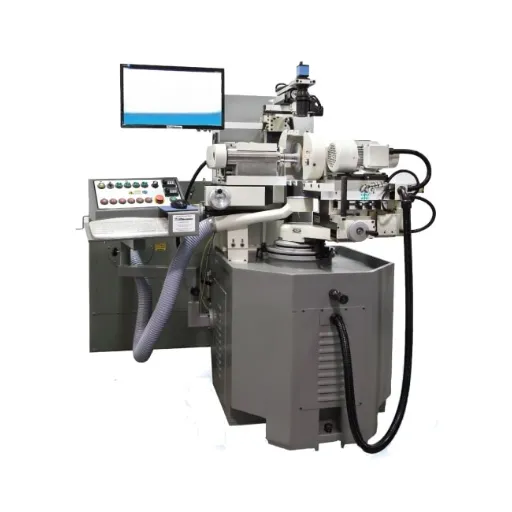
The term “wheel dressing machines” refers to specific devices that are used in the grinding process to bring back the sharpness and precision of grinding wheels. The grinding wheels can become less effective because of wear, accumulation of chips, and changes in their shape during repeated grinding operations. These grinding wheel dressing machines help to keep the grinding wheels with the correct profile, surface texture, and cutting ability all of which are not but necessary for the precise results in the manufacturing process.
These machines essentially operate by the reshaping of the grinding wheel again with the controlled removal of the material. The operation is done most of the time with either a cutting tool or abrasive material that grinds back the wheel to the desired contour. Upon rejuvenating the wheel, not only the accuracy of the grinding process is enhanced, but the grinder wheel is also kept longer by the use of these machines which further results in reducing the attributed waste and operational costs.
Industries that are heavily relying on high-precision grinding, such as aerospace, automotive, electronics etc. Rotate the wheel dressing machines. They contribute the production process in consistent quality, while also tackling the major issues of maintaining tight tolerances and getting a nice surface finish. Besides, these machines also assist in molding the grinding wheels to different materials, thereby making the process versatile and efficient in modern manufacturing.
The 3C sector comprising computers, communications, and consumer electronics has set high standards for the precision and efficiency of the manufacturing process. The grinding wheel dressing machines are the industry’s key players for the manufacturing of parts with the highest accuracy and top-notch quality. These machines facilitate the production of components that adhere to the strict tolerances, which are necessary for the electronics industry, and at the same time have the surface quality that is acceptable by the industry standards.
The machines are specifically designed to boost productivity through the reliable and consistent shaping of the grinding wheels to suit the various materials used in the 3C industry, which can be metals or composites. Such flexibility allows the makers to respond to the changing product designs and requirements very swiftly without compromising the quality. Besides, the ability of these machines to keep up the same quality over long production runs has the effect of reducing errors, which in turn leads to less downtime and waste.
Moreover, the application of grinding wheel dressing machines is a major factor in the 3C industry’s drive for innovation. Through their support, the manufacturers can develop components for next-gen technologies such as microchips, circuit boards, and compact devices. This not only goes a long way in satisfying the high consumer demand but also in making the development of technology a strong point in the competition between companies.
The CNC (Computer Numerical Control) grinding technology has changed the entire manufacturing industry by its precision, efficiency, and consistency. The computer-controlled systems make it possible for the CNC grinding machines to carry out the most complicated grinding tasks with remarkable accuracy. This technology is indispensable for making all the components necessary for the most demanding industries like aerospace, automotive, medical devices, and electronics, where precision-engineered parts are always in demand.
The primary reason for the favor of CNC grinding is its capability to give the highest possible repeatability. The machine after a certain program has been set up can produce the same components over and over again in bulk without losing quality at all. This capacity is especially useful in the fields that have strict tolerances and high reliability as their major requirements. In addition, CNC grinding becomes a time-saver for the manufacturing process and helps to increase the overall productivity and reduce the operational costs by the very combination of several different operations into one automated workflow.
Moreover, CNC grinding technology is a tool for increased customization. State-of-the-art software allows engineers to develop complex shapes that would not be possible with manual grinding. The machines can switch to different materials like metals, ceramics and composites so that they can satisfy the various needs of modern manufacturing. In the end, CNC grinding not only guarantees the quality of production but also makes the use of resources more efficient, which means it is a vital factor in today’s industrial processes.

CNC Wheel Dressing Machines are extremely sophisticated sorts of machinery that are made to buff and shape the wheels of grinding with utmost precision so as to give continuous and efficient grinding performance throughout. These machines are equipped with the computer numerical control (CNC) technology that simplifies and thus secures the dressing procedure accuracy and repeatability. Present-day CNC wheel dressers have the potential of working on different kinds of wheel profiles ranging from simple to complex geometric shapes, so that all the manufacturing needs can be met.
One of the main benefits a CNC Wheel Dressing Machine has over other dressers is the fact that it can cater to all kinds of abrasive materials ,including diamond, CBN (Cubic Boron Nitride) and conventional ones. This characteristic of machines makes it quite an opportune selection for the industries of aerospace, automotive, and tooling where precision and custom care are the main characteristics. For example, as per recent statistics, diamond wheels dressed by the CNC technique can attain surface tolerances ranging from ±0.001 mm, thereby losing a very little amount of material and having a very high quality of parts.
Furthermore, many of these machines come up with the very sophisticated simulation and programming software that is allowing the operators to see the dressing profiles before they execute it. This means that less time will be needed for set-up and at the same time, couple of operational errors will be avoided. The incorporation of these machines into the existing manufacturing systems through IoT and Industry 4.0 technologies has made a great impact on their efficiency, making it possible to do real-time monitoring and predictive maintenance.
Latest movement in CNC wheel dressing machines shows that manufacturers are giving more and more importance to sustainability and energy efficiency as well as the cost savings that come with the new state-of-the-art cooling systems and optimized power management. With their incredible abilities and ingenious features, CNC Wheel Dressing Machines are not only redefining precision machining but are also playing a pivotal role in the revolution of modern manufacturing processes.
The question of whether to select a manual or an automatic wheel dressing machine must include a critical comparison of the main features in the areas of precision, efficiency, and complicated machining tasks where the machine would be appropriate. Manual dressing machines depend almost completely on the operator’s ability and expertise. They are usually less expensive and can be used in small operations or applications where the requirement for extreme accuracy is not the most critical one. Still, the manual method can take a long time and sometimes lead to varying results because of mistakes made by the operator.
Automatic dressing machines, however, take advantage of CNC (Computer Numerical Control) technology, which gives the machines a level of excellence in precision and repeatability that is unmatched by any other technology. A recent industry study claims that automatic machines can raise production efficiency by up to 60% while at the same time cutting down on the consumption of materials by 30%, when compared to manual machines. The machinery has an array of sophisticated features such as adaptive control systems, automated feedback systems, and state-of-the-art cooling that makes them suitable for high-volume production or intricate job work. A report released late in 2023 revealed that those manufacturers who had switched to automatic dressing machines had their maintenance costs reduced by 25% and had their production throughput increased by 20%.
There is no doubt that manual machines will always have the advantage of flexibility and cost-effectiveness for some specialized applications, but automatic machines are already gaining the status of the main option for modern manufacturers who are looking to attain sustainability, precision, and scalability in their production cycles. The choice between the two ultimately rests upon the particular operational requirements, financial constraints, and the long-term strategies an individual or company has for their business.
Dressing solutions with diamonds are the mainstay for grinding processes to be not only efficient but also precise. They are the ones who usually wear the grinding wheels by using diamond particles, which are the hardest material and at the same time maintain the wheels’ sharpness and geometric accuracy. The diamond dressing tools have become the core of the production processes in various heavy industries like aerospace and automotive that need their output very consistent.
As per the latest market analysis, tools for diamond dressing make up about 40% of the global dressing tools market, and their projected compound annual growth rate (CAGR) from 2023 to 2030 is 5.8%. The reason why these tools are so popular is their incredible hardness that gives them very long life and the power to work on even the hardest materials like carbide or ceramics. More recently, cutting-edge tools, such as rotary diamond dressers and impregnated tools, have contributed to speeding up along with high-precision applications and to making these areas of application more complex.
Single-point dressing tools and multipoint dressers are the other dressing solutions that still offer viable options, especially for applications where cost-saving is more important than the extreme longevity of the tools. On the contrary, diamond is the material of choice when it comes to applications where consistency and precision are a must; thus, it is the preferred material in high-performance industries. The same goes for sustainability; manufacturers are also looking for green diamond dressing solutions by the introduction of synthetic diamonds that help in cutting down the carbon footprint while ensuring that the performance standards are not compromised.

This is the content of precision grinding which is a must in the making of electronic components with the precision of the parts being the only criterion that determines the performance and quality of the whole unit. However, the components of electronics such as semiconductors and circuit boards require very minute tolerances to be attained through perfect grinding. The quality dressing machines are the very machines that maintain the grinding tools to the scale of accuracy and prolong their endurance and consequently produce consistent results.
The electronics industry especially the 3C (computers, communications, and consumer electronics) is the major sector that makes use of precision grinding for micro-components technologically. The grindings allow the manufacturers to create smooth surfaces, accurate dimensions, and high levels of accuracy which are just the features required for making devices compact and efficient. The wheel dressing machines are the ones that shape the grinding wheels and keep them sharp so that they in turn influence the quality of the components produced.
In the meantime, precision grinding not only yields but also wipes out waste which is a necessity in the fast-moving and money-sensitive industry. Manufacturers of grinding tools that are dressed up to performance can not only minimize material loss and lower production downtime but also meet the quality standards that are very high. The process thus assists the development of advanced electronic devices while keeping in view their environmental impacts and energy efficiency.
In the making of communicating gadgets, the grinding is one of the main processes which assures precision in the parts giving them the right shape and finishing. Such precision is necessary for communication gadgets like phones, tablets, and networking devices, as even a minimum defect would degrade the performance of the device. Grinding empowers the manufacturers to achieve very tight tolerances required for different parts such as semiconductors, circuit boards, and microchips, and consequently their functioning at the best.
Besides, the grinding process is a supporter of material efficiency in the manufacturing process. During grinding, only the needed material is taken away thus the wastage of materials is kept at a minimum, also the recycling of leftover material is done where it is possible. In this way, the manufacturers can not only reduce the costs of production but also less their impact on the environment—an objective that has become very important with the increasing attention to sustainable manufacturing practices.
Moreover, grinding aids the manufacturers in keeping up with the high quality standards. With smaller and more advanced communication devices taking over, the requirement for extremely smooth surface finishes and durable components has become more pronounced. Grinding caters to this requirement by providing components that not only conform to design specifications but also enhance the longevity and reliability of the device. Thus, it is a process that cannot be overlooked in the production chain of modern communication technologies.
The increase of 3C items, i.e. Consumer Electronics, Communication, and Computer devices, has necessitated the development of new manufacturing processes to a considerable degree. One technique that has developed along with this trend in the 3C industry is precision grinding. Modern grinding is a field of machines and technology that supports these stringent requirements of the 3C industry.
One such innovative development is that of the wheel dressing machines, which guarantee the optimal functioning of the grinding tools. The wheel dressing machine is designed to keep grinding wheels’ cutting efficiency high by reshaping their surfaces and getting rid of dirt. In the 3C industry, these machines generate such accurate dimensions that it is easy to produce micro-scale components like connectors, housings, and circuit pads.
By means of newly collected data, it has been established by industry reports that the worldwide demand for grinding equipment in the 3C sector is on a steady upward trend owing to the speeding up of the demand for smaller and more robust electronic appliances. The usage of advanced wheel dressing machines brings about a reduction in production costs and an increase in yield rates which go hand in hand with the requirements of rapid prototyping and mass manufacturing.
Thanks to the advanced grinding methods made possible by wheel dressing machines, the 3C sector is still able to produce high-quality, durable, and compact consumer electronic products.

CNC wheel dressing machines are known for their high precision and accuracy which are very important in the sectors dealing with the production of the similar quality output consistently. They come with sophisticated measurement and control systems that enable the machines to get the tolerances within micrometers, thus making the grinding tools work at the best. For example, the latest CNC systems are making use of such features as adaptive feedback loops and real-time monitoring to keep the tool geometries exact, even when the manufacturing process has been going on for a long time.
Citing a survey conducted by the manufacturing sector, the use of CNC wheel dressing machines has been able to cut down the tool wear by around 30% which in turn has been a factor in increasing the life of the grinding tools. Besides that, automating the dressing of wheels enables taking away of human error and so repeatability in production is increased. These benefits make CNC wheel dressing machines an absolute must in 3C manufacturing and other technology-driven sectors alike, where precision is the key factor to product quality and market competition.
Production processes’ efficiency is a very important factor and it is the one that keeps business companies competitive and guarantees the output of high quality. The use of different methods of optimizing workflows, automation of repetitive tasks and waste reduction can all lead to an increase in production and a decrease in costs of operation. The example of integrating advanced machinery that is like CNC wheel dressing machines, is given as it allows for precise operations, thereby minimizing errors, and the quality of production is also controlled consistently.
Another area of efficiency that is very important is the management of resources. These are proper distribution of the materials, energy and labour that increase the productivity of the whole operation significantly. Lean manufacturing is one of the methods that highlight the elimination of activities that do not add value, the quickening up of the operations, and the development of the mindset of continuous improvement. This method ensures that companies do more with less in terms of resources, while the quality is the same.
Finally, the application of big data and analytics tools supports production decision-making processes. Performance metrics analysis is used by manufacturers to find out where the bottlenecks are and then set up specific solutions to get rid of them. Predictive maintenance is one of the instances of using data that predict equipment failure, hence, reducing downtime and ensuring continuous operation. The coming together of such practices can bring about remarkable improvements of production efficiency in various industries.
Wheel dressing machines are indispensable in the 3C (computer, communication, and consumer electronics) industry because they provide the most efficient ways for the maintenance of production and thus save costs. These machines are to restore the cutting surfaces of grinding wheels and give precise machining, and subsequently, waste the least amount of raw material. They take care of maintenance for the grinding tools and lessen their substitution costs and optimize the use of the resources; and thus, financially the manufacturers gain a lot in the process.
Rusty the cost-saving aspect, the wheel dressing machines also play a pivotal role in the resource management. Together with their performance of the grinding wheels they manage the cutting process so that through no excessive materials, the quality of the finished products is improved. This reduces the number of wrong pieces produced and thus the manufacturing process is made more eco-friendly. Besides that, the resource management is done so efficiently that the companies can meet the environmental and regulatory standards; hence, sustainability is not only one of the primary cores but also an aspect through which the companies are expressing their commitment.
The application of the wheel dressing machines also leads to the consistency of operations, which is a necessity for the booming 3C industry. Thanks to the predictable maintenance and the less downtimes the manufacturers can do uninterrupted production and thus meet the market demand. The interplay of cost-efficiency, resource optimization, and reliability of operation makes the wheel dressing machines the most powerful tools in the fight for efficiency and sustainability in the 3C sector.
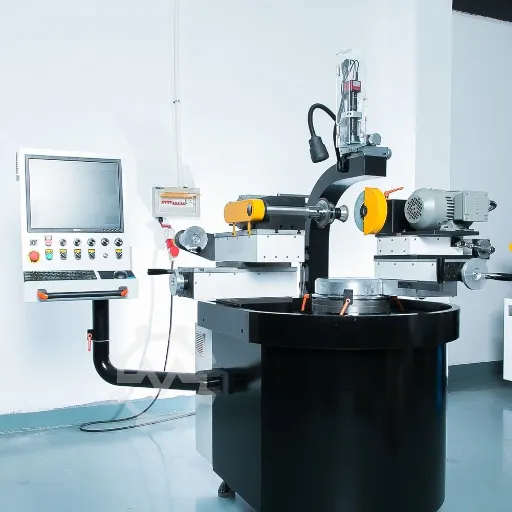
Automation of wheel dressing machines used in the 3C industry is a major revolution for the entire manufacturing sector. One of the most striking changes is the deployment of smart sensors and AI technologies. With these innovations, the machines can not only access the real-time data but also adjust accurately and conduct self-monitoring which in turn, requires very little human involvement thus overall control is assured in terms of production, which means that the manufacturers can still meet the quality standards at the same time they are taking rounds of more and more demanding customers.
The use of robotic systems for loading and unloading the tools is another revolution in automation. The robots can so perfectly collaborate with the wheel dressing machines that they will be doing the same tasks much quicker and safer than humans. This will eliminate human error, lower the risk of getting hurt at work, and free people to work on tasks that require more skills and strategic planning. The use of robots indeed transforms the whole process into a more adaptable one, thus it can easily deal with the ever-changing requirements of the 3C industry.
Besides, the automation trends are signaling predictive maintenance. Manufacturers may use IoT-empowered monitoring systems, which will facilitate real-time collection and data analysis of the performance to, not only forecast but also avert, the potential machine failures before they occur. This strategy has the effect of cutting the unexpected outages and machine life over which the manufacturers realize a substantial cost saving. It is these automation advancements that are the driving force behind increased output, eco-friendliness, and winning of the competition in the rapidly changing 3C sector.
The diamond dressing techniques have undergone incredible innovations that have together revolutionized the 3C (Computer, Communication, and Consumer Electronics) industry in terms of precision and efficiency. These techniques are quite essential to the quality and performance of grinding wheels and, thus, to the production of high-quality components. The modern diamond dressing methods are such that they guarantee the maintenance of the cutting power of the grinding wheels, hence allowing for the elimination of errors in the machining processes and their repeatability.
The main modernizing factor is that the automated wheel dressing machines are now in use. The advanced control systems of these machines allow them to achieve the highest precision and at the same time the human error. The automated systems give the dressings the same performance thus the production is of better quality and the material waste is less. Besides, such systems are often equipped with real-time monitoring capabilities, which makes it possible to adjust dressing parameters to the needs of every operation.
The application of ultra-high precision diamond tools is another significant progression. The primary goal for these tools is to produce wheel profiles with very low surface roughness and thus they are perfect for the 3C industry’s delicate components machining. The productivity of the mixing of these tools with state-of-the-art dressing machines is enhanced through the grounding of tool life and making tolerances more accurate. Such innovations are becoming mandatory when speaking about the always-increasing demands of the 3C industry, where precision and efficiency are the two sides of the same coin.
The Aerospace Industry has been positively affected by Industry 4.0 to the point of being revolutionized when it comes to wheel dressing. It is the connectivity, data analytics, and mainly automation that have led to the drastic rise in precision and efficiency. Continuous monitoring and smart dressing machines that use sensors are some of the excellent methods of producing results that meet very high-quality standards in aerospace production. The developments in technology introduce very accurate feedbacks during the dressing process that leads to less wastage and errors.
The merging of predictive maintenance systems is a significant factor that has been influenced by Industry 4.0. To be more precise, the use of data from connected machines allows the operators to foretell the maintenance needs even before the machines break down, thus reducing the time wasted on maintenance and increasing the production time to the full extent. This is of great significance in the aerospace industry where production targets have to be met despite the tight schedules, and at the same time, reliability is a must. Besides, such systems are beneficial for the longevity of dressing tools because they will not be subjected to wear and tear beyond their lifespan.
Moreover, communication between dressing machines and other manufacturing equipment is made easy by the improved connectivity. This interconnected environment not only has the advantage of supporting advanced workflows but also increases the flexibility of the manufacturing process in case of adjusting to the complexities of aerospace components. With the strict surface quality and dimensional accuracy requirements in aerospace applications, wheel dressing processes are still kept to be precise, efficient, and capable of overcoming the challenges posed by the ever-evolving demands of the industry, thanks to the adoption of Industry 4.0.
Proe Machinery – 3C Industry Applications
3C Industry – Automated Wheel Truing & Dressing Machines
This source discusses how wheel dressing machines are used in the 3C industry for precision grinding.
Proe Machinery – CNC Wheel Dressing Machines
Diamond & CNC Wheel Dressing Machines – PR-X5, PR-X3
Provides details on CNC grinding wheel dressing machines designed for precise shaping and dressing.
More Diamond Wheel – Forming Diamond Dresser
Forming Diamond Dresser
Explains the use of forming diamond dressers for shaping abrasive wheels.
Proe Machinery – Application of Wheel Truing and Dressing Machines
The Application of Wheel Truing and Dressing Machine
Focuses on the role of truing and dressing machines in precision grinding for molds and dies.
Ants Machine – Diamond Wheel Dressing
From Rough to Smooth: How Diamond Wheel Dressing Machines Transform Your Grinding Process
Discusses the transformation of grinding processes using diamond wheel dressing machines.