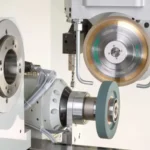
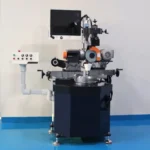
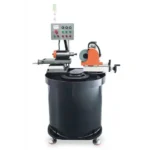
Revolutionary CNC Grinding Wheel Dresser
Transform your grinding operations with precision wheel dressing technology that delivers unmatched accuracy, reduces downtime, and maximizes productivity.


Grinding wheels are a significant part of machining and manufacturing industries, though their efficiency can be greatly compromised due to different reasons like wear, clogging, and glazing—these are Just a few among many. If a grinding wheel is not dressed at the right time, it not only cuts down the quality and precision of your work but also brings about some safety risks. Dressing is the process here and it revives the wheel’s sharpness and maxes the performance of the wheel.This guide, therefore, is all about you dressing the grinding wheel, starting from what its importance is to the diagnostic tools and techniques that are involved in completing the process. Even if you are an experienced professional, this article will still give you the necessary skills and good practices to utilize efficiency, precision, and safety to the maximum. Stay tuned to learn the maintenance of your grinding wheel and the good results that come with regular maintenance.

A grinding wheel is a machine part that is generally used in grinding machines for defining, shaping or finishing materials with an abrasive process. The most important part of the grinding wheel is the abrasive grains that are bonded together and that act as cutting edges. The use of grinding wheels is widespread in metalworking, manufacturing, and other industrial processes where clean-up by cutting is difficult because of the hardness of the materials involved, or where very precise surface finishes are required.
The quality of a grinding wheel is governed by its constituent parts such as the type of abrasive, grit size of the wheel, and the bond used to hold the grains. These factors are adjusted depending on the application and the work material. Shuttering wheels that are coarse-grit will give fast material removal while those that are fine-grit will provide a smooth finish.
Grinding wheels are very important tools that make shaping of materials and tolerance taking very precise. However, good maintenance and care are the two main factors for the wheel’s long life and performance. Regular inspection for damage, adjusting for proper mounting and operating within the limit, all contribute to the user’s ability to get the most out of the wheel and to ensure safe operations.
Wheel dressing is considered as a very important factor that can keep up grinding efficiency by reviving the cutting ability of the wheel, taking away the impurities, and keeping the shape of the wheel. With continuous usage the grinding wheel has a chance of getting dull or being loaded with material making it less capable of cutting, thus, the dressing process comes into play to get the wheel back to its original best condition.
Dressing forms such a significant part of the operation through which the removal of the foregoing material takes place- that is the swarf- which commonly blocks the abrasive surface during the grinding operation. This silting up of material can hinder the cutting action and also be a source of heat, hence, the workpiece may be damaged. The right dressing method will expose the abrasive grains and allow the wheel to perform its cutting function smoothly and with good quality. This will give rise to a smooth surface and decrease the possibility of the workpiece getting overheated during grinding.
Apart from that, the dressing also helps to keep the wheel in its usual rounded shape which is very important for precision grinding. Gradually, the wheels may get worn out and even change shapes which would make the final product not to be as required. The process of dressing returning the wheel back to its profile thus ensuring that the specifications for the undertaking are met. It thus becomes imperative that regular and proper wheel dressing is not only a factor of achieving desired productivity but also of quality assurance and safety in grinding operations.
Grinding wheels are one of the main tools of modern manufacturing, given their important functions in shaping, cutting, and finishing of metal and non-metal parts. The need for precision and accuracy in dimensions and surface finishes is one of the most common grinding wheel requirements. The grinding wheels are to be chosen according to the material to be processed and the particular outcome, guaranteeing the consistency in compliance with engineering tolerances and at the same time, lessening the waste.
In addition to precision and accuracy, durability and lifespan are important grinding wheels requirements. The manufacturers need wheels that can survive for a long time and still be used by the machine without any damage. Regular dressing helps the wheel retain its effectiveness and, at the same time, increases its usability, so that even after a long period, its performance will not be affected.
Besides, safety is one of the major aspects of concern during grinding operations. Trading wheels that are not well cared for or not correctly assigned can lead to accidents and damage to both the equipment and the operator. It is not only beneficial for the workers to avoid accidents but also to facilitate the overall process and thus it becomes an essential aspect for manufacturers through compliance with safety standards and appropriate wheel use.

Prior to the dressing process, check that all the necessary safety precautions are in place. Use safety goggles and gloves as part of your PPE to avoid getting hurt by flying debris and sharp edges. Check the grinding wheel for any damage or wear and confirm that the dressing tool is in good shape. Proper preparation aids in achieving accuracy and safety throughout the process.
Clamp the grinding wheel and the dressing tool according to the manufacturer’s instructions. Gradually bring the dressing tool into contact with the rotating wheel at the specified angle and pressure. This action eliminates the bumps on the wheel’s surface and helps to restore its form, thus giving better grinding performance. Move the dressing tool consistently to equally dress the whole surface.
Once the dressing procedure is finished, switch off the grinder and examine the wheel for an even and clean surface. Look for any uneven parts or signs of damage that may need more dressing. When you are happy with it, the grinding wheel is set for use in accurate operations. Dressing and cleaning the grinding wheel regularly not only extends its life but also makes it more efficient in future assignments.
Grinder dressing tool selection is not an easy task; it indicates that you are considering the kind of grinding wheel as well as the job’s specific headquarters. Dressing tools are to shape and condition the best grinding wheel, and their operation plus time will be depending on efficiency and precision in the dressing area. To arrive at a good decision, weigh such factors as grinding wheel material, precision level, and use frequency.
To start with, single-point diamond dressers or multi-point diamond dressers are often very effective for the general maintenance and shaping of standard grinding wheels. These tools are durable and do not vary greatly in performance, hence they can be used for most basic applications. However, in the case of wheels needing higher precision e.g. those used in fine grinding or finishing tasks, a rotary dresser would be more suitable. Rotary dressers are capable of handling intricate profiles and give high precision.
Secondly, always make the hardness of the dressing tool the same as the hardness of the grinding wheel material. For grinding wheels that are harder, a very strong dressing tool is required to effectively remove material and to make the wheel surface again. Conversely, softer wheels may only need less aggressive tools to prevent from being worn out more than necessary. It is understanding these differences that will help you buy a dressing tool that not only improves your grinder’s performance but also prolongs the life of the grinding wheel.
The dressing process’ efficiency is affected by several main factors with each one of them being particular for the quality and the performance of the grinding wheel. The factors are as follows:
Nonetheless, operators can still manage to optimize the dressing process, achieve more accurate, faster, and cheaper results, by keeping these factors in mind and being in touch with the latest technologies and industry practices.

Rotary dressers, also known as grinding tools, are very reliable and effective in the grinding process. They are able to provide the same result each time which is one of the main reasons why they are preferred. Consistent dressing maintains the profile and sharpness of the grinding wheel thus ensuring precise shaping and finishing, which in turn limits the occurrence of errors and defects in the final product. This means that less adjustment is required and thus increased operational productivity.
The other main reason why rotary dressers are so popular is their durability and longevity. Unlike other traditional dressing tools, rotary dressers can take a lot of stress and last for a long time hence they are used in heavy-duty manufacturing environments. Their strong build also means that they will not be replaced often and the costs of replacements are reduced, thus being a cost-effective solution for the long term.
Rotary dressers’ versatility has led to their use in different industries. They are often used in the automotive, aerospace, and engineering sectors to make very complicated shapes and close tolerances. The tools quicken the dressing cycles and provide high-quality output thus supporting the production of the critical components while still assuring their reliability. Furthermore, their capability of performing a wide range of grinding tasks makes them an absolute necessity for the manufacturers who want to boost their performance and at the same time cut down their downtime.
In the grinding wheel dressing process, single-point dressers and multi-point dressers vent their differences through their design, use and performance. The first ones are all about one diamond on the tip and so they are mastered in delicate and detailed dressing. Generally, these dressers serve applications where very precise shaping and high-quality surface finishes are needed. Besides, experts can position the tool exactly which is a great factor to getting such results uniformly throughout the whole operation.
Conversely, multi-point dressers are made up of a number of diamond points or clusters working together. This nicely contributes to the longevity of their use and thus they’re good for heavy-duty and high-throughput applications. Hardly any difference can be made between multi-point dressers and just-in-time inventories since they both require quick dressing cycles and horses’ life. The multiple diamond points help in the uniform distribution of wear and thus the individual diamond’s chance of damage is really low.
The task’s specifications dictate whether the single-point or multi-point dresser will be used. The former are most suitable for precision work and very tight tolerances, meanwhile the latter are the best choice in the case of strong and fast operations. Therefore, grinder wheel maintenance is effective when the right dresser is procured along with optimized performance and the shortening of downtime in manufacturing processes.
The decision between stationary and rotary dressers is determined by the particular needs of the grinding application. Stationary dressers are predominantly utilized in applications where precision is critical and the grinding process relies on high accuracy. They are relatively easy to operate, inexpensive and suitable for very limited, repetitive tasks that need well-defined wheel shapes. Nevertheless, they may getting worn faster during heavy-duty operations.
On the other hand, rotary dressers are most suitable for applications that require speed and volume or have complex wheel profiles. They are marked by their long life and fast dressing cycles, thereby fitting into the most challenging circumstances. Rotary dressers are capable of handling difficult shapes and maintaining their consistent performance even in hard conditions, which gives them an edge in flexibility and longevity in industrial applications.
Selecting the proper dresser for your application will depend on the volume of work, the required precision, and the cost considerations. Sometimes stationary dressers are able to provide the desired results for precision operations that require consistency and are using tight tolerances. However for more laborious or intricate tasks, rotary dressers offer the advantage of staying longer and achieving more in less time. By thoroughly analyzing your specific needs, you can identify the most suitable dresser that not only supports your grinding process but also minimizes downtime, is cost-effective, and easy to operate.

The use of acoustic emission (AE) sensors in wheel dressing applications is constantly increasing, mainly due to their remarkable capacity for monitoring and keeping the process precise. These sensors are capable of detecting the very high-frequency sound waves produced as a result of the grinding wheel and the dresser’s interaction. The data from these analyses provide the users with the information of the current condition of the wheel in terms of wear and dressing effectiveness, thus guaranteeing a uniform performance throughout.
One of the significant benefits that AE sensors bring is their capability for real-time monitoring. They make it possible for the immediate detection of irregularities, such as wheel overloading or excessive wear, and thus, operators are notified and can carry out the necessary corrections without delay. Such high precisions in grindings lead to the least waste of material, the maximum improvement in surface quality and the least time spent on repairs, which cumulatively results in enhanced grinding operation.
Furthermore, AE sensors are supporting the application of automation in milling by connecting with the advanced controlling the dressing process system. It thus enables the manual-free and less frequent intervention dressing process, which ensures optimum wheel condition and reflects the trend of using smart technological solutions in the manufacturing processes to the greater extent of efficiency, accuracy, and cost-effectiveness.
The incorporation of adaptive control systems into manufacturing processes is a major step in the right direction toward greater precision and efficiency. The automatic and real-time nature of the process controls, along with the use of sophisticated algorithms, maintains the quality of products and at the same time decreases the need for wastage. Adaptive control responds to varying conditions of machining which could be due to the wear of tools or changes in the properties of the material, thus enhancing reliability and minimizing downtime.
The optimization of performance without the intervention of humans is one of the major benefits of adaptive control systems. To this end, the continuous monitoring of cutting forces, temperature and other critical factors is involved, and when necessary, the systems can immediately make minor adjustments to keep stability in the process. This results in better surface finish, tighter tolerances, and longer tool life, which in turn, lower production costs and increase quality of output.
Furthermore, Adaptive Control systems have the feature of being scalable such that they can be used in a variety of industries ranging from aerospace to car production. The partnership of these systems with the new technologies like IoT and AI not only enhances their adaptability but also gives modest and data-driven manufacturing solutions. Processes are made more efficient and accuracy is improved by the adaptive control systems which have been deemed to be a reflection of the current trend of automation in the manufacturing industry thus paving the way for further inventions and competitiveness.
The dressing technology used for grinding wheels is soaring to new heights and is becoming more sophisticated as a result of the pressure to meet stringent tolerances and higher production rates along with the ever-increasing demand for automation in the manufacturing process. One of the leading trends is the pairing of top-notch sensors with machine learning algorithms, which works to optimize dressing parameters in real-time. Such a system not only helps to adjust to the grinding wheel’s condition but also substantially lowers the need for human involvement and hence, increases the productivity of the whole process.
Dressing methods that are non-traditional have started to take precedence over conventional ones and one such method is laser-assisted dressing. The range of these advanced techniques is vast as they not only work with high precision but also are very gentle on the wheel, leading to no mechanical wear at all. Moreover, their ability to work gently will soon make them a candidate for the long-term grinding wheel application as they will be able to cut the costs related to maintenance to a great extent. This essentially complements the ongoing movement towards sustainability and resource conservation in the industry.
To sum up, it is very hard to picture grinding wheel dressing technology without automation together with robots. Completely automated dressing systems deliver a consistent quality and at the same time minimize the human error. Coupled with the recent breakthroughs in IoT and AI, these systems can talk to the entire manufacturing operations to maintain the equipment in good condition and predict when to carry out maintenance. Such trends are a clear indication of the industry’s pledge to come up with smarter and greener solutions for the grinding wheel applications.

Quality surface finish is a process of dressing grinding wheel with correct and accurate dressing, which is the most important feature. Regular checking of grinding wheel condition is necessary to make sure that it is working at its best. Grinding wheels get clogged with debris or glazed over, which affects their cutting ability and results in an uneven surface finish over time. Dressing gives the wheel back its cutting edge, which in the end results in better precision and the wheel being up to the required standards.
The dressing process should be done with grinding wheel maintenance tools that are specially made for this . These tools should be well aligned , and the right feed rate must be used to prevent wheel wearing. Right dressing not only gives shape to the grinding wheel but also gets rid of the unused and clumped material on its surface. The operators should be very careful to do this in a controlled and uniform manner, owing to the fact that uneven dressing can bring about the formation of different features on the finished workpiece.
Certainly, a maintenance schedule can help in a way that it can make the grinding wheels wear and tear go down to the minimum and also produce smooth and quality surface. Moreover, good coolant flow management during grinding and dressing operations along with the decline of heat and friction are responsible for the extension of the wheel’s life and the preservation of the integrity of the workpiece. By sticking to these best practices, manufacturers can not only achieve excellent surface finishes but also remain their production efficiency at maximum levels.
Regular maintenance and care of grinder machines are crucial when it comes to their longevity, precision, and good performance. Neglecting maintenance can result in bad performance, lower production, and higher operating costs. A proper maintenance schedule should consist of inspecting, cleaning, lubricating, and fine-tuning the machine.
Visual inspections should be done by the operators each day in order to catch any signs of wear, damage, or misalignment. Look for fissures or the grinding wheel surface being worn unevenly, bolts being loose, and check the coolant flow system so it is not only working but working in the best way possible. Industry insiders claim that regular visual inspections done every day can bring about a 30% decrease in unpredicted machine downtime.
The machines need to be cleaned thoroughly to get rid of dirt, dust, foreign materials, and leftovers that might be there due to grinding activities. The attention should be focused on more than just the machine but especially the machine’s moving parts. Application of the right amount of oil or grease to the main parts like the spindles, bearings, and guides lowers the friction and heat ups the grinder. This method of prolonging the life of a grinder is up to 40%. Always use the product’s recommended lubricants for the best results.
Keeping the grinding wheels regularly dressed is very important for maintaining the precision of grinding and the quality of the surface. Grinding wheel misalignments might bring about finishes of lower quality and hence more waste material. Research shows that the cutting performance is enhanced and the consistency in performance during different production cycles is assured by dressing the wheel at prescribed intervals.
The coolant system has a very important role in getting rid of the heat generated during the process and thus preventing the workpieces from getting burnt due to heat. Regular cleaning of the coolant tank, proper filtration, and ensuring that the right concentration of coolant is used are ways of keeping the system failure at bay and also cooling efficiency high.
Periodic calibration is a must for all grinder machines if they are to have and be maintained with accuracy and precision. The use of tools like dial indicators and calipers helps in determining whether all axes are operating as per the manufacturer’s specifications. Proper calibration leads to machines that conform to tolerances and hence the reduction in material wastage.
Meticulously keep records of every single maintenance activity performed. Automation tools can schedule and track preventive maintenance tasks, which means that there’s reduced chances of neglecting the critical care steps. Studies show that having documented maintenance schedules can, on average, extend the life of grinder machines by 15%.
Manufacturers can maintain production quality, cut down machine downtime, and protect large investments in grinding machines by following these maintenance practices which are backed by industry data and trends.
Excessive force is one of the most common mistakes when dressing a grinding wheel. Too much pressure may cause the wheel to break, alter its shape, and lose its efficiency. Always apply steady and controlled movements to the grinding wheel in order to keep its intended shape and be balanced at the same time.
Another mistake that often occurs is forgetting to examine the dresser tool’s condition. A dull or broken dresser will make the results uneven and reduce the quality of the wheel’s performance. Check the dresser and replace it regularly so that you have the correct one functioning before each use.
And lastly, disregarding safety precautions is a big mistake. It is a must to wear eye and hand protection during the process of dressing a wheel, as small particles or dust can lead to injuries. Also, make it a point to turn off the grinding machine and lock it securely before you commence the dressing process as a way of keeping the working environment safe. These mistakes can be avoided, and the dressing process performed with safety and efficiency.
A: The in-machine wheel dressing technique is the practice of dressing and truing the grinding wheel during its attachment to the grinding machine, a surface grinder, for example. The dressing process basically reestablishes the grinding wheel’s surface texture, gets rid of excess bonding material or clogged abrasive grains, improves wheel performance and surface finish, and is vital for precise grinding throughout the grinding process to attain the highest possible efficiency and life.
A: The in-machine wheel dressing is done using the grinding machine’s dressers and dressing tools allowing the dressing to be done rotarily or the wheel to be single-point trued without its removal. On the other hand, such methods as external dressing machines, and manual dressing sticks use the opposite technique. In-machine methods for grooving, like rotary diamond roll and multi-point diamond dressers, allow dressing across the wheel and radius dressing for wheel profile control while still keeping machine commands and necessary cycle time.
A: The tools types used in the machine are rotary dressers (rotary diamond roll), single-point diamond dresser, multi-point dressing diamonds, dressing sticks, and diamond dressing wheels. These dressing instruments can have small diamonds embedded or larger dressing diamond tips and are chosen according to the grinding wheel, the amount of material to be removed, and whether truing or profiling is needed.
A: The right time to dress the in-machine wheel is when the wheel surface is clogged, losing sharpness, giving poor surface finishes, or the wheel is not rotating cleanly through the contact with the other wheel. The usual indicators would be increased cutting force, poor surface finish, and decreased grinding efficiency; thus, dressing is always required to improve cutting action and remove excess bonding material, either throughout the grinding process or whenever the wheel has been trued.
A: Indeed. In-machine radius dressing and traverse across the wheel techniques using appropriate dressers allow precise wheel profile control. Rotary dressing and dressers designed for wheel profile can dress a wheel to a specific wheel face or wheel profile required for precision grinding, enabling accurate grinding while preserving the surface geometry of the wheel.
A: The choice of dressing method—rotary, single-point, or multi-point—determine the degree of wheel sharpness, surface quality, and the rate of material removal. The rotary diamond dressers and multi-point diamond tools provide consistent dressing for light to medium pressure and continuous use, while single-point diamond dressers are used for high precision truing. Proper dressing is always important as it prevents clogging, improves grinding efficiency, and extends wheel life, especially for abrasives like aluminum oxide or different wheel compositions.
A: The type of abrasive (aluminum oxide vs others), work material, volume of material to remove, and the surface finish required are the factors that dictate the dressing technique to be applied. Harder materials or precision grinding application may require small diamonds, single-point diamond dressers, or more frequent dressing, while rotary dressing may be the preferred option for high stock removal tasks. It is important to match the dressing wheels and methods with the grinding process to ensure accurate grinding and optimal wheel performance.
On-machine Precision Preparation and Dressing of Ball-Headed Diamond Wheels
This study discusses the precision dressing of diamond wheels to maintain geometrical accuracy and sharpness.
Read more on Harvard ADS
Truing and Dressing of CBN/Seeded Gel Hybrid Wheels
An analytical and experimental investigation into the truing and dressing processes of grinding wheels.
Read more on UConn Digital Commons
Centerless Grinding Machine with Truing and Dressing
This document explores the truing and dressing of regulating wheels in centerless grinding machines.
Read more on University of Michigan