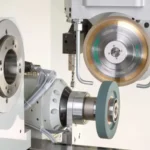
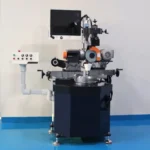
Revolutionary CNC Grinding Wheel Dresser
Transform your grinding operations with precision wheel dressing technology that delivers unmatched accuracy, reduces downtime, and maximizes productivity.


CNC grinding machines have modernized the manufacturing world by offering unbeatable accuracy and efficiency in shaping materials. Of course, the said operations are the software configurations that dwell inside a machine. They act as the controller for the system with the dresser at their core. This article will embark on looking at the exotic possibilities where excellent software coupled with an application yield unlimited precision or give complete automation to the more sophisticated tasks or otherwise simplify the manufacturing line. This framework in such a way would enable knowledge to acquire an understanding of basic control principles. Or they will highlight to give significant insights for improvement of such a system to dresser grinding technology in an area where the reader might be inclined.

CNC grinding is the precision engineering operation that includes the auto work of grinding machines with the CNC control. With this operation, higher precision and surface finishing can be derived with many materials, such as metals, ceramics, and composites. Through the induction of the CNC programs, the entire grinding unit becomes automated and programmed. powered by long-term instructions and results.
CNC grinding is an operation that brings together many components but, in this case, the grinding wheel works for the cutting of coolants. Precision is perhaps the greatest concern in CNC grinding. CNC-controlled systems ultimately move the turning workpiece, the speed, and movable grinding wheels aside for synchronized precision. When analyzed correctly, this forms entities with very narrow tolerances. This is why CNC grinding remains particularly important in the context of industries like aerospace, medical device manufacturing, and automotive manufacture.
Key Insight: Also, CNC grinding has proved to be a very versatile technology that can be applied in diverse situations: cylindrical grinding, surface grinding, and through-feed grinding to name a few. The sheer ability of CNC grinding to supply micro-accurate finishes around complex shapes and contours has made this technology an actuator in producing components demanding high-quality production and a high degree of functionality. CNC grinding has an efficient automated nature that practically eliminates machining errors and reduces waste of material.
CNC grinding is of utmost importance in today’s modern manufacturing setup. CNC grinding is pertinent in providing exceptional precision well within specification limit, offering uniformity and speed with improved performance. This implies that the design-type tolerances are maintained, ensuring that replacements and errors in measuring do not occur, thereby reducing material and time wastage. Its importance to the aerospace, automotive, and medical industries can never be discounted. These industries rely on components having a high degree of precision and quality.
One of the invaluable benefits of CNC grinding is its versatility in handling engineered materials. No doubt, metals, ceramics, and composites can be so shaped by grinding into any structure. On the other hand, CNC grinding helps to fabricate complex designs and shapes that, otherwise, could have been impossible using conventional techniques.
Manufacturing Advantage: Also, CNC grinding brings about speed and scalability to production. Ensuring an automated system translates to a consistent output, even with mass production, prospecting a leaner maintenance of work staff. The use of CNC grinding encompasses erstwhile precision, flexibility, and productivity in catering to production with highly demanding requirements. Quality plus high-standard efficiency earmark CNC grinding in accordance with compatibility and standards.
The main component at work is the software on the CNC grinder machine used to achieve precision and efficiency in industrial machining processes. By utilizing this software, one can insert or create programs that will instruct the CNC grinder machine to perform various tasks with high accuracy. With certain preconfigured procedures, software sees to it that the workings are always performed in accordance with a certain performance standard to minimize, for that matter, human error. These software programs are necessary to grind extremely complex geometries that are particular to this industry.
One key attribute is the adaptability of a CNC grinding machine software-one that offers the flexibility of changing settings to cater to different materials and grinding techniques for optimal results in different kinds of production needs. There is sometimes a nice feature of such software: An easy-to-use interface familiar to most, one wherein even less experienced operators may manage complex operations most efficiently. Now, there is an important criterion to consider when evaluating a tool: Will it be able to bring more productivity through automation, repeating the same task without a pause, less downtime, and continuous machine operation with minimum supervision?
Furthermore, the ability of software to monitor and collect data during the grinding process is crucial. This real-time feedback enables the operator to make changes, which in turn guarantees that every single product complies with preset and expected values. The evolution of advanced software solutions has meant that they are also compatible with currently available technologies, such as various sensors and system-connecting features, to provide a supportive cadre for predictive maintenance and increased equipment performance. Taken together, these capabilities make CNC grinding machine software a necessity, especially in today’s consumer- and end-user-driven interactive environment.

Building upon a few crucial elements CNC (Computer Numerical Control) systems bring in together in order to deliver smooth and precise machining. Essentially at the heart of it all is the control unit, which acts as the brains of the system; its main role is to read coded instructions in the form of G-code and so convert it into actions that direct the movements made by the machine. This control unit is what explains the precision in cutting, grinding, or other similar activities, thereby ensuring almost ultimate precision accuracy.
Vital to the control unit is the motion control subsystem, which sorts out moving machine parts. The movement control subsystem is deemed to consist of servo motors and drives that control linear or rotational motion along designated axes. It is this motion control component that ensures the accurate and smooth positioning in respect to the control units’ instructions. It is interesting to point out that CNC machines hold an exquisite ability-saying yes to intricate designs and consistency cause repetition.
Technical Note: Feedback systems under CNC control are also designed to include measures such as encoders and sensors which continuously observe performance and adjust it. These devices gather data of position accuracy, speed, and real-time machine condition. The feedback signal generated by these systems is then indicated to the control unit, which subsequently may help in making automatic corrections as per requirements. By incorporating these critical in-line components, CNC control becomes capable of offering very high degrees of accuracy and reliability for different manufacturing processes.
Consistency and accuracy lie at the core of enhancing precision in CNC controls during industrial workflow. CNC programs are so critical in vectoring machine components to move with high precision, making errors almost non-existent: avoiding threads line off rotation and part precision parameters within dimensions with uniform tolerances, even in high-volume producing situations.
Furthermore, refined feedback systems continue to improve machine precision by constantly tracking their status. Operational measurement tools can sense the slightest variation in the axis, speed, or other parameters and swiftly feed this new data back into the controlling device that receives instant adjustments. This ensures that the machine continues to work according to plan. This would mean great control over the appearance of some residues and with the end product arriving at an acceptable standard.
In addition, it’s worth noting that CNC control integrates highly sophisticated software that will simulate the process before actual production begins. This simulation capacity is necessary to identify potential errors or inefficiencies. Parallel to this, the modification can be carried out without material waste or damages. Herein lies the essence of CNC control, since it combines precise programming with real-time data collection while providing control through preproduction testing from various industries- vital for delivering precise and consistent results.
The integration of CNC technology with grinding machines significantly enhances their precision, efficiency, and versatility. CNC systems allow the grinding process to be programmed and controlled with exceptional accuracy, ensuring consistent results across diversified applications. This automated assistance, in turn, results in a reduced margin for error thus making it possible to produce highly complex profiles. Profiles that would be next to impossible or extremely difficult for the manual process to handle.
Increased efficiency is another added benefit CNC grinding machines bring. Due to the use of programmed execution, these machines are able to perform more complex grinding activities with very little manual intervention. The result is a higher speed of output and lower labor costs. Also, CNC would help reduce the waste of cutting media, further boosting the productive capacity and the environmental sustainability of manufacturing processes.
CNC grinding machines are most versatile and suitable for different industrial applications. One would be able to quickly change over from one task to another with different materials, requirements, or settings with very minimal downtime. Thus, industries like the aerospace, automobile, and tool manufacturing gain a lot from this technology. The flexibility imparted by the CNC will ensure some of the most accurate and efficient metal working jobs that are both cost-effective and dependable.

One of the features of modern CNC programs in grinding that attract the most attention is their offline capabilities. Off-line software allows operators to create and modify their machine tooling programs well away from the machine processes (even though they are in the workshops on the factory floor) down into the machine tool itself. This convenient and time-saving feature allows the most accurate and experienced designing while the machine is being operated at the same time. Since the minimal machine downtime obtained through offline programming, the machine’s availability is constantly being increased.
One of the big benefits of offline programming is virtual testing and verification of machining programs before implementation. Before even implementing this horrendous program on to the machine (along with the potential of disastrous collisions), we have a sort of nice debug set up right in the computer chair. Potential mistakes can be caught, tool paths can be optimized, and corrections made effectively without causing any physical damage to the machine. This results in a higher level of precision production and less usage of costly materials, it saves huge savings to the process and makes the whole thing cost-effective and environmentally sustainable.
Efficiency Benefit: Alongside these features, offline programming provides high flexibility to handle very complex geometries or very high performance requirements with precision. This facilitates the designing of paths for the demanding industrial applications that have very stringent requirements, in turn, rendering smooth operations and improved quality. On the whole, offline programming considerably enhances the flow of work and expanding the potential reliability factor in CNC grinding processes.
In study of the CNC grinding system, various important criteria need to be taken into account in order to tell the best choice for the best performance in an industrial setting. Usage must always be given prime consideration – for any software to be dubbed best fit, it must have easy-to-use tools and a friendly interface to allow an operator to adapt to that new system easily so that the grinding pilot can be in total control of the grinding process. Such software typically makes use of precise simulation models and easy tool movement adjustments that permit error-free. or mostly error-free, programming with little learning curve.
Efficiency is also an essential feature that the software should offer. The software must provide robust optimization processes, such as the inclusion of adaptive machining, considered necessary to provide incessant injection to the productivity. Compatibility is another essential aspect that must be put into consideration when the SCADA system is selected, so it is adaptive to the different machine models kept together in the network. Lesser-playing factors may affect the ability of the SCADA system to process the needs of a variety of industrial production systems. Equally important, another point is the need for high security and strong performance mechanisms to avoid the types of software errors that set off stoppage and, in some major cases, financial losses.
The crucial aspect that requires prior evaluation is the options for customization and support. Being in the know of what every software can do is crucial for the purchaser wanting to adapt it to their various producing needs. Proper customer follow-up, such as regular updates and tech support, ensures that the product’s functionality and the customer’s satisfaction will be sustained over a long period. If all factors are carefully taken into account, manufacturers can pick out CNC grinding software for both meeting their current requirements, and becoming a greater driving force for growth and innovation in existing production processes.

Grinding wheels are suitable for CNC abrasive processes, which means that there is a high need for such wheels to shape, finishing, and remove material from workpieces in a highly accurate manner. The wheels come in different types- where are they further subdivided are in terms of applications, materials, and people’s contribution with other the technical operations. Some of the basic types of CNC grinding wheels include the following:
Selection of the correct wheel ensures optimum performance and safety. The material of the workpiece is certainly an important factor when choosing a grinding wheel for a specific application. Here go, in detail, the most vital criteria:
For grinding applications, the material of the workpiece determines the selection of grinding wheels concerning bond grade and grit size. For instance, for grinding soft materials like aluminum or other non-ferrous metals, a wheel with a softer grade of bond and coarser grit is apt. On the other hand, very hard materials, for example, steel or cemented carbide, require a silicate bond with an extremely hard grade of the siliconaceous bond and very hard abrasive grit, to work effectively and deliver good accuracy.
Grinding has lots to do with what the final finish looks like. Smaller grit sizes (around 24-36) mean quick material removal at the cost of a rough finish. Likewise, larger grit sizes (approximately 80-120) follow better finishing tasks.
It is the bond that holds the abrasive grains together. The most common bond types are vitrified, which offer rigid strength and thermal stability; resin, offering shock absorption and flexibility; and metal, generally used in heavy-duty grinding operations.
The shape of the wheel is important-that is to say, straight or straight cup wheel-whatever enhances finishing results. Larger wheel sizes suit heavy-duty grinding while smaller wheels suit precision works best suited for places tight with space.
During wheel selection, ensure that the wheel operating speed is at its maximum capacity, in RPMs, which is compatible with the regular grinding machine speed. Over-speeding the wheel may cause fracture and lead to potential accidents.
Compatibility with a coolant is important in case the grinding is tough to incite. Thus, the grinding wheel’s compatibility with coolants ensures heat dissipation, which shields it from thermal harm, increasing both the life of the wheel and workpiece.
Safety Standard: Find wheels certified by ANSI or ISO to ensure their compliance with industry safety standards They are also labeled as per usage to help you work with more clarity.
These criteria, in conjunction with emerging technologies in the field of grinding-and grinding exclusively to ensure higher efficacy, minimum breakdown, and ultimately overall better outputs in grinding applications-can get into operation.
Quality in grinding wheels directly affects the precision of grinding operations. High-quality grinding wheels are produced from uniform abrasive materials and bonding agents and thus provide consistent planing performance. These uniformities are important because variations in the wearing process could lead to nonuniform amounts of material removal; casting could induce very significant transactions with precise measurements on the spirit. On the other hand, poor-quality wheels may develop problems like nonuniform wearing or breaking, thereby impeding accuracy.
Precision relies on the grinding wheel’s ability to keep its shape and cutting capacity during the longevity period. The long-term cycle with excellent resistance to wear imposes a minimal intervention on the geometry of the wheel during service, something very consistent for consistent performance. Greater wear over a short period, however, is destructive. Even a small deviation in surface finish and dimensions results in an unacceptable product obtained using such an early-failure wheel. Thus, top-quality wheels are more likely to make the compromise redundant while maintaining the strict application tolerances.
Also, high-end grinding wheels enhance machine rigidity and operator control. Properly designed wheels reduce vibrations; in turn reducing wear over time and allowing smoother operation — both significant variables in producing precision. If vibrations caused by a poor wheel deform precision results and even damage the workpiece on the wheel, good investment in wheel quality can certainly result in optimization of the grinding process and industrial application when precision is crucial.

In many cases CNC grinding is unequivocal and precise in providing high quality output data for various applications. Here is a preview of the critical steps that come into focus with this discipline.
This implies at first preparation of the CNC grinding machine: the workpiece is secured properly and a proper grinding wheel must be installed. To fine-tune the machine, the operators establish parameters like speed, feed rate, and depth of cut depending on the workpiece material. For proper and correct results, maximum alignment and calibration by that point should be realized.
Setting up a detailed program means that the CNC machine will follow all the grinding paths, and angles and be engaged in performing sequences. This program is put into the CNC system, which through its control instructions will lead to machine motions so that it runs the commands by itself to execute the grinding operations. Before the machine gets going, the program is mostly inspected so that the operators run a simulation focusing on frequently identified inaccuracies.
After setup is done, engine processes start engaging. The grinding wheel is being guided with proper precision by the CNC that will ensure complete control and consistency during the operation. Other than the diameter of the wheel, thereafter, the process will be rigorously monitored and adjusted until the finished part is insured to be perfect functionally using precision measuring techniques. area Defined at the end of the day.
The auto grinding makes the craft even more splendidly, keeping precision thereby. So if a craftsman sets up the CNC, he would always yield a reproducible good achievement. CNC grinding is too very much loved, owing to its improvement in efficiency and quality, In carefully selected industrial sectors, provisions may open the gates for well-controlled principles, dustpilicated in the aerospace, autos, petroleum, and other manufacturing processes.
The principle point of difficulty is invariably maintaining a repeatable high level of accuracy over a substantial, growing timeframe. The wearing-out of grinder tools leads to slight measuring errors, spoiling the final product. Regular maintenance, calibration, and periodic changing of certified tools are essential to eradicate such willingly ruinous misalignments and keep up with the high untampered-on performance.
Another point of issue is configuring the process for complex geometries or materials. In the context of CNC grinding, tearing to the upside selfwise in smart ways, blasting through the differing properties of its materials, such as a considerable variety of hardness, hardly boots up the procedure. Accurate and appropriate arrangement of program arcs while reducing the crystal gorge is thus a glorious way to address this issue of jamming a hundred-percent valid insulation.
Heat generation in the grinding for materials weighs heavy on the mind of the material engineer. The heat, if excessive, could ruin the grinding tool and the material being ground, bringing in cracks and distortions. Therefore, careful control of the grinding speeds using proper cooling systems and proper techniques can help to minimize mechanical damage. It is most essential to maintain the quality and effectiveness of materials.
When you begin grinding, you have to choose the right grinding tool to get the best output. This is because different materials need to be cut down with specific abrasives so that the process may be effectively, with high precision, and generate as little heat and wear as possible. In brief, understanding the material properties and matching them precisely with the right grinding tool helps maintain precision and save the tool and material.
Cooling systems are important practices as well. Excessive heat generated during grinding causes cracks, distortions, and a disruption of structural stability. By literally cooling the grinding zones, the cooling fluids or air are capable of keeping the temperature way down, thus preventing damage and, at the same time, prolonging the life of the tool. The cooling system must cool down at the grinding interface for maximum effectiveness.
5.5 Control of Grinding Speeds Finally, the control of grinding speed is of utmost importance, about both safety and quality. High-speed grinding could result in overheating and subsequently structural collapses, while low-speed grinding could result in inefficient material removal. Properly controlled speed, matching the material specifications and thickness, would produce uniform operations and accurate results. Based on these best practices, the quality of its material would be enhanced, its lifespan extended, and all the safeguards for safe and efficient grinding in place.
CNC wheel dressing software is a special type of software that enables CNC machine tools to control wheel dressing processes. The software provides the programmer and the operator with an intuitive conversation interface or PC-based HMI for setting up the machine efficiently, the definition of wheel shape or tool position, and process parameters of grinding wheel dressing. The software has open architecture, allowing for program creation, integration of machine control, support for grinding cycle, and ability to work in parallel with other studer grinding software or StuderWIN to allow seamless access to grinding programs and integrate the grinding and dressing workflow.
CNC wheel-dressing software allows simulated and optimized grinding cycles and dressing processes to be run with the help of (simulations) and StuderSim functionality on the CNC machine before live application. This saves programming time and minimizes trial and error. Conversely, various features like process visualization, workpiece-oriented grinding programs, guides for inputting grinding data and parameters that help the operator or programmer perform his task, optimization of an application, increased throughput, and cost-effectiveness during setup and production on the shop floor.
It offers solutions for wheel dressing and grinding operations, including programming of all standard cycles and special functionalities for tasks like internal cylindrical grinding, as well as thread grinding. The software’s fairly good menu and effective help system mean that some parts can do programming tasks, define their own grinding cycles, and prepare part programs for complicated profiles like cones and threads. This minimizes programming time and offers great support to an operator or a programmer.
Many CNC wheel dressing packages are designed to be intuitive with touch screen human-machine interfaces (HMI), conversational menus, and programs aimed at workpieces for use by shop floor operators as well as experienced programmers. Furthermore, an open architecture and clear software structure make it easy to set up the machine and insert parameters and enable access to grinding programs with next to no training for the operator, while the program still has more features than are necessary for the operator.
The software facilitates personified menu and data input screens for wheel shape definitions and tooling, assisting in defining profile, cone, plunge, and other relevant geometric parameters. The structured program system (part program) inside the software remembers the grinding cycle, grinding data, and tool definition, ensuring not only the easy recall of dressing processes but also tool definitions amidst grinding programs and during set-up and changeover.
Your software helps optimize processes through a slew of features, including simulated and optimized grinding cycles, tool sets to estimate specific grinding time, workpiece-oriented program creation, built-in help systems, guided menus, visualization tools, and troubleshooting. By recommendation, there might be parameter adjustments with input parameters. By providing a step-by-step guide, you lead an inexperienced operator towards the most cost-effective and repeatable solution. If the operator is supposed to perform, the software can be extended with specially tailored solutions and support modules to meet any particular requirement.