Revolutionary CNC Grinding Wheel Dresser
Transform your grinding operations with precision wheel dressing technology that delivers unmatched accuracy, reduces downtime, and maximizes productivity.


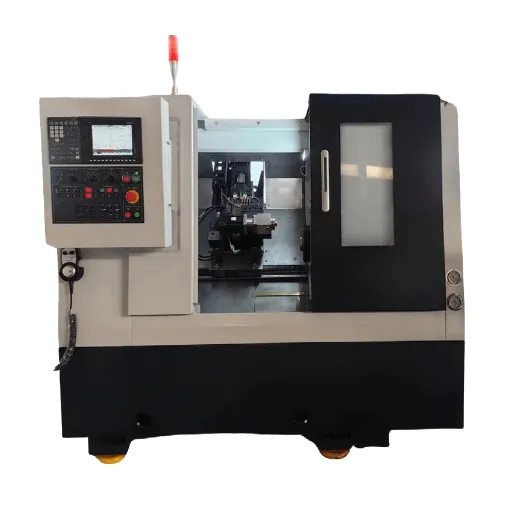
The quality and condition of the grinding wheel determine the accuracy of the grinding operation. Grinding wheel, when used, ends up losing its efficiency and the accuracy of the machining processes is hampered. Wheel dressing machines provide that needy assist. Dressing wheel machines ensure that the dressing is done to sharpen the grinding wheel, remove irregularities, and maintain a profile so that it performs correctly. This article will delve into the key role wheel dressing machines play in precision ground work, the advantages of such machines, and the various technologies and methods to cater to different industries. The article is useful to both well-versed machinists and the neophytes on the grind, as they will all better appreciate how wheel dressing machines help in achieving more efficient results.
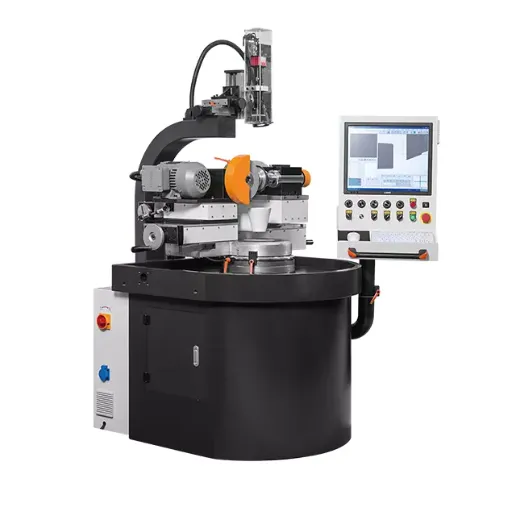
A dressing machine is used to maintain the cutting surface of the grinding wheel for all intents and purposes into their original shape and function. As they are used, grinding wheels become worn out, glazed, and clog with debris, thereby affecting their efficiency and accuracy. The grinding wheel must be reprofiled and cleaned by the said dressing machine so that it shall remain sharp, accurate, and able to give consistent results.
The dressing process itself refers to the removal of excess material from the surface of a grinding wheel to expose fresh grains and to restore the contour or profile of the grinding wheel as desired. Dressing machines can be with mechanical, abrasive, or diamond-tipped tools, or even a combination of these. The process may be one of general maintenance or one for setting up for very accurate work, depending on the application.
There are different applications of these machines; in fact, certain disciplines demand that the grinding operations meet stringent specifications, such as automotive, aerospace, and tool manufacturing. In the respect of dressing the grinding wheels to their highest level of performance, which in turn contributes to the entirety of machining activities with respect to efficiency, accuracy, and economy, the dressing machine holds an important place.
Wheel dressing is a vital procedure in precision grinding to maintain the grinding wheels in proper shape, sharpness, and cleanliness for best performance. Grinding wheels get clogged with debris or may lose their shape with time, thereby affecting the surface finish, accuracy or speed of the grinding operation. Thus, if the wheels are adequately dressed, their cutting ability of the wheels and their consistency can then be regained by the machinists to meet the high-grade finishes needed in precision grinding work.
In a way, wheel dressing improves accuracy in the machining processes. An untreated or worn grinding wheel might result away from deviations in dimensions and surface irregularities on the workpiece. Dressing enables the grinding wheel to retain its intended geometry ensuring the possibility of equal contact with the material under grinding process. This is extremely crucial, especially in aerospace and automotive industries, where precise tolerances are a prerequisite for safety and functionality of components.
A further important reason for dressing the grinding wheel is to improve efficiency and prolong the life of the wheel and the machine. Grinding wheels that do not see frequent dressing tend to wear unevenly, causing an increase in loading, energy consumption, and, needless to say, strain on the machine. It means a dressed wheel will be able to perform grinding operations smoothly and reliably, thus increasing overall production efficiency and reducing downtime for replacement/maintenance. Thus, wheel dressing is critically important to ensure the quality, accuracy, and economy of precision grinding operations.
The wheel dresser is considered an essential tool in the grinding sector. It finds applications in areas demanding precision and efficiency, and here are some of its prominent applications discussed in detail:
Wheel dressers are used extensively in the manufacturing industry to keep the grinding wheels in good working condition. Any wheel would restore sharp cutting edges to produce very fine components cut out of steel, aluminum, composite alloys, etc. In automotive manufacturing, wheel dressers play a big part in grinding engine parts to strict tolerances.
In the aerospace sector, highly accurate components like turbine blades and structural members are demanded. Wheel dressers keep the grinding wheel in shape during the machining of superalloys such as titanium and inconel so that the parts can meet the stringent standards for safety and performance.
In tool manufacturing and engineering applications, precision grinding plays a pivotal role. Wheel dressing ensures precision when grinding tools like end mills, drill bits, and cutting blades. This is imperative in providing very fine geometrical accuracy and surface finish in applications such as optics, electronics, and medical devices.
Wheel dressers are employed in the construction industry to dress grinding wheels that work on and finish very hard materials, like concrete, stone, and asphalt. Also, frequent wheel dressing of grinding tools in heavy machinery applications benefits in refurbishing components efficiently.
Wheel dressers working for Research and Development stand to gain comparative advantage due to the advances made in CNC technologies. Laser-guided and automated wheel dressing systems allow ultra-precise profiling and dressing of ultra-hard materials such as diamond and CBN wheels. Such technologies find particular use in the fields of advanced material research.
Latest researches reveal that with regular wheel dressing, energy required for grinding could be reduced by 30%, and grinding wheels substantially extended in life. The consequence is a reduction in operational costs while bearing a lesser environmental footprint of wastage.
The range of applications for wheel dressers is ever-increasing with the advent of technology, and their higher productivity, accuracy, and sustainability achieved in various industries cannot be overemphasized.

Wheel dressing has undergone a revolution because of super precision and efficiency offered by CNC Technology. CNC, or Computer Numerical Control, automates the dressing processes so that the results are consistent and errors are minimized. By programming the desired parameters, CNC dressing machines can create profiles of complex shapes with high accuracy to adhere to the precise specifications required by different applications.
Another great advantage of CNC technology in dressing machines is that it can handle all sorts of wheel types and all manners of dressing tasks. They can be programmed to carry out complicated dressing operations on both conventional and superabrasive grinding wheels. Such versatility makes them prime movers in industries like aerospace and automotive where in addition to precision, versatility is paramount.
In addition, CNC technology will increase the productivity of work, minimizing downtimes and optimizing the use of grinding wheels. Dressing works are automated and thus reduce setup times and allow better wheel adjustments while the machine is running. So the working efficiency is higher, and will extend the life of the grinders, leading to reduced cost and more sustainable operations.
Variable speed features afford grinding machines a great degree of versatility and efficiency. Speed can be adjusted according to the material and the work, providing operators with flexibility for finer results. The speed can be changed when grinding soft metals, hard ceramics, or applying fine finishes to prevent damage to the workpiece with utmost productivity.
One other good thing about variable speed is that it offers some protection to the grinding wheels from being quickly worn out. Lowered speeds may be chosen for precision work, thus saving the wheel from excessive wear, while high speeds will quickly remove material. So this versatility cuts the cost of operation, being a result of frequent replacements and maintenance.
In addition, variable speed can make an operation safer and easier to control. The operator can slow down the machine for complex or difficult jobs, improving accuracy and minimizing the chances of mistakes or accidents. Variable speed also enhances productivity and therefore safety, as a result of having sustained optimum performance for each specific requirement.
Adjustable RPMs provide one of the very important features contributing to the efficiency and accuracy of machining processes. By providing situational spindle speed adjustment with respect to material and operation at hand, this option ensures best cutting condition because each task. Generally, soft materials need high spindle speed, whereas harder materials do best with slower speeds. This adjustability minimizes tool wear and prolongs the service life of machining equipment.
The most influencing feature of adjustable spindle RPM is gaining accuracy. Slower speeds can be adjusted for very detailed or delicate operations so refiner cuts are possible and minimize errors. On the contrary, faster speeds are great for swiftly stripping away a greater amount of material. In essence, the possibility to set the speed suited to the process makes it possible to minister to high standards in multiple machining applications; hence, the overall performance measure of workshop equipment is improved.
In addition, adjusting the spindle speed leads to cost saving potentials over time. By giving an RPM that best goes with the requirement, users avoid exposing tools and machinery unnecessarily to wear and tear hence saving on maintenance costs. Besides that, energy consumption is being minimised and faster output will be achieved; that is environmentally friendly. Basically, adjustable spindle RPM goes hand in hand with optimizing performance and productivity in machining nowadays.

Both manual and automatic wheel dressers assist in restoring the cutting surface of grinding wheels but differ significantly in their working and operational efficiencies.
Manual wheel dresser used to be operated directly by a human being. They are simple, usually inexpensive, and suitable for small jobs or workshops where time and money are a prime consideration. However, manual operation requires a fair level of skill and experience to obtain consistent results; interrupted by this is the longer time needed for its working process-that affects production in some high industrial sectors.
On the other hand, automatic wheel dressers provide effectiveness and consistency. The systems are built to operate with minimum human interference; hence, they are the most appropriate equipment for applications that require large or continuous production. An automatic system provides all the accuracy and repeatability levels necessary to eliminate human errors and maintain wheel performance uniformity over time. On the other hand, automatic machines, although expendable as an upfront cost, in many operations may prove worthwhile through increased production and precision.
In a nutshell, the choice of manual or automatic wheel dresser depends on workload, budget, and degree of precision. Manual wheel dressers are indeed affordable to small workshops that have meager production demands, while bigger production environments requiring efficiency and consistency would go for the automatic kind.
Dressing solutions may be spaced offline or online based on how and where the wheel is dressed. In the offline approach, dressing or gliding takes place away from the grinding machine, using a separate dressing unit altogether. This arrangement is chosen when the highest accuracy is to be maintained while grinding operations are going on and when the workshops have extra equipment and basically emphasize less downtime to enhance production.
Online or in-process dressing occurs while grinding on the grinding machine. It is suited to operations calling for frequent adjustments or for working under constant wheel conditions, as it tends to get rid of any delays involved in transferring the wheel for dressing to a separate unit. These types of systems are mainly suitable for quicker scale production where time ID really simplicially.
The choice between offline and online solutions depends on factors like production scale, machine capacity, and priorities for the respective workflows. Offline dressing would be preferred for detailed preparation while the option for a spare machine exists, whereas online dressing keeps the processes simple and highly utilized in settings where highest efficiency and minimum interruptions are desired. In their proper context, both methods can advance accuracy and speed.
Customizable wheel dressers are amongst the most vital tools that match grinding solutions with production requirements. They enable manufacturers to change dressing parameters; for example, speed, pressure, and frequency, according to changing material needs and application goals. Having such systems increases flexibility so that grinding processes can achieve the highest level of precision and surface finish with the least amount of waste.
Some of the key advantages of such wheel dressers are that they improve efficiency in various workflows. For intricate detailing, this adaptability allows for high accuracy and repeatability. And in high-volume production environments, the ability to customize helps provide quick changes to allow for a slick operation with decreased downtime and increased throughput.
Contemporary unique wheel dressers lean toward user-friendliness. User-friendly features include adjustable settings, simple controls, and sturdy construction. Designers strive for maximum versatility and ease of use to improve the grinding quality in industries and resolve the emerging challenges in manufacturing.

The performance of dresser machines affects grinding wheel tolerances greatly. When properly dressed, grinding wheels are kept to geometrical accuracy and surface finish, both parameters being crucial in tolerance specifications for industrial applications. Consistently dressed wheels produce consistent results and reduce opportunities for error, thereby enhancing the overall quality of the finished product.
Correct dressing removes abrasive grains that are worn or clogged, while re-profiling the wheel to its desired form and cutting edge, minimizing dimensional deviations, and allowing the grinding wheel to function satisfactorily over a longer duration. Lack of proper dressing means a rough surface on the wheel that damages the workpiece, rendering tolerances void and vastly increasing scrap.
Moreover, modern dressing machines equipped with advanced controls allow the operator to achieve fine adjustments such that the grinding wheel strictly conforms to specification. Uniformity in this operation means better tolerances from one production cycle to another, thereby increasing productivity and reducing reworks. High tolerances are attained from a mixture of machine settings, operator competence, and periodical maintenance of the dressing equipment.
The process of dressing is important to maintain the wheels for optimal grinding. Whatever the method used for dressing of a grinding wheel, they aim to remove dull abrasive particles or any type of loading or debris present on it, to restore the sharp cutting edges of the wheel to make them usable for grinding. This means if the grinding wheel is dressed well, its shape and surface integrity will always be maintained throughout production, thereby performing consistently. Constant and accurate dressing will avoid defects from occurring and favor uniform results in machined parts.
The moment and frequency of dressings are perhaps the catching points for the abrasive to work. Overdressing may bring about unnecessary wear and hence shorten the life of the wheel, while underdressing may lead to harm to the quality and cause inefficiency. Operators should put into consideration the work material, grinding wheel condition, and application requirements to commute a dressing schedule. The grinding wheels must be periodically examined and measured to ascertain performance inconsistencies that may be bridged by dressing.
Another consideration is the appropriate tool selected for dressing. The various tools-diamond dresser or rotary dresser-should be selected as per the type of abrasive wheel and the kind of finish required. Good maintenance of the equipment, such as dressing the tools to ensure sharpness and to be free of contamination, also aids in efficient dressing. Applying proper techniques along with good tools and maintenance, operators can tremendously enhance the performance of abrasives, which is a prerequisite for high efficiency and precision in grinding operations.
Machine selection and maintenance are critical for the best performance in grinding operations. It should be apt for the specific materials and abrasive processes involved. For example, the speed, power, and stability of the machine must be suitable for the requirements of the abrasive wheel and the material being finished. It just has to do with the wheel being operated at an optimum speed to avoid overheating and to achieve a precise finish.
Maintaining the machinery in good condition will guarantee that performance remains consistent, and any operational inefficiency is averted. Cleaning, lubrication, and inspection of the components for wear and tear and recalibration of some settings will help maintain consistency of performance. Also, checking for potential problems regularly will allow for such problems to be addressed before productivity is impacted. Preventative maintenance and corrective maintenance may be used to reduce downtimes and hence extend the operational life of the equipment.
To put it simply, operators should be trained adequately to handle the machinery effectively and safely. Improper handling or lack of understanding might lead to damage to the equipment or poor results. Operators should be given clear instructions and ongoing general training so that they are constantly aware of their assigned machine’s functions, safety features, and adjustments. Considering these factors, grossly, the machinery will be capable of performing at its best while increasing grinding efficiency and quality.

Differing workpiece materials require different dressing tools and techniques. For example, hardened steel or ceramic materials may need diamond precision dressing tools. Simply put, the dressing wheel should be chosen based on the hardness of the piece and its geometry for an acceptable finish.
Consider whether the wheel dressing machine will remain compatible with existing grinding systems and the size of the unit. Wheel dressing machines are CNC-based nowadays and offer a very high level of control and automation, thereby improving productivity and reducing the possibility of operator error.
Before installing the new equipment, place a value on the initial investment and compare it to the long-term savings expected. The global grinding machines market was valued at 4.51 billion dollars in 2021, and from 2022 to 2030, it is expected to grow at a CAGR of 5.9%, as per recent market insight reports. Investment in advanced technology, such as in an automatic wheel dressing machine, will ensure that labor costs are minimized, cycle times are short, and output quality is increased.
Wheel dressing machines need to be serviced and maintained to extend their operating life. Keep in mind the availability of spare parts or technical support from the vendor. Maintenance systems that are easy for the user will help reduce downtime a lot.
The equipment must adhere to industrial safety standards. The machines should include safety features, such as automatic shutoffs, dust collection systems, and adequate enclosures. These features can help provide for the worker’s safety. Complying with machine safety standards, e.g., ISO 16089 for grinding, will increase the dependability of its use.
Advanced dressing machines require operators with a high level of knowledge. Invest in training for operators and maintenance teams on current technology in CNC controls, dressing patterns, and troubleshooting.
Making considerations such as these before implementation will enable a business to realize maximum grinding efficiency, while being safe and sustainable. Solutions offered by new means of the latest technological advancements in grinding technology thus continue to provide greater accuracies, reduced costing, and adaptable manufacturing processes.
Buying dressing machines has a host of advantages for grinding operations, chiefly contributing to improvements in precision, efficiency, and life of the tool. The most important aspects are consistent dressing of the grinding wheel, which translates into improved accuracy of the manufacturing processes. The operators can monitor less downtime because the dressing is automated. This, paired with the consistent surface of the wheel, diminishes operation time, thus improving the quality of the end product.
Depending on the budget, the initial purchase of dressing machines could be quite high. These expenses operate as an offset to reduction in the operational expenses – decreased manual interventions, increased wheel wear, and defective parts. Besides, modern machines usually carry some energy efficiency. This would mean even lesser energy costs. Long-term savings, therefore, justify the investment from a manufacturer’s standpoint looking to optimize their production lines.
Key Consideration: Before acquisition and investment, companies must perhaps assess their particular manufacturing requirement. Will a dressing machine be economically viable in view of the number of parts produced, the type of material, and tolerances required? For high volume production, the money saved in time resources probably overweighs the capital cost. Other manual methods of dressing would still suffice and prove economical for less volume operations.
The future of wheel dressing technology is tuned to automation and precision manufacture. Automation is predicted to get into the limelight and benefit the dressing process by cutting down errors and gaining efficiency in volume operations. Integrated systems, sensor-based and monitoring tools will help in real-time adjustments thereby preserving quality and cutting wastage.
The development of the green concept is thus another major trend in the process and materials. As industries look toward green alternatives, research in low-energy abrasive processes for wheel dressing will certainly get an upward thrust. These innovations promote high productivity with stringent environmental regulations, thus making them sustainable in the long run.
Digitalization and smart technologies also contribute to shaping the evolution of wheel dressing. Utilizing data analytics and AI-based solutions can help to optimize maintenance schedules, predict wear patterns, and guarantee operational efficiency. These tools promote predictive maintenance of equipment, thereby extending the lifespan of dressing equipment-a win for manufacturers as it means less downtime and fewer costs!
A: Dressing machines are indispensable manufacturing tools for dressing and truing grinding wheels. The dressing process is intended to maintain the shape and sharpness of grinding wheels to achieve high-quality finishes on materials of various coatings.
A: One method of grinding wheel dressing is through the removal of the worn layer of the grinding wheel using a diamond grinding wheel (rubbing wheel) or a grinding wheel dresser. The process restores the diameter and surface profile to the original form so that it will function properly during the grinding process.
A: The truing spindle in dressing machines forms a very crucial element for exact dressing of the tool. It was used for aligning and adjusting the grinding wheel so that the wheel would have the correct shape, diameter, and radius for its performance.
A: Indeed, dressing machines may be customized to suit particular working requirements. That is to say, custom solutions are often offered by manufacturers which may incorporate features like different wheel pack configurations and infeed rates, all suited for varying sizes and shapes of grinding wheels.
A: Dressing machines usually operate on multiple axes to properly execute movements required during the dressing. Linear axes include those for infeed and positioning, whereas rotational axes manipulate the adjustment angle of either the grinding wheel or the dressing tool.
A: Yes, such are now designed and manufactured to be easy to use. Most of them comprise user-friendly interfaces and automated operations that do not require lengthy operator training so that the valuable time can be utilized for actual production.
A: Dressing machines’ grinding wheels are often made of carbide and diamond, and each type of grinding wheel used has a different performance and service life. Hence choosing the most appropriate one for the particular grinding application is always necessary.
A: Dressing machines improve production efficiency by ensuring the best performance of the grinding wheels for excellent surface finish and less machine downtime. Dressing keeps the wheels at their best, hence helping manufacturers save on production time and force.
A: Dressing is sharpening and reshaping the grinding wheel surface, while truing is correcting the shape of the wheel with respect to its axis. Both processes are important to maintain good working condition of grinding wheels used in dressing machines.
A: The diamond grinding wheels provide the following advantages: more durable, longer life, and capable of grinding harder materials. Their tough construction and ability to keep very sharp cutting edges put them among the common choices for dressing machines where high-quality finish is desired.