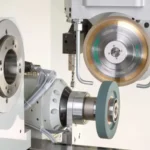
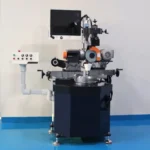
Revolutionary CNC Grinding Wheel Dresser
Transform your grinding operations with precision wheel dressing technology that delivers unmatched accuracy, reduces downtime, and maximizes productivity.


Grinding wheels have many applications in daily use, with fine grinding and finishing of many materials with precision and efficiency. With time, the wheels lose their shape and may become worn, clogged, or misshapen, thus affecting performance and accuracy. In such cases, wheel dressing comes into the picture, which is a process needed to restore the formation of grinding wheels to their optimum level of functionality. This article shall lead you into the inspiring world of wheel dressing, highlighting the machines employed for this purpose and the methods used to achieve maximum grinding wheel performance. Whether you’re a seasoned professional or a novice, this eye-opener will keep you informed on…

Grinding wheel dressing machines stand as furnishing instruments used to restore the grinding wheel’s shape and remove dirt against polishing performance and precision. Dressing tools operate to either dress or cleanse the wheel surface, ensuring that abrasive cutting remains fair and efficient. The process serves to control the accuracy required for the machining operation and to defend from defects brought about by a blunt or clogged grinding wheel.
In operation, the grinding wheel and dressing tools are located one next to another to effect the exact contact between them. This comprises the dressing tool stripping away the grinding wheel’s outer layer to expose fresh abrasive particles for the best cutting action. Depending on the design of the machine, these operations can be performed manually, semi-automatically, and fully automatically, adjusting dressing parameters for depth and speed, accordingly, concerning the grinding job involved.
Through consistent maintenance via dressing, grinding wheels can be fostered with a long life, consequently operating at their best. They are useful in holding the wheel in its original shape and form of texture, thus contributing to accurate results by reducing the time wasted in wear of the wheels. This is an industrial necessity when the environment requires accuracy and reliability, holding the finish quality of products and machining as well as floor productivity status in its hands.
The CNC Grinding Wheel Dressing Machine affair nub thbooks vital components enabling it to function and maintain wheel quality with precision. Reshaping and sharpening of grinding wheels to enhance their performance and prolong their lives constitutes the dressing step. The most critical elements are exerted below:
All the above key components promise that a CNC grinding wheel dressing machine qualifies for precise and efficient machining processes in various industries.
Anything existing in the realm of traditional dressing offers a rather hands-on approach or employ very simple machines for shape and maintenance of grinding wheels; such methods typically require the ability and experience of the operators for consistent results. While traditional methods will suffice for fairly basic applications, they are less able to ensure precision and repeatability once more elaborate machining requirements come into play. Lastly, these operations, being consummately time and labor intensive, tend to grossly affect the efficiency of any industrial scenario with a healthy demand on its processing.
Modern dressing methods, however, use an advanced technology through CNC (Computer Numerical Control) systems for increased precision and control. These systems automate the adjustment of speed, depth control, and positioning, minimizing manual intervention to a great extent. Modern methods can change a lot because they are adaptable, which are great for complicated machine jobs and big factories. This, thus, increases efficiency while assuring consistent quality in different applications.
| Aspect | Traditional Methods | Modern Methods |
|---|---|---|
| Precision | Limited precision, operator-dependent | High precision with CNC control |
| Efficiency | Time and labor intensive | Automated, faster operations |
| Repeatability | Inconsistent results | Consistent, repeatable quality |
| Flexibility | Limited adaptability | Highly adaptable to complex tasks |
| Cost | Lower initial cost, higher long-term costs | Higher initial cost, reduced long-term costs |
| Application | Simple operations | Complex industrial applications |
Evaluating against modern technologies, the traditional methods in the face of the new technologies lag behind with respect to accuracy, efficiency, and flexibility. Manual actions typically come with a few limitations-these include human intervention of the manufacturing process, ability to produce within set working hours, etc., which modern techniques are beyond. They also serve the purpose of reducing cost in the long run. Traditional technology may hence come in handy in simple operations where there are no rigorous expectations; however, modern dressing means do offer high demand for complex industries looking for machining solutions with a scale.
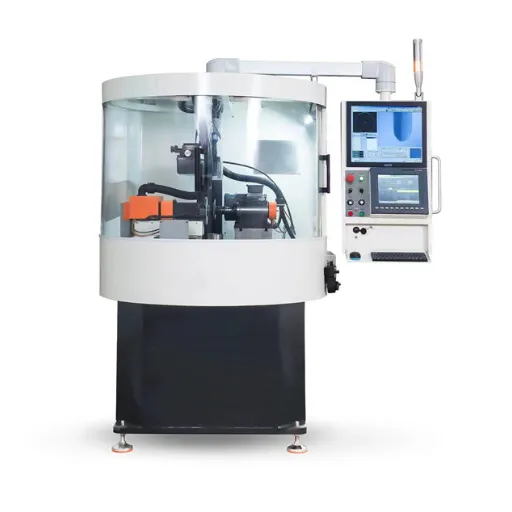
Modern activities in CNC grinding and wheel dressing have completely made their way into machining precision and efficiency aspects. CNC (Computer Numerical Control) charts allow grinding operations to be made in the automated and precise manner to ensure repeatability in production quality and reduced human error. These machines control grinding variables by utilising the most advanced software, giving them the capability to work with very detailed designs, tight tolerances, and quick production cycles.
The big change in wheel dressing is that these machines work to dress grinding wheels in the machine itself. This setup allows the wheel to be dressed directly in the CNC machine, limiting downtime and ensuring prudent conditioning of the wheel throughout. This, in turn, takes away any manual handling involved, thereby improving safety and productivity. These days, advanced sensor technologies are also being installed, monitoring wheel wear as it happens and giving another dimension to accuracy and tool life.
The use of adaptive control systems is yet another critical development. A data-driven algorithm adjusts grinding conditions dynamically with real-time feedback. By taking into consideration fluctuations in material properties, grinding pressure, or wheel condition, an adaptive control system enhances efficiency while minimizing tool damage. Our innovations are pushing the boundaries even further in terms of performance and reliability in CNC grinding and wheel dressing applications.
A CBN grinding wheel is important in precision dressing because of its exceptional hardness and thermal resistance. These features make them ideal for cutting and shaping materials that are hard to the highest degree with the least amount of wear and durability. Precision dressing demands the wheel to be sharp with the right form and, due to the undying wear resistance of CBN, the grinding wheels stay effective throughout their extended use in producing consistent results.
Another essential advantage that CBN grinding wheels provide is the ability to maintain their cutting capacity at elevated speeds. High-speed grinding allows better coordination with CNC machinery and less heat generation during grinding. Less heat means longer wheel life and also protects the surface of the dressing material from thermal damage, thus maintaining surface integrity and dimensional accuracy.
Lastly, the usage of CBN grinding wheels amplifies the manufacturing capacity of a firm by minimizing its time for maintenance and replacement. Theoretically speaking, longer life, alongside the maintenance of precision over extended operations, reduces costs and increases productivity. Due to this, CBN grinding wheels find unusual practical value in those industries where accuracy, reliability, and efficiency come together, such as aerospace, automotive, and tool manufacturing. In contrast, the unique combination of durability and performance defines CBN grinding wheels in precision dressing applications.
The uptake of automation in dressing machines in manufacturing has increased levels of efficiency, precision, and consistency within the processes. Automated systems reduce interference so cycle times will be fast, concentrating on repeatability now, finishing dressing operations accurately while reducing errors made by operators.
Automation has allowed dressing machines to adjust to different conditions and absorb production requirements. With the sensors and the software being highly capable, they ensure updates on the machine’s operation taking place and allow it to be adjusted at any time. With these adjustments to the level of control, it is possible to manufacture components with precision to meet the strict quality criteria set in various industries, including aerospace and automotive.
Automation offers an additional level of cost-effectiveness by lessening labor requirements and curbing material wastage. The automated dressing machines ensure that tools and abrasives are used more by way of consistent excellent performance through extended cycles. Hence, from an operational perspective, this spells cost benefits; from Green manufacturing, promotion of sustainability. The automation now ensures that productivity gains can be achieved by manufacturers while working accurately and reliably through the process.

In improving the precision and accuracy of grinding applications, wheel dressing machines have come into big consideration. A lot of grinding wheels become worn, and at some point, they deviate from desired parameters. If the wheels are dressed once in a while with an accurate dressing method, every cut or grind will be of equal specification. Irregularities that come through time due to clogged or worn surfaces on the grinding wheel are thus eliminated, allowing for tighter tolerances on manufacturing a good finish surface on the workpiece.
In addition to the above, these machines are able to dress the grinding wheel with various degrees of automation to reduce human errors and achieve repeatability, making sure that it keeps the grinding wheel in a constant shape and sharpness that is highly demanded during the precision grinding operation of large quantities. This can greatly help produce a highly finished product, which, if not possible, could serve as time-consuming rework during production or adjustment.
The longer the life of the tools can be attributed to the wheel dressing machines for keeping grinding wheels in excellent condition for a very long time. Such wheels are capable of giving consistent performance and may rarely require replacement, thereby lessening plant downtime and cutting operational costs. The emphasis being laid on precision while cutting waste and raising efficiency marks these machines as the machinery needed in numerous manufacturing processes.
Working in operational efficiency is key for cutting production costs while ensuring the highest standard output. If processes are composed of streamlined variations and minimization efforts are channeled toward creating wastage, there exhaust fewer resources into production; therefore production costs go down. Dressing machines are pivotal in maintaining such efficiency by ensuring that a grinding wheel is kept in teasing condition. A thoroughly dressed grinding wheel performs well, actually, reducing material loss and precision tolerance.
Another second level of operational efficiency is reducing downtime. Productivity shoots up as machinery works uninterrupted, and adherence to delivery deadlines becomes a waif. The maintenance schedule facilitated by any dressing machine would rarely allow unplanned breakdowns to interrupt production. This smooth and predictable operation results in low repair costs and thus allow even greater allocation of resources to production activities.
Lastly, reduction in costs through efficiency bonds always for the long-term sustenance. The lower operational costs increase competition in the marketplace while taking along profitability. On the other side, guess is to improve efficiency in resource usage, reduce waste, contribute fulfilling their corporate social responsibility as companies, and gain operational benefits. This singular conformity of efficiency and cost reduction is the basic foundation applied toward successful manufacturing.
Achievements in grind-wheel prolongation directly contribute to enhanced efficiency and lowered operational costs in industries. Longevity depends largely on the materials employed, keeping the abrasive wheel in good shape, and the application of best-use practices. The amalgamation of good-quality raw materials with precise manufacturing ensures that the adolescents sustain being used time and again for a significant period. The better the durability, the fewer wheel changes will have credited to much saved cost and less downtime for production processes.
Keeping grinding wheels fit for application over the longest possible time requires timely maintenance and correct handling. As a routine operation, the operators should check the wheels for signs of wear, cracks, or damages before using them. Likewise, storage of the wheels in an environment dry and clean, and one where no extremes in temperature exist, would contribute greatly to preserving the quality of the wheel. Apart from that, making use of the appropriate grinding wheel for any operation saves it from undue stress that might shorten its life.
Adhering to suggested operating speeds and pressure values increases the life of the grinding wheel. If working conditions remain as stated in the limits of the grinding wheel, there will not be undue stress or compromise on its performance. Today, newer technological developments, such as automated monitoring systems, can be used to take action against incipient problems and enforce correct usage. The combination of these will help industries achieve better longevity of the grinding wheel, thereby increasing productivity and cost advantages.

There are mainly three types of dressing machines used for industrial purposes—this is based on nature; it is manual, semi, and fully automatic. Each one is meant for a particular operation, depending on the situation: use of machine for precision, frequency of being used, or level of automation involved.
Manual-Type Dressing Machines are operated by an individual worker and thus would be used when smaller-scale dressing jobs have been worked on, where utmost precision could be discharged. These machines have the lowest price and are very easy to operate; however, to get uniform results, these good operators would be required.
Semi-Automatic Dressing Machines are considered to be a perfect balance between manual control and automation. The equipment allows automatic control of parts of the process – for instance, control of feed rates or dressing patterns – while leaving the operators the flexibility to customize controls in some other ways. These machines would perfectly fit medium-scale applications wherein repetitive, though slightly versatile, requirements are involved.
Dressing machines that are fully automatic entails large-scale or high-precision operations with little human intervention. Having a set of particular configurations, this type of dressing machine will conduct dressing with utter consistency and precision. These modified operational qualities add to their time efficiency and labor efficiency, hence attuned to high-production requirements of industries.
When selecting a dressing machine, priority should go to those specifications specific to the manner of operational execution of the machine and its outcome. Factors of consideration include precision accuracy, working speed, and intended application or materials. If the precision accuracy is of a very high order, then it should be maintained for the entire dressing operation. Machines that generally incorporate precision controls or monitoring systems are favorable in industries where very tight tolerances are necessary.
The working speed is another very important specification since it has its direct relation to the productivity of dressing. High-speed machines can be used in large-scale production to reduce the cycle time by far. However, speed must not compromise the quality of the dressing, primarily when dressing is performed on products containing delicate materials or intricate designs.
The compatibility of the materials and the adaptability of the machines for these materials or applications stand very critical in choosing the right dressing machine. Machines designed to handle more than one type of material or for different applications provide an added layer of versatility. For instance, machines that offer adjustable settings or have interchangeable parts are able to meet various demands without sacrificing efficiency or effectiveness. All these factors ensure that the chosen equipment meets the operational goals, as well as industry requirements.
| Specification | Importance | Considerations |
|---|---|---|
| Precision Accuracy | Critical for quality output | Look for precision controls and monitoring systems |
| Working Speed | Affects productivity | Balance speed with quality requirements |
| Material Compatibility | Ensures versatility | Choose machines with adjustable settings and interchangeable parts |
Vendor support is paramount in the selection of dressing machines because excellent customer service ensures smooth operation and swift problem resolution. Ideally, the vendors would offer support services such as installation, maintenance, and troubleshooting. Proper support services minimize downtime and facilitate recovery from technical or operational dangers that develop in the life of operation.
Integration is also important, to make sure that the dressing machine can do so with your systems and processes in place. Flexible options for connectivity give such machines the advantage of better workflow integration; seamless integration, therefore, eliminates any chances of bottlenecks to your operations and optimization of your overall production line efficacy.
Vendor evaluation in selecting the vendor round out least. The best vendor will always have his name associated with equipment for timely support aid and integration. Incumbent operations will be running smoothly and efficiently. Evaluating such parameters during vendor selection prevents interruptions, aligns equipment cost with operational objectives on the long run, and maximizes investment.

Dressing machines have to be strictly maintained with good care to ensure optimum performance and longevity. The following are some maintenance practices and considerations that are being followed with respect to industry standards and recent changes:
Industry Insight: Such a routine practice serves to increase the lifespan of dressing machines and simultaneously improves their productivity and efficiency. According to recent industry research, companies that have an intensive maintenance program for their assets report a reduction of 40% in equipment downtime. This means less loss of revenue and stability in operations. Check the manual to get precise maintenance instructions depending on the type of the machine.
While proper maintenance can preclude many problems, common issues of dressing machines might still crop up. The most common problem is uneven dressings, for example, due to worn or misaligned components. Troubleshooting would involve inspecting the machine for wear and ensuring the parts are adequately alignedfollowing the user manual. Cleaning of the dressing tool and inspection of its condition are also means of addressing this problem.
Other issues may include overheating during operation, which may result from insufficient lubrication, overuse, or debris inside. The fix would be to check that the lubrication system is working properly and apply lubrication as required. Then, clean the whole machine to get rid of any debris or blockage and consider shortening operation cycles to prevent overuse. Make sure to consult the maintenance schedule recommended in the manual to keep recurring overheating issues at bay.
Sometimes machines go through a loss of precision; it is often because of component misalignment or errors in software calibration. If it happens, recalibrate your machine following the manual, then check if it is all fixed tightly in the right place. Regular software updates and calibration per the schedule will keep this issue from popping up again. Simple tests and scheduled maintenance per the manual can greatly enhance the long-term performance and reliability.
| Issue | Cause | Solution |
|---|---|---|
| Uneven Dressing | Worn or misaligned components | Inspect for wear, ensure proper alignment, clean dressing tool |
| Overheating | Insufficient lubrication, overuse, debris | Check lubrication system, clean machine, shorten operation cycles |
| Loss of Precision | Component misalignment, calibration errors | Recalibrate machine, check component alignment, update software |
The appropriate features and maintenance will surely prolong the life of your grinding wheel dressing machine. Considered from an up-to-date industrial approach, here are some long-taken-for-granted facts and recommendations to make it run at peak performance:
Dust and debris accumulation reduces the efficiency and accuracy of any grinding wheel dressing machine. A report from Modern Machine Shop suggests that machines cleaned daily, operate 15% better than those cleaned once a week.
Keeping moving parts lubricated ensures that no wear can take place and the machinery will run smoothly. Industry experts report lubricants should be applied according to manufacturers’ recommendations to avoid damaging the machines. The use of synthetic lubricants, characterized by longer-lasting properties, in fact, has led to a 20% reduction in downtime.
The individual components like spindles, bearings, or gears, upon wearing, over time affecting their accuracy and further leading to a failure of operation if not kept in check. A survey among maintenance professionals concludes that if worn-out parts were refreshed proactively, the life span of a machine can be increased by up to 30%.
Most of the recent grinding wheel dressing machines are computer-controlled. In light of keeping the technological edge, increasing the software’s routine update and calibration are top requirements. Research has stated that on average, precision in machines having outdated software degraded by 25% within two years.
State-of-the-art sensors and IoT (Internet of Things) technologies can be used for the real-time monitoring of the conditions of the machines, e.g., their temperature, vibration, and operating speed. Integration of IoT tools into maintenance strategies has been shown to reduce unexpected downtimes by 40%.
Important Reminder: Carefully observing these methods and taking advantage of advancements in machine care will greatly improve the overall efficiency, dependability, and longevity of your grinding wheel dressing machine. Keep in mind that preventive maintenance is like putting a few pennies into a kitty as opposed to selling a kidney to repair or replace an entire system.
A: A wheel dressing machine for raw material manufacturing is a specialized tool used to reshape and maintain grinding wheels for their optimal performance during the grinding operation. These machines are necessary to keep diamond and CBN grinding wheels, which are typically used for hard materials, precise and efficient.
A: The wheel dressing process consists of truing and dressing of the grinding wheel using a diamond dressing tool. It restores the shape of the wheel, removes any debris, and exposes fresh abrasives onto the working surface, which makes the wheel more efficient in cutting and increases its lifespan.
A: A dressing machine can take in a variety of wheels, such as diamond wheels, CBN wheels, and silicon carbide grinding wheels. These machines may dress several wheels at once, which enables increased production of raw materials.
A: CNC grinding wheel dressing machines, including the DM-12 CNC, carry out dressing with high accuracy and high levels of automation. They are capable of dressing precision contours in vitrified wheels; they work offline, which keeps the grind operation going and improves efficiency.
A: Features like variable speed control, solid construction, digital display for user-friendliness, and the ability to treat different wheel shapes should be considered in the selection of a wheel dressing machine. Machines suitable for high-precision usage, with long service life, will gain an advantage during continuous use.
A: Yes, the wheel dressing machines are specifically for hard materials. The diamond grinding wheels and other superabrasive tools they employ can best dress wheels used in grinding harder materials to ensure better performance and life of the grinding process.
A: Inspection during the dressing process or post-dressing is done to ensure the quality and accuracy of the grinding wheels. Through each dressing cycle, it is highly advised to conduct an inspection to check for irregularities or wear. Any irregularity or wear has implications for the grinding operation and the end product.
A: The oscillation during the wheel dressing process offers a mechanism for dispersing the contact of the dressing tool over the wheel surface. It ensures the entire diameter of the wheel receives an even dressing; hence, this improves the performance of the wheel and increases the useful life thereof.
A: Yes, there are independent machines that provide the option of offline dressing of wheel packs. Such facilities allow the user to dress the wheels without the need to halt operation during grinding, thereby offering greater versatility and efficiency to the raw material manufacturing.
A: Customer-specified spindles for a dressing machine bring greater variety in customization as well as compatibility with different grinding assemblies. Therefore, it ensures that it can dress wheels for particular applications, resulting in improved grinding and product quality.