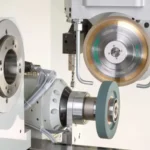
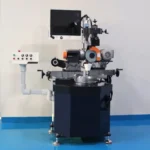
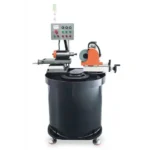
Revolutionary CNC Grinding Wheel Dresser
Transform your grinding operations with precision wheel dressing technology that delivers unmatched accuracy, reduces downtime, and maximizes productivity.


The right tools are essential for keeping grinding wheels in optimal working condition. A grinding wheel dresser is an indispensable manual tool that restores grinding wheels to their original sharpness and precision, ensuring peak performance. Whether you’re a seasoned professional or an enthusiastic hobbyist, mastering the art of dressing a grinding wheel will extend its lifespan and dramatically improve your work quality. This comprehensive guide explores everything you need to know about grinding wheel dressers—from their purpose and operation to selection criteria and maintenance best practices.

Grinding wheels constitute a critical component in modern machinery, specifically designed to cut, shape, and finish manufactured materials. Constructed from abrasive particles bound together by specialized bonding agents, these tools efficiently remove material and shape workpieces with remarkable precision.
The primary function of a grinding wheel is to abrade workpieces to achieve desired shapes, dimensions, and surface finishes. Their versatility spans across numerous materials—from metals and stones to ceramics—making them indispensable in industries including automotive, aerospace, and construction.
Automotive
Engine components, brake systems
Aerospace
Turbine blades, precision parts
Construction
Stone cutting, surface finishing
Manufacturing
Tool sharpening, metal fabrication
Recognizing the connection between grinding wheel performance and product quality highlights the importance of proper maintenance. A well-maintained wheel prevents improper material removal, reduces wasted machine time, and ensures accurate results across all applications.
Grinding wheels require proper dressing to achieve maximum performance, extend wheel life, and maintain precision results. The dressing process eliminates loading caused by clogged debris and worn abrasive grains, allowing fresh grains to perform the cutting action and deliver consistent finishes.
Grinding wheels become loaded and begin cutting improperly, often generating excessive heat and producing results beyond normal tolerances. This diminishes workpiece quality and poses risks to both the wheel and grinding machine.
Beyond cleaning, dressing maintains the grinding wheel’s exact shape. With continuous use, wheels lose their original contour, resulting in workpiece inaccuracies. Regular dressing restores the profile, ensuring precision and efficiency in both industrial and artisanal applications.
Manual grinding wheel dressers are operated by hand, offering simplicity and cost-effectiveness for wheel maintenance. These tools excel in low-volume operations and applications requiring precise, customized adjustments. Operators maintain maximum control throughout the dressing process, though achieving consistent results requires developed technique and a steady hand.
Automatic dressers represent an advanced alternative, delivering enhanced productivity and consistent performance. Operating through programmed controls, these devices offer state-of-the-art precision while eliminating human variability. They function optimally in industrial environments with high throughput demands, providing long-term benefits in time savings and consistent quality.

Manual grinding wheel dressers represent the most economical approach to grinding wheel maintenance. The initial investment remains relatively modest, making them ideal for operators with budget constraints or those engaged in smaller-scale projects.
Their simple construction with minimal moving components means maintenance costs stay low, and repair needs are rare. This not only preserves capital but also reduces downtime—critical for smaller operations where efficiency directly impacts profitability.
Manual dressing provides exceptional control and precision—fundamental factors for optimizing grinding wheel performance. Operators gain direct oversight during the dressing process, enabling real-time adjustments based on actual wheel conditions.
The precision achievable through manual dressing stems from the operator’s ability to assess the grinding wheel’s current state and respond appropriately. Visual imperfections such as uneven wear or diminished sharpness can be addressed immediately through controlled dresser movements.
Low initial investment and minimal maintenance requirements keep operational costs manageable.
Direct operator control enables customized adjustments for specific wheel conditions and requirements.
Compatible with various grinding wheel types, enhancing overall utility and workshop flexibility.
Operators can make rapid decisions and adjust processes on-the-fly for optimal outcomes.
Manual dressing proves particularly valuable for specialized grinding tasks requiring careful attention and precision. Small, intricate work benefits significantly from the flexibility and adaptability that manual dressing provides, enabling customized solutions that automated systems cannot match.
For precision applications, manual dressing ensures substantial operator control, reducing the risks of workpiece waste and surface damage. This makes it an invaluable tool for producing precision-finished products where quality cannot be compromised.

Begin with a thorough examination of the grinding wheel. Check for visible cracks, chips, or damage. Never use a damaged wheel—it poses serious safety hazards and can produce catastrophic failures during operation. If any damage is detected, replace the wheel immediately.
Ensure the grinding wheel is firmly mounted on the grinder and running at proper speed. Position the dresser securely, maintaining stable grip throughout the operation. Stability is essential for both physical safety and achieving quality results on the grinding wheel surface.
Position the manual dresser against the rotating grinding wheel with light, controlled pressure. Move slowly across the wheel face to prevent chipping. Dress the entire surface systematically to remove debris and restore the wheel profile. Continue until a uniform surface is achieved with no visible irregularities.
After dressing, inspect the wheel surface to confirm uniformity and proper profile restoration. The dressed wheel should exhibit fresh abrasive grain exposure and consistent geometry across its entire face.
Skipping PPE such as goggles, gloves, and masks exposes operators to injuries from flying particles, dust, and sparks. Always wear appropriate protective gear before beginning any dressing operation.
Tools mismatched in size, type, or condition can cause accidents or produce substandard results. Always verify that your dresser is suitable for the specific material and grinding wheel before use.
Working too quickly leads to errors such as uneven surfaces and poor finishes. Take adequate time to follow proper procedures, ensuring both accuracy and safety throughout the operation.

Maintaining dresser cleanliness is essential for preserving effectiveness and extending tool life. After each use, remove loose debris and metal particles using a stiff brush or clean cloth, taking care not to scratch the tool surface.
For residue buildup or grease accumulation, use a mild detergent diluted in water and scrub gently with a soft brush or sponge. Avoid abrasive cleaners that could damage delicate tool components. After cleaning, dry the dresser thoroughly to prevent rust development.
Significant wear indicators such as visible flat spots, uneven surfaces, or chips signal the need for evaluation. These issues compromise how effectively the dresser interfaces with the grinding wheel and can produce inadequate results or wheel damage.
Minor issues can often be addressed through low-cost repairs. Lightly worn areas may be smoothed through resurfacing, and material buildup can be cleaned. However, if the dresser no longer maintains proper alignment or continues underperforming after routine maintenance, replacement becomes necessary.
Successful dresser selection requires understanding the material and grinding process while considering wheel composition, size, and hardness. Harder grinding wheels demand stronger, more precise dressers capable of adequately resharpening and reshaping the wheel surface.
Operational demands such as accuracy requirements and frequency of use also influence selection. Applications prioritizing finish quality may benefit from precision-focused dressers, while high-volume operations require durable options with superior wear resistance for extended service life.
Mechanics of rotary dressing of grinding wheels
Published by ASME Digital Collection, this article explores the mechanics and forces involved in the rotary dressing process for grinding wheels.
Read more here
Friction improvement via grinding wheel texturing by dressing
Published by Springer, this research discusses the techniques and benefits of grinding wheel texturing through dressing.
Read more here
Effects of dressing parameters on grinding wheel surface topography
Available on ProQuest, this study examines how dressing parameters influence the surface topography of grinding wheels.
Read more here
The history of grinding
This book provides a historical perspective on grinding tools, including manual grinding wheel dressers, and their evolution.
Read more here