Revolutionary CNC Grinding Wheel Dresser
Transform your grinding operations with precision wheel dressing technology that delivers unmatched accuracy, reduces downtime, and maximizes productivity.


When precision machining and attendant cutting operations are needed, the choice of tools is one of the main determinations of efficiencies, service life, and performance. Among the prominent options are CBN (Cubic Boron Nitride) and carbide inserts, with each bearing particular characteristics and suited for certain applications. But how really are they put up against each other? Whether you’re trying to fit their attributes into a cost scenario, their property of heat resistance, or the ability to perform with hard materials, it is imperative for you to know exactly how they’re different from each other. In this article, I have described all of their pros and cons that should help with an informed decision for your machining requirements. So stay around as we battle it out regarding their capabilities and determine which one comes on top in various industrial scenarios.

CBN, or Cubic Boron Nitride, is a synthetic substance that is primarily considered to be the second hardest after diamonds. Industrial applications have earned their well-deserved reputation for tough durability and wear resistance. Where traditional tools would fail, CBN would work on hard metals, especially in machining hardened steel or superalloys. Its crystalline structure keeps it performing well in extreme conditions, so it is widely used in cutting and grinding applications.
One of CBN’s main honors is to retain its cutting efficiency at high temperatures. Whereas carbide tools may quickly wear or lose efficiency when the cutting temperature is very high, CBN retains its integrity and hardness. This renders it especially useful when high-temperature conditions require the tool to work for a long time or with a high degree of precision. Generally, CBN tools improve the surface finish and reduce tool replacement costs as the expected life of this tool is very long.
The downside is that CBN is limited in use. Normally, CBN will not be so efficient in machining soft materials like aluminum or non-ferrous metals compared to carbide tools. Another drawback is the considerable initial cost of CBN; therefore, this cannot be contemplated for applications where it is not strongly needed. Nevertheless, it remains a terrific contender to satisfy the need in industries where cutting hard and abrasive materials requires hard and reliable performance.
Being very tough materials, tungsten carbide resists abrasion with a notable degree of hardness. The two elements involved in its construction are tungsten and carbon, but there may also be a binder such as cobalt added to increase toughness. This combination creates a material that is very difficult to deform, one that industrial technicians around the world eagerly seize to apply across the broad space of applications.
Highly adaptable, tungsten carbide is another name for life-building tungsten carbide. The machining tools, cutting edges, and drill bits are typified as some of its most common uses. It holds an edge under the most intense pressures of use, and withstanding heat and corrosion makes it ideal for harsh environments where other materials degrade with time.
Despite the many advantages, tungsten carbide has a few disadvantages. It is extremely hard but brittle in certain situations, especially with sudden blows. This characteristic requires careful use and almost specific applications to maximize its functioning and lifespan. Still, these characteristics among others, make it a very helpful and reliable material used in various industries such as automotive, aerospace, and manufacturing.
Tungsten carbide finds major use in machining hardened steel aspects that require precision and durability due to the very nature of its hardness. Hardened steel finds application wherever the highest strength and wear resistance are required; tooling and automotive components, for example. However, because of their great hardness and toughness, they are very difficult to machine by conventional cutting-tool methods.
With feeling pitch-perfect, tungsten carbide cutting tools provide the highest wear resistance and rigidity with which even the toughest materials can be removed efficiently in practically extreme conditions. Hardness-wise, tungsten carbide brings forth magic-9 on the Mohs scale-being strong enough to create very long tool life in machining steels with Rockwell hardness values of 50 HRC and above. For example, a study on carbide tools vis-à-vis high-speed steel (HSS) tools showed tungsten carbide tools stay in action three times longer under the same cutting conditions.
New enhancements of tungsten carbide technology like in TiAlN coatings, create yet another dimension in the properties of the material, in the presence of which the frictional coefficient decreases, heat resistance increases, and cutting-edge protection occurs, making tungsten carbide tools suitable for HSM and dry cutting. Facts reveal that, depending on cases, carbide tool implementation for machining hardened steels can improve productivity by up to 40%, due to higher cutting speeds and less downtime for tool changes. Hence, tungsten carbide continues to be one of the lesser-known names associated with manufacturers working with hardened steels for efficiency and precision in a harsher industrial working environment.
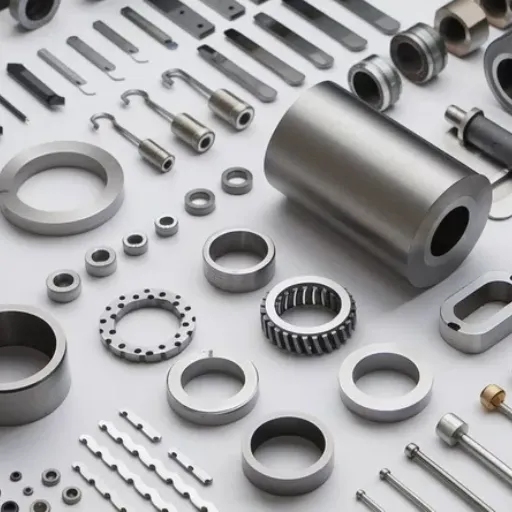
In substance manufacturing industries, hardness is a chief parameter that determines whether a material can withstand wear and tear and deformation. Hardness is measured by comparing the ability of one specimen to resist scratching against another known specimen; this comparison constitutes what is known as the Mohs scale. Although a few materials are classified between numbers between 1 and 10 (talc is 1 and hence the softest; diamond, 10, is the hardest), tungsten carbide is ranked to be about 9, thereby making it sufficiently hard for hard machining operations. Cubic Boron Nitride (CBN), quite close to diamond at 9.5 on the scale, is thereby harder than tungsten carbide.
To be more fine-tuned into the standardization of hardness, other scales such as Vickers and Rockwell are being given consideration as well. These are tests of hardness in terms of a material’s resistance to deformation under a defined amount of force resisting an indenter that comes of different shapes. By numerous sources, tungsten carbide is reported to have a Vickers hardness of about 1600 to 2000 HV, while depending on composition, CBN goes well above 4000 HV. Hence, the numbers discuss CBN as a better alternative for those applications that require extreme hardness and wear resistance.
Even though CBN is harder than tungsten carbide, the latter is more popular because of its cost-effectiveness and versatility. CBN would be the best candidate on ultra-hard materials like hardened steels, whereas tungsten carbide is hard, tough, and cheap enough to cater to most industrial needs. Lastly, the decision of choice falls on the application and working conditions.
CBN inserts possess extreme hardness, thereby considering them among the hardest substances used in cutting tools. This immense hardness, second only to diamond, preserves the sharp cutting edges and subjects them to harsh conditions during machining processes. Thus, CBN inserts are used in applications where other materials would wear out in no time, particularly when grinding hardened steels and superalloys.
Because of the hardness of CBN inserts, they give a high measure of precision and performance to the cutting operation. High brazing strength reduces the tool-wear rate, thus ensuring fewer instances of tool replacements; efficiency shall, therefore, be enhanced, coupled with savings in the long run. High-temperature resistance also guarantees the quality of the tool’s performance through cutting operations and can withstand harsh machining conditions at elevated temperatures.
With that said, there are applications where CBN inserts do not work best. Although hardness is an advantage for CBN inserts, they lack the toughness of materials such as tungsten carbide. Therefore, CBN inserts are well-suited for machining under stable conditions, with minimal risk of impact or vibration. The correct choice of tool material depends on the demands placed upon it, such as the material being machined, the operating environment, and cost.
Carbide inserts are known for their exceptional hardness, which makes them highly effective for cutting and machining a wide range of materials. This hardness is primarily due to the use of tungsten carbide, a compound that combines tungsten and carbon atoms, resulting in a material that is significantly harder than steel and capable of withstanding demanding machining conditions.
One of the key advantages of carbide inserts is their ability to maintain sharp cutting edges even under high temperatures. This property allows them to perform efficiently at higher machining speeds, which improves productivity and reduces operational downtime. The hardness of carbide also provides superior wear resistance, enabling the insert to maintain its integrity over extended periods of use, even when cutting abrasive materials.
However, despite its extreme hardness, carbide inserts are fairly brittle compared to other softer tool materials. This property of brittleness makes them more appropriate for machining under very stable conditions with nearly zero vibration or impact. When working rightly, carbide inserts give finely measured, accurate, and quick cutting performance and work out to be cheaper in the long run, while their stress-bearing capacity and longevity are cardinal.
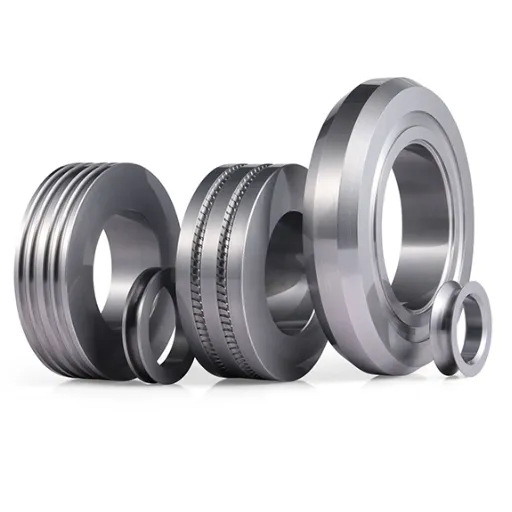
Another unique characteristic of CBN is its very high heat resistance; other cutting materials like carbide cannot compete. CBN retains its hardness and cutting capacity even at temperatures above 1000°C, hence being suitable for all high-temperature machining operations.
The best factor permitting this thermal stability in CBN is the chemical structure. Whereas traditional cutting materials are susceptible to softening or oxidation at high temperatures, CBN resists thermal softening and oxidation to keep a good performance even under very high heat. It is, therefore, ideally suited for machining hard, abrasive materials such as hardened steels or superalloys where heat generation becomes a major concern.
Moreover, by reducing wear and maintaining cutting symmetry at high temperatures, CBN tools increase the life of cutting operations. This increases production and allows for fine applications that operate at tight tolerances. With that said, CBN is, therefore, a good solution for industries requiring tools that can sustain heavy thermal conditions.
In the industrial field, it goes hand-in-hand with heat, so the carbide has somewhat of a reputation for heat resistance. High temperature hardness enables it to be efficiently used in processes like high-speed cutting and machining operations of heavy loads. The resistance is essentially due to the composition of carbide, mainly tungsten carbide, which has an extremely high melting point and thermal conductivity.
At higher temperatures, carbide undergoes very little thermal deformation. This property helps the carbide maintain its dimensional stability under tough operating conditions, ensuring performance remains consistent. At the same time, superior thermal conductivity helps in dispersing heat fast enough to avoid the failure of the tool through overheating. Carbide tools are thus used whenever machining involves concern for sustained thermal loads.
Yet, even with carbide’s impressive resistance to heat, it is not untouchable by thermal damage. Extended durations of exposure to temperatures higher than what it can withstand may cause the possibility of slight degradation such as thermal cracking or oxidation. Keeping these scenarios away, appropriate cooling methods and suitable conditions for cutting are necessary. When carbide tools are used correctly, they prove to be robust and efficient tools for high-temperature areas.
Edge cutting longevity of a tool is a decisive factor for its choice in utilization and economic viability in machining operations. Both CBN and carbide materials, under certain circumstances, exhibit exceptional wear resistance; however, the nature of wear can vary greatly depending on the machining conditions.
CBN, with its hardness being second only to diamond, can resist edge wear so well that it can keep the cutting edge sharp even in operations where high heat is generated and heavy loads are applied. New machining reports state that CBN tools are capable of ten times the life of conventional carbide tools when machining hard materials such as hardened steel or superalloys. Such high edge retention greatly reduces the frequency of tool changes and thus improves the overall operational efficiency.
When it comes to machining general workpieces or soft materials, carbide tools are the prime choice. The cutting edge life of carbide is determined mostly by thermal stability which is much less than CBN (although CBN has even greater thermal stability), but is adequate if the machining applies at moderate temperatures. For example, the multilayer coating on a carbide insert may include titanium nitride (TiN) or aluminum oxide (Al$_2$O$_3$) that may increase the tool life nearly twice while being able to be used effectively on the workpiece up to a cutting speed of 800 meters per minute, depending on the material.
It turns out from industrial experience that while for extreme applications CBN tools are preferred for an unmatched tool life and resilience, carbide tools, in contrast, still prove their mettle as a rather inexpensive solution to almost every machining requirement. When manufacturers understand the machining requirements and performance characteristics of relevant tools, an optimum combination of durability, cost, and precision is achieved.

CBN offers an exquisite resistance to oxidation, even at very high temperatures. Due to this property, it finds use in machining applications where heat is generated intensely during cutting, such as hardened steels and superalloys. The ability of this material to withstand serious environmental conditions of oxidation creates an unavailable precision-and-durability environment.
Carbide is comparatively prone to oxidation when the temperature is high, unlike CBN. Carbide tools are generally good for machining tasks; yet, their resistance to oxidation decreases at temperatures beyond 1000°F or 537°C. At that temperature, the degradation of the material starts, affecting performance in terms of cutting and life of the tool on prolonged exposure to heat.
The factors contributing to the difference in oxidation resistance between CBN and carbide tools varied by their chemical compositions. CBN remains stable in oxidative environments and, therefore, excels in high-temperature processes. CBN, hence, becomes a preferred option for cases requiring endurance against thermal and oxidative shocks. Carbides, on the other hand, perform sufficiently under regular working conditions without heat extremes, and they are comparatively cheap.
Depending upon the hardness and thermal properties of the workpiece and the cutter tool and operational conditions, CBN tools may be selected as the preferred ones. CBN tools are commonly employed in cutting hard materials such as hardened steels, superalloys, and cast irons. They can hold a cutting edge at elevated temperatures and thus are used for precision machining of engineering materials in harsh conditions.
Carbide tools, on the other hand, are more suitable for general-purpose machining of soft materials, including non-ferrous metals, plastics, and composite materials. They are an inexpensive and somewhat versatile tool, depending on moderate temperatures for their operation. In fact, they may lose their effectiveness in situations involving extremely hard materials and elevated temperatures, where wear resistance becomes a priority.
It must be emphasized that the engagement of tools with cutting materials shall be judged on the parameters of the machining process, including such factors as composition, precision required, and thermal exposure. A proper choice of cutting tool yields efficiencies, extends tool life, and allows an unprecedented level of quality in the finished product.
Tool life will depend on the cutting environment or operating conditions. The cutting speed, feed rate, and depth of cut are crucial numbers that establish the life of the cutting tool. Tool life would be severely reduced with the application of a higher speed or heat; that is to say, a tool will burn out while the cutting edge gets dull and inferior in performance. Proper treatments must be given to tool life considerations the result of machining quality.
Material composition of the tool as well as that of the workpiece may also be another critical factor affecting tool life. The harder materials or abrasive ones wear the tool fast and this makes it all the more difficult to match materials between the tool and its workpiece. Most advanced cutting tools are coated to resist wear and heat, while others are made with the end goal of counteracting wear and thermal damage; in both cases, the application of proper machining techniques is a must to make full use of the tool’s advantages.
Maintenance, coupled with regular checking indeed constitutes the other primary factor for the life extension of tools. By being checked for signs of wear or undoubtedly damages timely replacement of the tool and decreases the amount of downtime, which in turn causes a severe problem with the quality of the machined product. Also, providing adequate cooling and lubrication schemes reduces heat and friction, thereby maintaining the tool condition with time. Hence, when tackled properly, manufacturers, therefore, shall optimize the performance of the tool, consequently reducing the cost associated with it in the long run.

Various factors must be taken into consideration in order to make an optimal choice regarding the type of cutting tool inserts, be it CBN (Cubical Boron Nitride) or carbide, for better performance, cost, and longevity. Besides, below is a list of those factors considered:
CBN inserts offer greater wear resistance and heat tolerance and are used mainly on hard materials such as hardened steels and superalloys. Carbide inserts, meanwhile, are more suitable for machining softer materials such as aluminum, low-carbon steels, and general-purpose machining. For instance, it has been observed that CBN inserts last ten times longer than carbide inserts in hard turning applications.
CBN inserts fall into the group of those inserts used in high-speed machining, and grinding gives enhanced surface finishing at higher speeds, which means that it is very much appropriate for precision applications. Carbide inserts, being rather general in nature, may be operated much better under medium speeds. The industry reports state that cutting speeds for CBN inserts have tended to exceed 1,000 meters per minute in certain applications.
Being cased within the inherent properties of their material, CBN could endure the very high temperatures that are developed while machining (above 1,000°C) with minimal wear. On the other hand, carbides require the implementation of an extra cooling or lubrication system to obtain efficiency at high temperatures.
The CBN insert is, in tandem with CBN powder-compacted tool bits, ingrain in a special category as deposits of CBN chemicals are priced more than carbide inserts for their supremacy and working qualities. In some rigorous operations, this extraordinary wear resistance can be put to good use in allowing less frequent changes, eventually leading to less downtime for tool maintenance. For example, the researchers have shown the running costs fall in a range of 25-40% while the CBN inserts are employed in high-level machining.
CBN inserts might be applied on machining operations requiring ultra-smooth finishing and very tight tolerances. Carbide inserts are rather for general machining with minimal surface finish requirements.
It is common for CBN inserts to have longer tool life, especially when machining hard materials. However, carbide inserts might require frequent replacement but take less time in regrinding. The automotive industry has seen a case where tool life was increased by 50% upon switching to CBN for machining hardened components instead of carbide.
Upon considering these factors against the requirements dictated by the application, manufacturers will be able to decide whether CBN or carbide inserts are best so that tool selection can enhance productivity while minimizing the cost of tool wear and machining inefficiencies.
With hardness and heat resistance being its major properties, CBN proves to be an awesome tool in machining hardened steels. While carbide inserts lose their cutting edge when heated to higher temperatures, CBN maintains it, and that is important when machining materials that are hardened above 45 HRC. A CBN tool is used to achieve consistent and precise machining even under tough working conditions.
The other advantage of CBN insert is hi THE LIFE. CBN tools, when compared against carbide, offer extended wear resistance, which cuts down the number of times a tool must be changed. This makes for even higher production and greater cost efficiency, especially where downtime to change tools greatly hampers the operation. With higher cutting speeds permitted by CBN, machining cycles could be further optimized.
Further, CBN provides superior finishes on hardened steels. This reduces secondary processing such as grinding and thus makes it ideally suited for the manufacture of a few high-grade parts. This in turn minimizes the losses owing to tooling and improves the overall requirements of machining so that CBN has become a natural solution for manufacturers working to achieve machining outputs with increased precision and efficiency for hardened materials.
Carbide tools take priority for machining situations requiring working on softer materials like aluminum, brass, and other nonferrous metals. Since these tools stay sharp and thereby keep their cutting ability for a long time, they are consistently dependable in high-speed machining. They also resist the heat formed during the cutting process, thus: effective and reliable.
Another occasion that favors carbide tools is when the machining requires intricate or precise cutting. Carbides are rigid enough to have minimal tool deflections and keep the proper dimensional accuracy. They prove most advantageous in machining complex geometries or parts where tight tolerances are maintained.
Carbide tools are preferred by virtue of being a better option for batch or even volume manufacturing. Because of their durability against any sort of wear, they reduce the need to make tool changes, thereby improving production efficiency in ongoing processes. For that reason, carbide tooling is an excellent candidate for high productivity, low-cost, and dependable performance in the less abrasive materials.
A: Yes, given CBN’s incredulous hardness, only it can find application in performing their function in their extreme wear situations.
A: CBN therefore possesses advantages in SCR wear resistance, tool life, and speeds once set: CBN is better than carbide inserts for machining hard materials and ferrous materials.
A: The cudgel of CBN concerns: the cudgel of CBN is substantially greater than that of tungsten carbide by several factors, depending on cutting applications where this proves important in maintaining tool integrity.
A: CBN is preferred in applications involving hard steel alloys and ferrous materials, where its extreme hardness allows for high cutting speeds and decreased cycle times. Other typical uses include metal-working tools such as end mills and inserts.
A: Being chemically stable and withstanding heat and pressure make CBN suitable for high-temperature machining operations in which traditional carbide tools could degrade.
A: The sintering process is important in the production of CBN as CBN particles are first bonded under heat and pressure before final processes. In this way, the morphology and hardness of the final product are enhanced as opposed to cemented carbide.
A: Carbide end mills are capable of performing many operations, while CBN tools are favored in applications requiring high hardness and wear resistance. Being predominantly employed for hard machining of materials, CBN tools are preferentially used in certain industrial applications.
A: They are mostly costlier than their carbide counterparts due to their production costs and materials used; however, this cost can be compensated for by their longer life and superior performance.
A: Knoop hardness and Rockwell hardness C scale measures are most commonly used to test the hardness of materials like CBN and tungsten carbide. These tests quantify the hardness of the material and give a clear comparison between the two.
Supposedly, I can say it is true: CBN tools are mostly designed to work with ferrous materials, yet they can take some non-ferrous materials on. Although the performance might be more efficient using carbide tools, which are much more versatile for a wider range of materials.