Revolutionary CNC Grinding Wheel Dresser
Transform your grinding operations with precision wheel dressing technology that delivers unmatched accuracy, reduces downtime, and maximizes productivity.


Modern manufacturing industries largely rely on updated machining technologies to enhance precision and productivity. The CNC wheel profile grinding machine and the Dress machine represent innovative solutions designed to boost production methods for utmost accuracy and performance. These high-tech machines are completely transforming industries, defining the future of fabricated objects, and serving the increasing demand for precision-aligned components by remaking production standards on a global level.

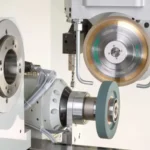
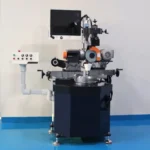
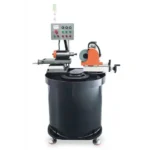
CNC Grinding Wheel Profilers are highly precise and automated machines designed to shape or profile grinding wheels to particular contours and dimensions. These machines ensure that grinding wheels are prepared with exact profiles, enabling grinding operations to remove materials with exceptional precision. By utilizing computer numerical control (CNC), these machines eliminate human error, delivering highly reliable results with superior accuracy.
The paramount importance of a CNC grinding wheel profiler is to maintain a precise shape and profile for the grinding wheel, thereby enhancing its productivity and wear life. Creating profiles involves removing material from the wheel using dressing tools that are easily programmable. This allows for perfect replication of profiles with simplicity—a significant advantage as profiles can be produced repeatedly with consistent accuracy.
✈️
Turbine blades & fasteners
🚗
Gears & brake parts
🔧
Precision cutting tools
⚕️
Implants & surgical tools
Modern manufacturing’s reliance on CNC for grinding wheel profiling delivers increased efficiency and lowered material waste, along with better-defined wheels that boost productivity while maintaining quality levels. Automated setups create time savings, reduce downtime, and make machines adaptable to various project requirements.
CNC profiling is a process that uses computer-controlled machinery to fabricate structural shapes with absolute precision and repeatability. The process follows a systematic workflow that ensures consistent, high-quality results.
Created using CAD (Computer-Aided Design) software specifying required form and features
Design is converted to machine-readable code fed into the CNC machine
CNC machine guides cutting tools along programmed paths with exact precision
CNC profiling can work with a wide variety of materials depending on the application and job specifications:
The primary components that make up a grinding machine work together to enable mandatory cutting and shaping operations. Understanding these components is essential for optimal machine operation and maintenance.
Numerous grinding machines incorporate automatic sensing systems that make extremely minute corrections during operation. These automatic adjustments increase efficiency and lessen opportunities for mistakes, ensuring high accuracy, maximum efficiency, and durability in grinding operations.

Tailoring precision-design solutions for specific industries is crucial to address stringent requirements within automotive, aerospace, and medical sectors. By developing advanced modules like CNC grinding, precision laser cutting, and 3D printing, manufacturers achieve superior accuracy while meeting strict quality expectations and tolerances.
Handling complex or unique parts with resistance solutions accommodating changes from client to client
Closing tolerances with highly precise machinery and automated setups assure consistent outputs without significant mistakes or waste
Adaptive programming promotes scalability for production, allowing businesses to address flourishing needs without diluting accuracy
Stretching the frontiers of design and function across different industries

Innovations in grinding wheel design are unfolding a new era in machining precision by enhancing efficiency, precision, and versatility. Today’s grinding wheels have been tuned to optimal performance through advancements in abrasives, bonding technology, and wheel structure.
Cubic boron nitride (CBN) and diamond abrasives have made wheels resistant to wear with increased cutting ability, suitable for complex profiling and machining harder materials.
Precision-bonded techniques allow manufacturers to tailor hardness, porosity, and grit distribution for application-specific performance. Hybrid bond systems combine vitrified and resin bond advantages.
Lightweight and active wheels with less vibration, reduced operator fatigue, and increased cutting speed without sacrificing safety or precision.
The integration of CAD (Computer-Aided Design) and CAM (Computer-Aided Manufacturing) systems with cutting-edge wheel technology accelerates the production cycle remarkably.
Accelerated cycle times with coordinated procedures where accuracy and precision work simultaneously
Due to their exquisite hardness and durability, diamond tools ensure the superiority of finishes across the toughest materials. These setups are precisely designed for granite, glass, ceramics, and high-performance composites, delivering the ideal precision and efficiency for cutting, grinding, and polishing.

Optimal performance, long life cycles, and reduced downtime depend on good CNC grinding machine maintenance. Consistently performing preventive maintenance delivers precision and makes the machine highly reliable.
Keep the machine clean by removing all dust, dirt, and slag that may choke the machine. Regularly examine key components including spindles, belts, and drive systems for trueness or wear. Detecting issues early saves time and prevents costly maintenance later.
Proper lubrication of moving parts produces minimum friction, minimal wear, and smooth running. Regularly check oil and grease levels and use manufacturer-specified lubricants. Periodic calibration ensures accurate grinding operation—incorrect calibration leads to poor-quality finishes and material wastage.
Parts such as grinding wheels and bearings tend to wear out over extended operation. Check worn-out components per manufacturer’s instructions and replace as necessary. Monitor vibration levels and listen for unusual sounds to detect potential problems early. Always use high-quality replacement parts.
⚠️
If the machine produces parts with inconsistencies from standard specifications, the cross slide, guides, or ball screws may be worn. Minor inaccuracies not attended to will develop into something disastrous over time.
🔊
Grinding operations should be smooth and relatively quiet. Grinding, squealing, or drone sounds may indicate internal issues. Higher vibration levels can suggest misalignment or wear of critical parts.
👁️
Visible damage or degradation of important elements such as belts, wheels, or seals indicates maintenance is needed. Regular visual inspections help get these early warnings.
This paper discusses a vision-oriented CNC system designed to monitor grinding wheel wear and ensure high profile accuracy during grinding operations.
This research focuses on optimizing grinding wheel geometry for precise end-mill cutter generation using five-axis CNC grinding.
This study explores the development of a CNC grinding machine capable of 3+2-axis grinding for creating precise profiles on rotary milling cutters.