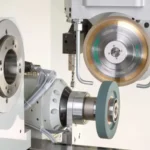
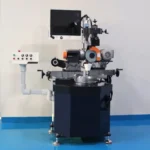
Revolutionary CNC Grinding Wheel Dresser
Transform your grinding operations with precision wheel dressing technology that delivers unmatched accuracy, reduces downtime, and maximizes productivity.


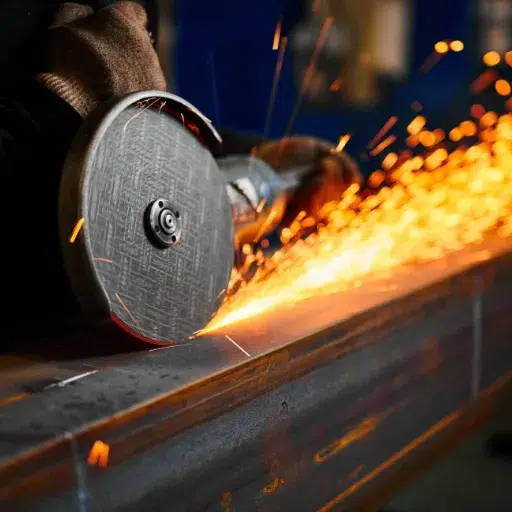
When it comes to grinding wheels, truing and dressing are two words that are often misconstrued to mean the same thing, actually performing very different functions for optimal wheel maintenance. One’s obvious understanding between the two would mark a profound importance in ensuring accuracy, prolonging grinding wheel life, and achieving the best possible finish for the project. Therefore, this article explains the nuances of truing and dressing operations, along with understanding their different purposes, and when to use either one, all while contributing to the efficiency and accuracy of grinding operations. Whether you happen to be a professional or a novice with grinding wheels, this article has everything that you need to keep your tools sharp.
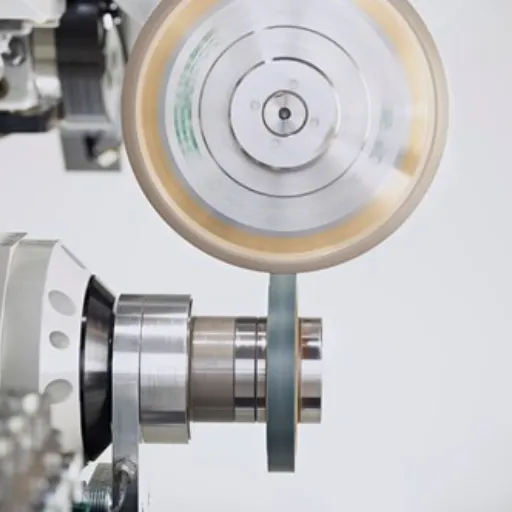
A grinding wheel is considered an abrasive cutting instrument used for grinding, cutting, or finishing the confrontations of all types of materials. It is formed of abrasive grains and an aggregation of some cementing material. These wheels are utilized for machining operations to sufficiently shape or smooth the surfaces of materials ranging from metals to ceramics to composites.
Different matters will affect the cutting behavior of the grinding wheel. These include the abrasive type, bonding material, and grain size and hardness of the wheel. Each of these components is being carefully processed for the type of materialized work and the outcome to achieve. For example, the harder abrasives will be used for the harder materials, whereas the finer grains will be used for smooth finishing.
Depending on the task at hand, various shapes and sizes of grinding wheels are made, which include surface grinding, cylindrical grinding, and sharpening cutting tools. Across industries, these grinding wheels are reliable for their versatility and high precision, ensuring that components are fitted into the desired specification with utmost accuracy. Grinding wheels need to be properly handled and maintained to ensure safety and maximize performance during operation.
Diamond grinding wheels do heavy grinding on materials like ceramics, glass, and carbide, which are extremely hard. With the highest hardness, they are able to quickly remove material and impart a fine finish. Thus, diamond wheels may be used for high-precision applications and extremely high-performance settings.
CBN grinding wheels are prepared mainly for grinding ferrous metals, such as steel and cast iron. The hardness is a little less than that of diamonds, but excels at retaining the cutting ability at elevated temperatures. This makes it very well suited for heat-sensitive materials. Their wear and heat resistance afford them a long working life with an assured performance.
These two grinding wheels are necessary in an industrial setting, far away from precision, efficiency, and reliability. The type selected will depend on the material to be worked on and on specific requirements. Thus, good maintenance combined with the right kind of usage will guarantee maximum life and safe operations.
The grinding wheels need to be maintained during operations for accuracy, safety, and efficiency. The maintenance of the wheel will avoid accidents, give consistent performance, and last longer, thereby saving much time and money. The user can conduct frequent inspections of wear, cracks, or other types of damage to report them for their attention before they present hazards.
The grinding wheel needs to be dressed periodically so that it will retain its cutting ability. This means that with use, the wheel may become loaded, or its cutting edges may become dulled with loading, thus affecting its performance. Dressing brings back the sharp edges and the correct shape of the wheel so that it can perform its working operation at all times. Without this, the wheel will cause the workpiece to have an uneven surface and will affect the overall productivity itself.
The storage and handling of grinding wheels also affect their condition. Wheels should be stored inside an equipment room or a building in a dry clean environment to avoid exposure to moisture or extreme temperatures, which can bring forth weakness in their structure. Also, operators should be trained on correct mounting methods and using techniques to minimize damage to the wheel and ensure safe and reliable operation during industrial work.

Truing is the process of reshaping a grinding wheel in order to regain its original geometry and make sure that it will run true. When grinding wheels wear out on uneven surfaces and thus lose their trace of a perfect circle, their effectiveness and precision get impaired. Truing remedies these imperfections by removing a very small amount of material from the surface of the wheel so that it regains its intended form and balance.
The operation is very important for the life and work of the grinding wheel. When the wheel is true, it revolves with perfect smoothness, maintaining uniform contact with the workpiece; any vibration that might deteriorate the grinding is prevented. This improves the quality of grinding and prevents damage to both the wheel and the work under grinding.
A diamond step, much in the same way that truing refers to a process requiring a tool harder than the grinding wheel material, is usually occasioned in the truing process. By restoring the wheel into its proper state, truing ensures safe operation and efficiency in industrial and manufacturing plants where precision is paramount.
Dressing is the process that cleans and sharpens a grinding wheel. It is done to restore its ability to perform the cutting operation, after all. A few hours into work, the grinding wheels get clogged with debris and are dulled by wear. The dressing action of removing the build-up of grit and other materials re-exposes fresh abrasive surfaces of the wheel, permitting the wheel to perform effectively.
Not only does it upgrade the grinding action, but it also maintains the shape and balance of the wheel. Dressing minimizes uneven wear, thereby preventing vibrations from appearing during the grinding operation or defects from appearing in the workpiece. Dressing accomplishes fine and consistent grinding results, which is very important where high accuracy is required.
The dressing of the grinding wheel is accomplished by means of a dressing tool, which is normally made from a harder material as compared to that of the grinding wheel. The dressing tool may be either a single-point or a multi-point one, depending on the job or the type of wheel used. A grinding wheel must be regularly dressed to extend its life and ensure safe and efficient working conditions.
Truing and dressing are two of the most important operations in grinding-wheel maintenance. However, they have quite different functions and are required in different situations.
| Aspect | Truing | Dressing |
|---|---|---|
| Definition | Bringing the grinding wheel back to its original shape. This step is often needed if the wheel has become warped through grinding, comprising heavy wear, or damage. Thus, it aims at maintaining the trueness of the grinding wheel by allowing it to run without vibration to utmost precision. | The process of removing the materials from the surface of the grinding wheel that may have clogged it or embedded into it. In so doing, it refreshes the sharpness of the grinding wheel by exposing the fresh layer of abrasives. |
| Purpose | Done to rectify the deformation to restore the intended geometry of the wheel. Carried out to achieve proper concentricity and balance of the wheel. | Stated to wash away those matters that reduce the grinding performance so that sharper abrasive grains are exposed. |
| Tools Used | A diamond roller, a dressing stick, or an exact truing mechanism can be used to obtain the required shape of the wheel for smooth rotation. | Can be done by a single-point dressing tool, which scrapes away the wheel material, or with the multi-point type, which scours the abrasive surface of material dirt. |
| Frequency of Application | Considered as caring for the entire shape of the wheel, is usually performed less often. Sometimes it is carried out in the first setup of the grinding wheel or after major reshaping is needed. | Performed more often, intermittently, through every few grinding operations to ensure grinding efficiency and surface finish. |
| Time and Cost Implications | Involves much time and might require more cost because of the need to be so precise, especially when employing more computerized truing mechanisms. | Mostly faster and less costly but is required more often, depending on what is being ground and the condition of the wheel. |
| Effects on Grinding Results | Affects the workpiece dimension in that the wheel is aligned to work with consistency and precision. | Affects work surface finish and grinding efficiency, influencing the rate of material removal and hence, surface quality. |
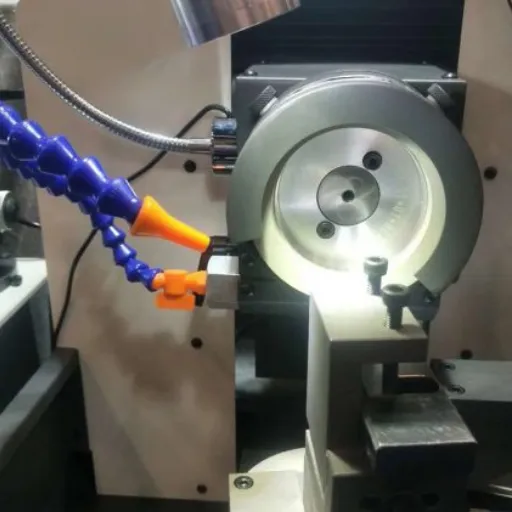
A truing setup works with special tools to set the grinding wheels properly and shape them to restore or maintain concentricity and precision. The tools listed below, therefore, are the primary ones used for truing grinding wheels:
The post mentions that diamond is the primary choice for tools because of its great hardness and durability. Single-point diamond tools and multiple-point diamond dressers might be used. Single-point diamond tools are employed for selective applications giving the finest surface finish.
They employ abrasive rotary discs or wheels that engage with the grinding wheel and act upon it to reshape it. Rotary wheel-type rotary truers are generally used to true larger grinding wheels in heavy work. And, by nature, they permit either an automatic or a continuous type of truing.
A profile truing device is an advanced tool used to generate particular profiles on the grinding wheel surface. The set-up frequently includes CNC-controlled systems for extraordinarily intricate geometries.
By utilizing the proper truing tools, industries will obtain better grinding FIG. 5.289 Black diamond dressing tool. pictures. Grinding wheel life will be good, and the realization costs will be reduced.
Before any truing operation, check for any obvious irregularity on the wheel surface, like uneven surface, flatness, or radial runout. The wheel should be free of debris or any foreign matter if finer results are to be obtained.
Mount the grinding wheel suitably and securely and ensure proper alignment of the grinding wheel. Position the truing tool in its holder and tighten any securing devices until the tool is fixed and cannot move anymore during the process. Proper alignment is important for safety and accuracy.
Set the speed and feed rate of your machine according to the manufacturer’s recommendations or the standard ones, and when you bring the truing tool in contact with the wheel, be gentle enough to avoid wearing away too much material or even damaging the wheel.
Proceeding in a slow and controlled motion, the tool traverses the wheel surface. Consistent motion should be employed to remove irregularities and restore the correct shape and surface texture to the wheel. The wheel should be true before the passes are repeated any number of times.
When the truing is done, check the wheel to confirm that it is even and concentric. Rotate the wheel at a slow rate and confirm if any irregularities still exist. A test grind can be done for confirmation of performance.
Thus, by virtue of the above, the wheel will have been duly trued, on account of which precision in grinding operations and life of the wheel will be increased. Moreover, the better the truing, the better the quality of work and the materials saved from unnecessary wastage, thereby reducing the cost of operation.
The speed of the wheel during truing is critical for attaining the required precision. A high speed is used for effective material removal and could cause very fast wear and damage otherwise. With overheating occurring at speed too much, at a vastly low speed, truing becomes an inefficient operation.
The feed rate and pressure should be applied consistently to avoid uneven wear or irregularities. Too much pressure may damage the wheel or the truing tool; too little pressure may cause imperfections to remain or not restore the shape of the wheel adequately.
A decision must be in consideration of the grinding wheel characteristics and the material on which it is going to be used. The hardness, grain size, and bonding type of the wheel influence the truing process. Any mismatch in these elements concerning the operation reduces the efficiency and life of the grinding wheel.
In view of these important parameters, the truing process will contribute to the accuracy, productivity, and durability of the grinding wheel; hence, resulting in their high-quality performance in various operations.
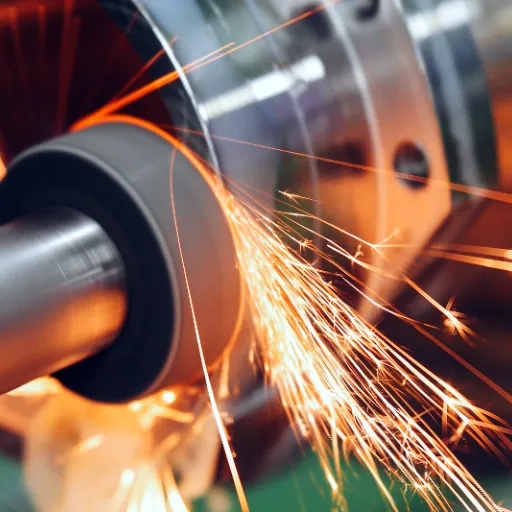
The efficiency of the grading wheel dressing process highly depends upon the tools and equipment applied. These are some of the common types of dressing tools along with their characteristics:
Diamond dressing tools are considered to be the most widely used and efficient for dressing grinding wheels. These tools are presented in two major types:
Rotary dressers are for heavy-duty applications with high production. Rotary dressers reshape and renew the grinding wheel by means of a rotating mechanism, usually diamond-coated. The rotary dressers prove ideal for complex or fine profiles.
Such tools have diamonds scattered over the surface, allowing even wear of the tool, resulting in uniform performance. They bestow the greatest durability on the tool and are the most efficient type in dressing grinding wheels used in heavy grinding operations.
These possess a fixed position and are brought by hand into contact with the grinding wheel. Stationary tools are inexpensive dressing methods widely used for basic dressing but sometimes lack the precision of diamond tools.
Dressing sticks of abrasive material such as aluminum oxide or silicon carbide, are used in hand cleaning operations. They are mainly used for smaller or portable machines.
It consists of a visual inspection of grinding wheels; a crack indicates the need for replacement. Ensure the grinding wheel is properly mounted and balanced before the dressing procedure.
Select the dressing tool that meets the specific needs of your operation. Diamond dressing tools are used for precision work with precision grinding machines; dressing sticks might be fine for simple operations carried out on smaller, portable machines.
Turn off the machine and make sure that it is not connected to the power supply. Setting the dressing tool at the right angle with the grinding wheel is vital. Double-check the alignment and tighten firmly if all’s well.
Bring the dressing tool into contact with the spinning grinding wheel slowly. Apply light, uniform pressure to remove debris, restore shape, and open up the abrasive grains. Always make sure to do this in an even manner over the wheel surface.
With the dressing procedure complete, turn off the machine and inspect the grinding wheel once more. Verify that the wheel has been brought back to its original shape and that any glazing or debris has been removed. Rebalance the wheel if it needs to be.
These steps ensure an efficient working of the grinding wheel, prolong its life, and ensure consistent and good-quality finishing. Dressing improves not only the working of the wheel but also operating arrangements from a safety point of view.
The variables that affect the efficiency of dressing a grinding wheel directly contribute to its overall performance and service life in the first place. The abrasive-type material used in the wheel is a major factor in the grinding wheel dressing method. Different abrasive types, such as aluminum oxide or silicon carbide, are worn away differently; hence, the dressing method must work with such features for optimum results. Dressing tools should be selected in line with the type of abrasive material.
Other factors involved include the dressing speed and feed rate. These parameters control the interaction of the dressing tool with the grinding wheel surface. Incorrect settings lead to excessive dressing-wheel wear or unequal surface profiles, or at least inefficient debris removal. Correct speed and feed rate settings will ensure a clean, sharp wheel surface for the most accurate and consistent grinding.
Also, the working and environmental conditions matter. Dressing needs to be affected by variables like coolant use, temperature, and vibrations. Adequate cooling during dressing reduces the heat and friction generated, thus increasing the wheel’s stretch of life and the dressing’s effectiveness; while reduced vibrations allow the dressing operation to occur well and uniformly, reinforcing the grinding operation towards the desired improvement in accuracy and performance over a period.
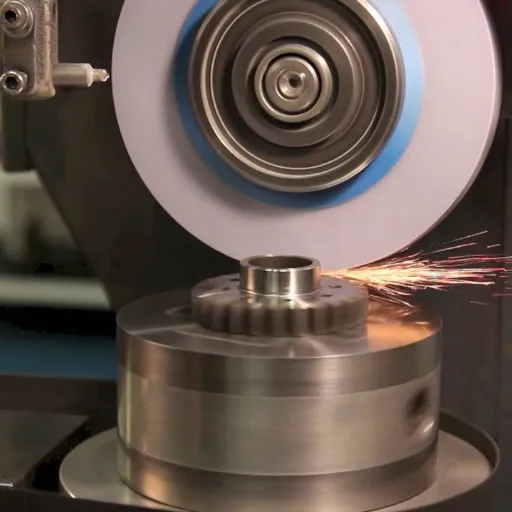
Mounted alongside grinding wheels and often confused, truing and dressing are two separate processes. Truing is a process utilized to bring back the wheel to its original shape and ensure that it is concentric with the spindle of the machine. Usually, this process is used when the wheel becomes uneven with wear and needs reshaping for a particular job. Truing either eliminates errors in runout or sets the error if some out-of-tolerance is intentionally introduced into the form of the wheel for a grinding requirement. The objective of trueing is to have a perfect geometry of the wheel for precision in its operation.
Dressing, however, is the cleaning and sharpening of the grinding wheel. As it is during the time, dirt accumulates and clogs the abrasive surface, and grinding efficiency goes down. Dressing helps to take away the dirt and exposes fresh abrasives, thereby facilitating performance during grinding by keeping the cutting edges and abrasive texture intact.
Understanding the distinction is vital to the effective functioning of grinding operations. Truing makes a wheel run true and attain precise results, whereas dressing improves cutting action on the wheel. Both processes contribute to the wheel’s working efficiency, and thereby, whenever the right process is used, it will improve machining performance and results.
It is frequently assumed that truing and dressing are interchangeable processes, as both serve to maintain grinding wheels. This is a false assumption, as the two activities serve different purposes. Truing is about restoring the original shape and making sure the wheel is running true about its axis, whereas dressing is to renew or expose fresh abrasive substance so that the wheel can maintain its cutting ability.
Being unaware of the specific functions of the processes and using them interchangeably may lead to a lack of efficiency. For instance, dressing a wheel when truing is needed does not correct shape errors, which may compromise machining accuracy. Conversely, turning a wheel when dressing is required does not restore the edges, compromising performance and resulting in slower grinding operations or uneven surfaces.
Achieving the best results entails a considerate recognition as to whether truing will best serve an application or dressing will provide the greatest benefit. Both truing and dressing are employed to sustain various parameters governing the grinding wheel at specified accuracy levels in respect to efficiency and machining quality. In other words, knowing when to true and when to dress ensures maximum grinding performance and longer grinding tool life.
A very current myth has it that dressing and truing have the same function in the maintenance of wheels. Actually, while related, these two processes are quite different. Dressing is basically cleaning and sharpening the grinding wheel to present fresh abrasive material for the best cutting action. In contrast, truing is a process by which the true shape of the wheel is restored. Any wheel imbalances or irregularities are corrected-well and good. If this distinction is maintained, the wheel performance will be sustained. An excellent product and long wheel life will be realized.
Another common misconception is that grinding wheels should only be maintained when visible damage has occurred. Such a belief can potentially affect machining efficiency, precision, and safety conditions. The grinding wheel requires regular maintenance, including periodic dressing and truing to forestall operational troubles from arising. Such proactive care maximizes performance consistency and minimizes the chances of expensive downtime or accidents.
Some individuals erroneously believe a grinding wheel’s performance does not change with maintenance. In reality, incorrect or irregular maintenance causes inferior surface finishes, slower cutting speeds, and premature wear of both the wheel and workpiece. By keeping to maintenance procedures, the end user retains reliable performance and produces better results.
A: Both dressing and truing are necessary processes that require good grinding wheels. Truing is the operation meant for bringing back the perfect shape and roundness of the wheel, allowing it to rotate silently on the spindle. Dressing, however, is the process of grinding the old surface away to reveal the sharp edge of the wheel, thus contributing positively to the ability of the wheel to cut and the quality of its surface to be finished.
A: The right dressing is the main factor that makes the wheel sharper, as it reveals the new abrasive grains, and removes the clogging material, thus taking the wheel to another level grinding-wise, performance-wise and efficiency-wise, with the best possible rates of material removal and the finest surface finishes on the workpiece.
A: The regularity of dressing depends on the grinding types and the wheel’s application. Regular dressing allows wheels to hold their cutting edges and prevents glazing or clogging, thus ensuring that grinding performance is not negatively affected.
A: Absolutely, using a diamond tool like a diamond dresser or diamond roll is the best method for dressing wheels made of abrasive material. Diamond tools are long-lasting and an effective way of slowly exposing fine grinding particles, which in turn, increases the sharpness and grinding ability of the wheel as a whole.
A: The grinding wheel will suffer from dressing or truing neglect and the effects would be uneven wheel wear, impaired cutting power, and inferior workpiece surface quality. The wheel could also be subjected to glazing or filled with metal particles, which can lead to the production of excessive heat and subsequent reduction in grinding efficiency.
A: The wheel configuration plays a very important role in getting sharp cuts and controlling the smoothness of the surface of the workpiece. A correctly trued and shaped wheel can be said to achieve its objective by providing the correct contour from the start till the end of the operation, whereas an incorrectly shaped wheel will perform poorly and yield inconsistent results.
A: A CBN (Cubic Boron Nitride) wheel is superabrasive, that is one of its major features, hardness and thermal stability. These characteristics make it the best choice for high-precision grinding. The one main advantage of CBN wheels over standard abrasive wheels is the long period of time before they lose their cutting edges, which is particularly good for hard material grinding.
A: A wheel dresser is a tool used in the dressing process to reshape and refresh the surface of the grinding wheel. It helps to remove debris, expose fresh abrasive grains, and ensure the wheel maintains its cutting efficiency and surface quality.
A: Yes, dressing sticks are generally utilized as methods for dressing grinding wheels. The use of dressing sticks for cleaning and sharpening the wheel surface is by reason of their ability to remove the particles embedded in the metal and bringing fresh abrasive grains to the surface which leads to an increase in the wheel’s cutting ability.
A: Cutting performance significantly drops, the surface of the wheel becomes glazed or shiny, wear is unevenly distributed and grinding causes too much heat – these are the major signs indicating that your wheel must be dressed or trued. By routinely maintaining your equipment, you will not only avoid these problems but also keep your grinding process running at the best possible efficiency rate.