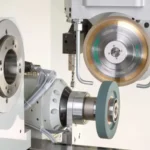
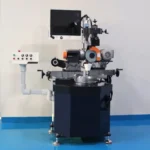
Revolutionary CNC Grinding Wheel Dresser
Transform your grinding operations with precision wheel dressing technology that delivers unmatched accuracy, reduces downtime, and maximizes productivity.


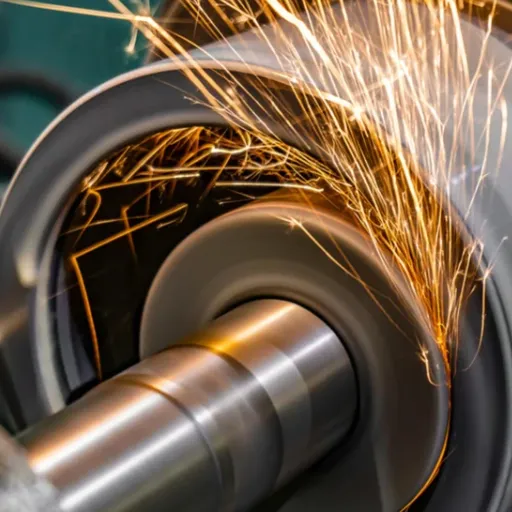
When precision and efficiency are at stake during grinding procedures, the forthright need for a perfectly maintained diamond grinding wheel is stressed. But it should be said that the exact finishing of the performance is greatly dependent upon one very critical procedure—dressing of the wheel. This is the guide for you, a complete resource about diamond grinding wheel dressing and the machines that accomplish this task. Whether you’re a very experienced machinist, a manufacturing professional, or just a curious individual about the fascinating world of grinding tools, this article will provide you with the knowledge to maintain accuracy, improve tool life, and thereby maximize productivity. From the basic understanding of wheel dressing to how to choose a dressing machine, we will explain everything so you can confidently make all your future choices. Time for you to be the big boss in grinding!
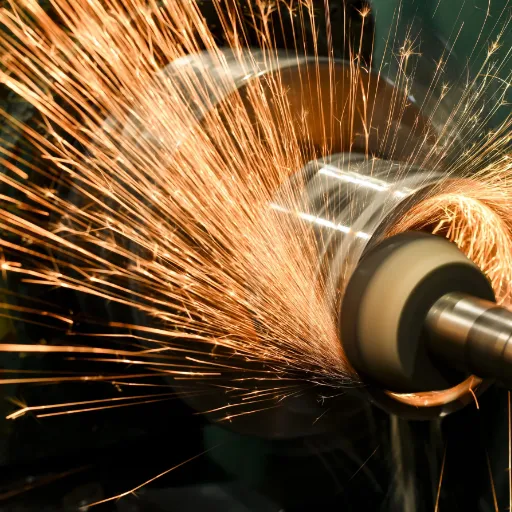
The dressing of a grinding wheel refers to the act of refurbishing the cutting surface of the grinding wheel in order to make it effective and precise for grinding. As time progresses, grinding wheels gather goop of all sorts in the form of swarf (fine chips or shavings from a material being ground) and develop a dull surface, which will either prevent the wheel from being cleaned and accurately or the best performance of the work-piece. Dressing will clean the wheel of all these substances and lock in the profile or sharpen the wheel if sharpening is necessary.
Primarily, wheel dressing exposes fresh abrasive particles, unclogs the wheel, and restores the wheel to its original shape so it can be used for exacting work or heavy-duty removal for which it has been intended. It also helps to maintain grinding conditions free of heat, chatter marks, and any other defects caused by uneven or polluted grinding surfaces.
Dressing means conditioning the abrasive wheel with the help of a hard abrasive tool, usually a diamond dresser. Various dressing techniques are used depending on the grinding operations and wheels. Among these techniques are truing, where the wheel is set to a certain shape for grinding, and dressing, where the surface of the wheel is cleaned and sharpened. Properly dressing the wheel will ensure the quality of the machining process and prolong the life of the grinding wheel.
The grinding wheel must be dressed to ensure its efficiency and accuracy of machining. On account of abrasion with time, the abrasive particles situated on the surface of the wheel would either be worn away or clogged, thereby reducing their cutting capacity. The dressing process refines our wheel and removes all code in the abrasive particles, thus sharpening the wheel for consistent results and smooth finishes.
Balancing or shaping the wheel is an equally important purpose of dressing. An abnormality/unevenness or misalignment of a wheel is set up during use which it could lead to poor performance or worse, damage of the workpiece. Dressing corrects the shape of the wheel and restores its balance; this ensures smooth operation by eliminating vibrations. This is especially important to meet the desired standards and avoid errors during grinding.
Lastly, dressing helps prolong the life of the grinding wheel. By dressing, the surface of the wheel is cleaned and sharpened, thus reducing the chances of overheating and wear caused by inefficiency during grinding. Hence, regular dressing helps reduce the replacements and cut down on operational costs, making the entire process safely reliable.
Generally, the grinding wheel imparts unmistakable signs when it demands dressing. The principal one of these is a loss of cutting efficiency. When the wheel cannot penetrate materials properly, or extra pressure is applied to do so, it is either dulled or choked by some debris. The presence of such things in the wheel would definitely affect the finish to give it an uneven or rough surface.
Other signs include the appearance of glazing or a shiny and smooth surface on the grinding wheel. Such glazing arises when the abrasive grains wear out, leaving the wheel incapable of sharpening or grinding on. Vibrations or chatter during grinding are also suggestive signs that the grinding wheels may have become unbalanced or uneven, which can be corrected by dressing.
This, in turn, includes unusual heating during grinding, a key sign in the wheel that may need attention. When a grinding wheel is not functioning properly at its speed, excessive heat is produced which destroys the tool and the workpiece. Regular inspection for these signs with prompt dressing lets one restore the functionality of the wheel, improve its performance, and operate more safely.
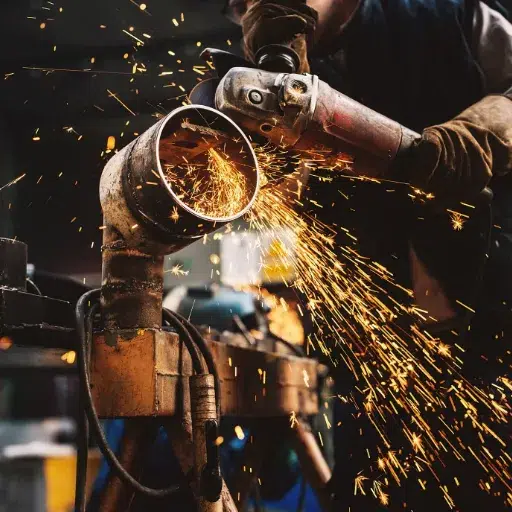
Diamond dressing tools are used to keep the grinding wheels efficient and precise. They condition or reshape the grinding wheel surface by using diamond particles to remove unwanted materials, dull grains, and to keep the wheel sharp. Through the correct use of diamond dressing tools, the wheel cuts better, generates less heat during grinding, and lasts longer.
Diamond dressers are of many kinds, each being appropriate for certain uses. The single-point diamond dresser, being the most common, comprises a single diamond set on a steel shank ingenious tool formed for the basic dressing tasks and at an economic price. Multiple-point tools contain several diamonds and are more durable; they are provided for very heavy applications. Cluster diamond tools allow a cluster of diamonds to be set on a tool, more suited to the more complicated dressing requirements. Lastly come the rotary dressers, which do a rotary dressing on a diamond wheel, allowing very precise, consistent dressing suited to high production.
Choice of a diamond dressing tool depends on certain factors, like the nature of the grinding wheel, the desired finish on the wheel, and the complexity of the job. Especially, regular maintenance and alignment of tool during its dressing are necessary for major results. The proper dressing tool, therefore, means less time needed for mounting the wheel and thus grinding cycles are more efficient in many industrial ones.
Diamond dresser tools fall into two familiar types: rotary and fixed, each having its unique niche in the dressing processes for the grinding operation. If rotary dressers are known for anything, it is for their high production capacities coupled with the ability to give accurate and repeatable results. Rotary dressers, with their dynamic nature, work well to dress complex profiles and stay precise over longer periods of usage. Industries that predominantly stress efficiency and accuracy are the automotive and aerospace industries.
Whereas fixed dressers rarely work in a large setup, fixed dressers operate under smaller, highly specialized setups. These tools are stationary features having diamond points or clusters that grind the wheel surface into the desired shape. Simplicity, low cost, and the ability to create sharp edges or specific geometries make them unique; since they may not be as efficient as rotary dressers on a large scale, yet workshops use or smaller production runs make use of them.
Selecting any one option between rotary and fixed dressers depends upon factors such as production scale, required accuracy, and budget. The rotary dresser finds more application where high productivity and precision are required, whereas the fixed dresser finds application where costs are minimal, and less complex works also take priority. An understanding of these differences enables us to ensure that the most suitable tool is selected for any given job, which increases the whole working efficiency and cuts costs.
The selection of dressing tools depends primarily upon the requirements of the task. If one looks at factors such as the grinding wheel, the difficulty of the dressing, and the degree of finished product required, rotary dressers reproduce greater precision and consistency than their fixed counterparts, affording them considerable advantage in the case of higher precision demands and larger-scale production.
Where small-scale activity or cheapness is of concern, the fixed type will most often have the preference. It is simple and economical for the lighter tasks or those for which application requirements allow a less perfect finish. It is well-suited for operations that do not require a high productivity rate, thus giving it an advantage in low-cost uses.
Ultimately, the correct choice depends on the right balance between the three factors of efficiency, cost, and quality of output. Considering the needs of the specific job and budget will ensure that the tool selected will be able to meet operational requirements and stay within financial constraints. By carefully scrutinizing these factors, the user can attain the best performance in harmony with costing.

Diamond wheel dressing machines utilize efficient methods of wheel dressing to extend the service life of the tool, produce a smoother surface, and maintain dimensional accuracy during grinding operations. Some of the advanced and practical methods are:
The method consists of a single-point diamond being drawn across the surface to remove material and reshape the grinding wheel. Ideally, it is done to achieve precision in smaller, intricate grinding tasks. It can be done usually to keep the wheel sharp, but it is a highly skilled job plainly requiring proper execution of a technique.
A multi-point diamond tool contains multiple diamond particles; hence, it is more durable and more suited for dressing large wheels. The technique, however, lowers tool wear while, at the same time, enhancing efficiency.
Rotary A Diamond Dressing for maintaining the Grinding Wheel’s Geometrical Shape and Integrity. This technique is the most viable for heavy applications and provides accurate repeatability in high-precision industries such as aerospace and automotive.
A crushing roller is applied onto the surface of a grinding wheel, thereby maintaining a consistent shape and finish. It is best suited for high-volume production and offers better wheel stability and wheel performance.
Dressing properly a diamond grinding wheel is paramount to ensure adequate wheel performance, good finish, and enhanced tool life. Follow the steps given below, step by step, for efficient dressing of your grinding wheel:
Maintenance of grinding wheel performance and precision requires several dressing methods. Each method is suitable for certain purposes depending on the material, application, and finish required.
Appropriately dressing a grinding wheel assists in extending the grinding wheel’s lifespan; it also enhances the quality of the workpiece and provides consistent results over time. Careful monitoring of the grinding process ensures maximum productivity and avoids frequent wheel change.
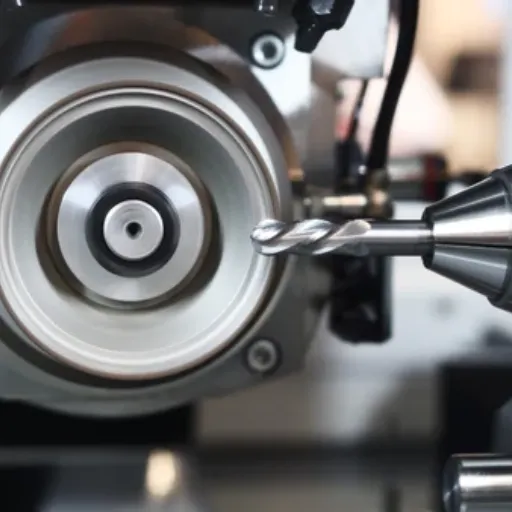
Correct maintenance ensures the efficiency, precision, and longevity of a diamond wheel dressing machine. Cleaning the equipment regularly is the first step in building up maintenance. Always clean dirt, debris, and other remnants from the aftermath of its use. The collection of such matter only hampers its working efficiency. A clean machine works smoothly and, over time, lessens damage.
Inspect the machine’s components frequently. Pay special attention to the state of moving parts such as guide rails, spindles, and dressers. Check for any signs of wear, misalignment, or damage. Taking care of worn-out parts promptly safeguards against any greater damage and secures smooth operation without any disturbance.
Apply lubrication on key parts, as the manufacturer endorses, to prevent abnormal wear due to friction. Also, records ought to be maintained on the schedule of maintenance to remain consistent with periodic checks. Such maintenance will surely help in prolonging the life of the equipment to maintain the high degree of surface quality needed for superior grinding results.
When using grinding equipment, operators may encounter several common issues that, if left unchecked, can affect performance and product quality. Below is a detailed exploration of frequent problems and steps to address them:
Possible Causes:
Troubleshooting Steps:
Possible Causes:
Troubleshooting Steps:
Possible Causes:
Troubleshooting Steps:
Possible Causes:
Troubleshooting Steps:
Possible Causes:
Troubleshooting Steps:
Possible Causes:
Troubleshooting Steps:
Maintenance is a very important aspect of the Diamond wheel dressing machine in order to have it for a long time. This involves regularly inspecting the machines for wear or damage and paying particular attention to such aspects as spindles and dressing wheels when any small glitches can otherwise turn into major failures. It must be cleaned after each use to keep all the debris from settling on it and blocking its use.
A lubrication schedule must be strictly followed for the assurance that moving parts remain active and running smoothly. Use the specified lubricant recommended in the manual, referring to the intervals at which to lubricate. Proper lubrication will reduce friction and high temperatures, thereby greatly extending the life of the system.
Another concern relates to the operators. They must be sufficiently trained to operate the machine to prevent operational errors. One must follow all manufacturer recommendations on operating conditions such as speed and pressure so the parts do not wear prematurely. Maximizing the performance of the diamond wheel dressing machine depends on frequent maintenance along with wise usage.
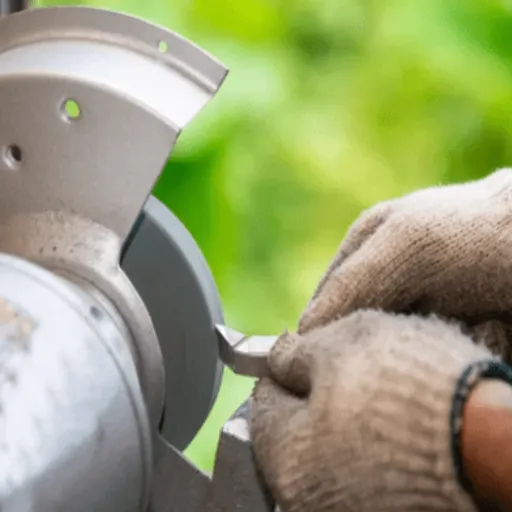
Personal protective equipment is crucial when working with a diamond wheel dressing machine, as these measures will protect the operator. Safety goggles or face shields must be worn by operators to protect their eyes and faces from flying debris or fragments from the dressing operation. Proper hand protection from cuts and abrasions would be good as well, like a sturdy pair of gloves.
Another protective measure to consider is hearing protection in cases where the machine is noise-intensive. Prolonged exposure to loud noises from machinery is regarded as a cause for hearing loss, hence earplugs or earmuffs would be a very good precaution. The operator should also wear protective footwear reinforced with toe protection, just in case heavy tools or other items drop by accident.
In addition, wear fire-retardant clothing or coveralls in case sparks or abnormal heat get generated in the process. Always ensure that PPE is well intact and in its proper size since improperly worn PPE could jeopardize safety. If these are followed, there would be a great decrease in the dangers posed to a diamond wheel dressing machine operator.
When conducting grinding wheel dressing, always review thoroughly the manufacturer’s recommendations pertaining to the dressing tool and the grinding wheel. Such recommendations carry vital details on correct usage, speed limitations, and compatibility, thus averting damage to the equipment or an operator’s injury. It is wise to ensure that the dressing tool is compatible with the grinding wheel being worked upon to maximize safety and performance.
Before starting with any operation, look over all tooling equipment to check for any damage, such as chips, cracks, or wear that could compromise the integrity of the tooling. Secure the grinding wheel adequately, along with its dressing tool to avoid slippage or misalignment during use. Keep adequate distance from the rotation of the wheel and wear appropriate PPE, i.e., safety goggles, gloves, and a respirator, as mentioned earlier. Follow good housekeeping practices by ensuring no extra tools or debris clutter the working area that could pose potential hazards.
Do not use heavy pressure on the dressing tool as it may cause overheating, diminish its usefulness, or damage the grinding wheel itself. Work carefully, slowly, and make fine increments toward the desired effect. Always let the wheel come to a full stop before inspecting it or making any adjustments after completing the work. Following such procedures all the time will ensure the creation of safe working conditions and adequate wheel dressing.
Several risks come into play in grinding wheel dressing if adequate precautions are not undertaken. One significant threat is personal injury caused by operators not wearing the proper safety equipment such as eye goggles and gloves. Sparks were generated by grinding wheels at certain speeds. These sparks pose a hazard in view of the eyes, as well as to the limbs and flesh. In the case of applying such safety protocols, these risks become minimized.
Then another big risk is the possibility of damage being caused to equipment. If too much pressure is exerted during dressing, the grinding wheel may get heated up excessively, suffer uneven wear, and even develop cracks. Such conditions create hazards of the wheel losing service capacity and resisting dangerous means while in use. Frequent checkups of both the grinding wheel and the dressing tool are usually a means to avoid such conditions.
Lastly, incorrect dressing techniques will lower the overall performance, and the grinding results will deteriorate. If one side of the wheel is not dressed properly, the wheel will vibrate or be inconsistent during the grinding operation, thereby yielding an inferior product. Therefore, operators must practice these techniques carefully: steady, controlled movements and slow, gentle adjustments. Proper training, as well as discipline, throughout the dressing process will promote safety and effectiveness.
A: A diamond wheel dressing machine is a specialized tool that keeps a diamond grinding wheel in shape. It offers enhanced grinding by applying rigid precision dressing and truing of the wheel surface through rotary diamond dressers or dressing sticks, thereby increasing grinding efficiency and life.
A: Dressing can be done by rotary dressing tools or by using a dressing stick. It removes the worn-out material from the wheel surface to bring it back to a helpful shape and improve its grinding efficiency. Always look into the wheel condition before dressing and do ensure that the grinding machine is off during dressing.
A: The benefits of dressing by a diamond dressing tool include precision grinding, increased grinding efficiency, and effective wheel maintenance. Essentially, a dressing tool is used to give a particular wheel surface for a grinding operation that demands certain qualities in plastic materials.
A: By the choice of the dressing tool, running the grinding machine at the correct speed, and applying the proper pressure during the dressing operation, you can control the dressing process. This in turn prevents any damage to the wheel while ensuring the best grinding performance.
A: A dressing stick is warranted where the performance of the grinding wheel goes down or when wear is plainly evident on the wheel. Regular dressing may maintain the wheel well and keep it running at the peak of its efficiency, especially when precision grinding is being undertaken.
A: Truing refers to reshaping the grinding wheel to make it perfectly round and smooth, while dressing is the cleaning and sharpening of the abrasive particles on a grinding wheel. Both these operations preserve the performance of the grinding wheel activity and maintain its lifetime.
A: Choosing the right grinding wheel is dependent upon the grinding wheel material, the workpiece to be ground, and the grinding operation. An understanding of wheel types will allow you to choose the right wheel for your grinding machine, thus producing good results and not damaging the wheel or the workpiece.
A: It is advisable to use the appropriate dressing tool for your diamond grinding wheel, maintain a uniform feed rate, and exert proper pressure. The wheel must also be checked from time to time for any damage, with the entire surface of the wheel being dressed evenly to ensure that the wheel performs at its best.