Revolutionary CNC Grinding Wheel Dresser
Transform your grinding operations with precision wheel dressing technology that delivers unmatched accuracy, reduces downtime, and maximizes productivity.


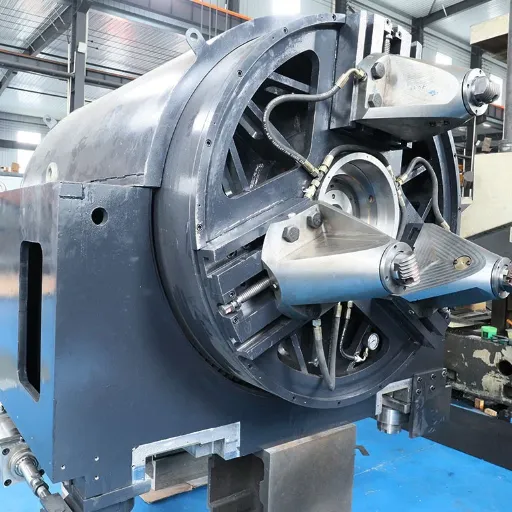
Demonstrating its role in the safety and effectiveness of railway travel, keeping the railway wheelsets in good condition is very important. One of the things that continuous use does to wheels early in their life is wearing them off instead of reshaping indentations on railway tracks. With no disassembly of wheelset and restoration of a wheel profile with utmost precision, next to underfloor CNC wheel lathes would be the answer. This post will discuss some of the modern technology behind these machines, what they mean for railway maintenance services, and how these machines prolong the wheelset’s life while ensuring that optimum levels of performance are maintained.
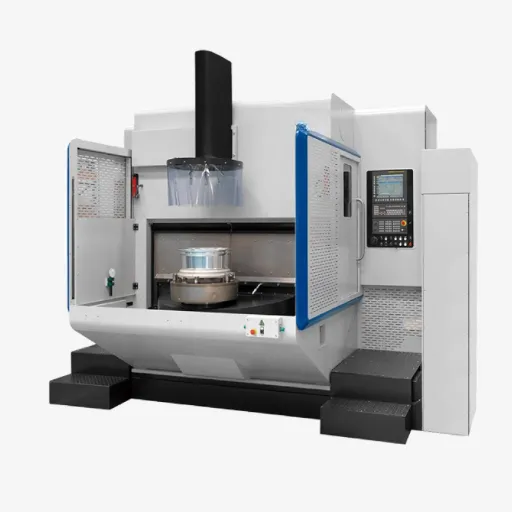
According to its importance, a wheel profiling machine is a special-purpose machine that is utilized in the railway industry to mold the profiles of rail wheels. Running on the tracks continuously wears their surfaces over time, which further leads to issues such as unevenness or worn-out edges of surfaces. On one side, these issues overshadow the assurance of safety and stability for rail vehicles; on the other, they lead to higher rolling resistance and therefore higher energy consumption. To do away with the wheel imperfections produced during the usage of wheelsets, a wheel profiling machine reshapes the wheel profile to an acceptable and verified profile by cutting and grinding the surface.
The main purpose of the machine is to maintain a proper profile of the wheel, which is crucial for ensuring the correct wheel-to-rail contact that ensures good power transmission, a comfortable ride, and adherence to safety parameters’ compliance. The machine can stop severe wear from occurring in the wheels and rails, thus reducing possible costly follow-up repairs or replacements, thus preventing further issues. This will also reduce productivity breakdowns that would herald the rail services’ reliability.
The objective of a Wheel Profiling Machine is to deal with all other vehicle wheels, whether they belong to passenger trains or freight trains. Off-site establishments or even concrete sleepers near the tracks can easily install them for their work in their semi-liveable sites. For them, the machining of the wheel around the head shape serves as yet another process in the plant. An accessory unit is allowed to accomplish the profiling faster and more precisely than continuous manual operation during the profile testing process. In relation to what has already been discussed, modern railways mostly depend on profiling, prolonging the effective radius of fourth-generation wheel sets, equipment enhancement, and the overall safety and efficiency levels of a railway network.
Correct wheel profiling is of primary importance for ensuring the safety, efficiency and endurance of running operations. Wheel profile stands for a uniquely designed shape and dimensions of a wheel tread and flange of a train, which is essential for keeping proper contact with the rail for enduring movement. Wheel profile offers significant concessions in reducing the wear and tear on both wheels and tracks and results in keeping maintenance costs as low as possible and reducing track work that arises consequent to equipment failures. This eventually promotes the fostering of a safe and legal running of railway networks.
Profiling also serves as a means of making a cleaner, comfortable ride for passengers. Poorly maintained or mismatched wheel profiles contribute to increased vehicle vibrations and higher noise levels, affecting both the traveling experience and the vicinity surrounding the track. Through assessing and maintaining wheel profiles correctly, a railway ensures the safety and efficiency of its operations with a clear display of commitment towards passenger satisfaction and environmental responsiveness for a sustainable transit mode.
When talking about CNC technology in wheel lathes, the good precision, efficiency, and ability to perform railway wheel processing procedures are usually highlighted. CNC technology assists in designing and reshaping wheel profiles in an attempt to maintain the proper contact between wheel and rail, for safety’s sake. In turn, the proper shaping of wheels had a part to play, minimizing the wear and tear suffered by both rail and wheels, while reducing operating expenses.
One of the aspects of CNC technology applied in the wheel lathe is automated control. Automated control not only eliminates human error but also ensures uniformity in the practice of maintenance. A set of instructions sent by an operator specifies that the system should perform certain functions based on a specifically predetermined action, cutting, inspecting, or measuring with very high precision. Therefore, the streamlining of activity within the process leads to reduced downtime under the highest operational and passenger safety standards.
In addition, CNC wheel lathes are able to monitor and correct wheel profiles in real time during machining. Advanced sensors and software are employed to highlight undesirable variations in wheel profiles and to bring about highly accurate corrections. Moreover, these systems are usually loaded with data storage capabilities intended to facilitate the recording of maintenance history and the scheduling of future servicing. Adoption of CNC technologies has been good for railways in offering dependable and environmentally safe transportation.
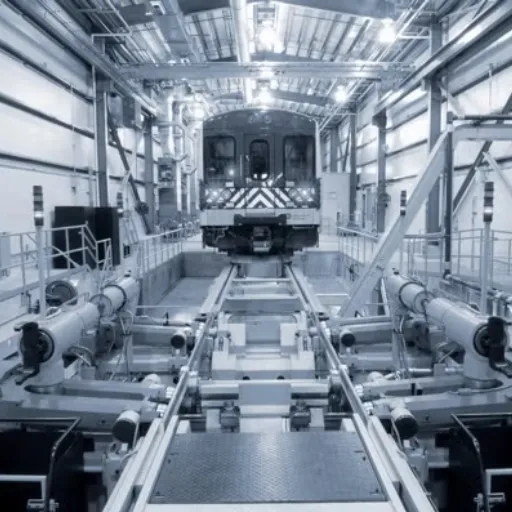
The CNC wheel lathes with underfloor programs work to mechanically rejuvenate and recreate the proper profiles of train wheels, making use of other technologies to rectify uneven wear, off-roundness and flat spots at the client’s demand. Firstly, the wheel and the axle mount are taken to an underfloor lathe without disassembly after the train has been placed on it. With the use of cutting tools, the precise information on the actual wheel profile is always achieved or modified to ensure that wheels tolerate safe and correct use of trains. Accuracy is achieved through a computer-guided mechanism that removes human bias and related mishaps.
Having been machined, the wheels are made to undergo checks for the second time to confirm that the required corrections have been duly effected. This ensures that those train wheels are in a position where they can exhibit optimal performance, thereby reducing vibration, noise, and wear on both the wheels and tracks. A comprehensive system that incorporates measurement, machining, and amendment, CNC subfloor lathes form one of the fundamentals supporting contemporary railway maintenance purposes.
Underfloor wheel lathes are crucial railway maintenance appliances designed to re-establish the circular profile on the train wheels of a locomotive to save time and gain efficiency. They can measure the wheel tread or flange dimensions; it became an important aspect in controlling and maintaining the interactions that were intended to happen with wheels and rails.
In addition to the fact it is capable of working with a variety of rolling stock holding all the evolutionary aspects, such as those using tracks, and enforcing some form of maintenance, it is also capable of performing material removal at high speed, all the while ensuring that the accuracy of the spindle is high enough to ensure the proper functioning of the wheel and, therefore much rail service life. Thus, it could now help to preserve the long-run life expectancy of both the wheel and track by combining all such attributes. Therefore, the under-floor wheel lathe becomes indispensable for the safety and reliability of the operation of railways in modern times.
CNC underfloor wheel lathes are currently a critical component for the prevention of maintenance failure, keeping safety and quality railway wheelsets geared up in today’s fast-evolving infrastructure of transportation.
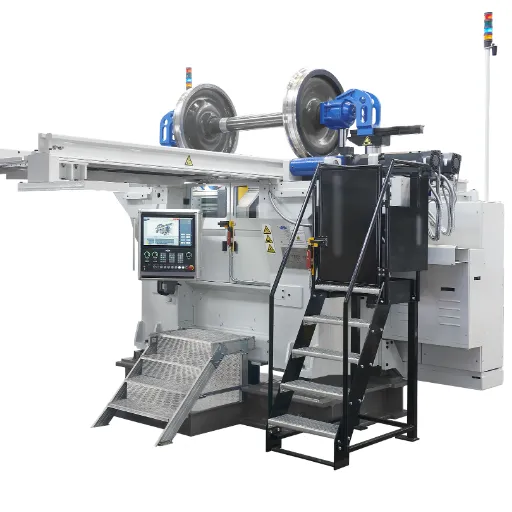
Re-profiling locomotive wheels is required in railway operations, subject to user safety and economy of operation. This steered block is certain to experience wear and tear due to the continually reciprocating modes of interaction with the rail tracks, affecting shapes such as flat spots, uneven running surfaces, and even out-of-round conditions. If left for some time, these imperfections may invite mechanical failures, may affect the ride comfort, and may also intensify noise and vibrations during the operation. The re-machining activity returns the wheel back to its best shape to relieve the associated risks and prolong the life span of the wheel sets.
The process of re-profiling involves the removal of a thin surface layer in order to return the wheel to its original profile. This precision work maintains the correct geometry of rolling stock, necessary for achieving smooth parallelism with a balanced load distribution. It is carried out at regular intervals depending on a whole variety of attended to criteria strongly influenced by mileage, operating conditions, and the demands presented to the railway network.
Wheel truing and profile maintenance is the key to railway operation safety, efficiency, and longevity. Proper wheel profiles help wheels to engage smoothly with the flanges, thereby lowering the wear pressures on both the wheelset and the track. Regular maintenance is crucial in preventing derailments from happening due to uneven wear or distortion.
The process of truing up a wheel to its original profile when it gets worn out or deformed is known as truing. Usually we use specialized cutting tools like wheel lathes to remove material to bring the wheel back to its original shape. Regular check-ups are a must to catch concerns in time to keep the wheels from causing actual harm to either the rollers or the rail system.
💰 Cost Impact: When railways maintain uniform wheel profiles, it can result in less running costs due to reduced fuel consumption. Aligned wheels reduce friction and thus power consumption, leading to fewer ride jerks and service delays. Regular maintenance and routine wheel truing are instrumental in sticking to a reliable, sustainable railway system, adding perks to its operators and passengers alike.
Portable wheel lathes are essential for on-site wheel adjustments. These machines are built in such a way that they reclaim the wheel profile and get the wheel to comply with operational and safety considerations, all performed without needing to remove wheel sets from the train. Needless to say, the application of this technique adds value in terms of minimizing downtime and boosting the efficiency of maintenance work.
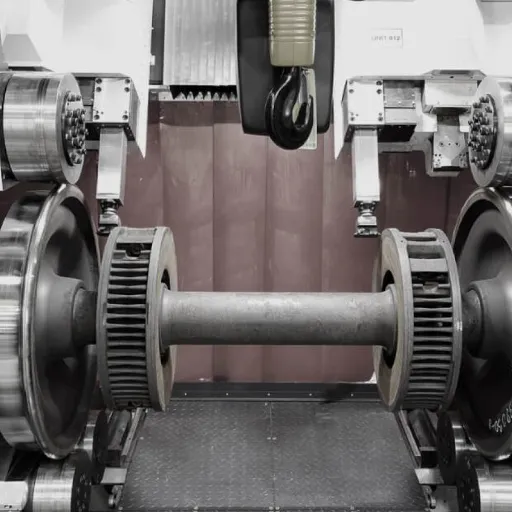
Processes were automated in CNC wheel lathes to provide the best precision so that all railway wheels receive an accurate and constant finish. This has helped in reducing human errors and generating good repeatability results for a high-quality contribution for maintenance operations on tracks. With the reproducibility that saves for uniform treatment, maintenance for the railway wheels improves their lifespan and reliability.
Uniform treatment is further ensured by the automated control of CNC wheel lathes, keeping variations to a minimum. These machines are set to maintain close tolerance, which is unique because in railway systems wheel shapes need to be maintained with high uniformity to ensure efficiency. These lathes set the stage for better job specifications to correlate with higher general system stability, all the while minimizing track wear.
The use of CNC wheel lathes not only offers trained personnel, but also presents advantages like enhanced precision and operational consistency leading to much reduced maintenance cycles. This accurate profiling enables the wheels to maintain their rail contacts at an optimal distance, reducing the risk of damage and wasting power. Decreased costs and prolonged sustainability are additional factors to appreciate. Hence, CNC wheel lathes are certainly a feasible and trusty solution for railway maintenance.
CNC wheel lathes drive to lessen the downtime and regular check costs pertaining to rail operations. These lathes are used to machine steel or cast-iron wheels bearings, axles, wheel flanges, and related components at the same time. This process of wheel profiling may be automated by the high-precision machine, which ensures quick wheel surface updating. These CNC lathes take less maintenance time wastefully, and, consequently, train time out of service itself is thus greatly alleviated.
CNC wheel lathes always mean precision, and precision always lasts much longer life for both the wheel and the rail. Hence, they prefer always setting free asperity in their interface surfaces, that is, they shall keep abrasion down to a very low level by making lesser demands on cyclic repairs or replacements. Since regularity may contribute to lower wear of the systems, the machines give up to minimum prevention and repair, thus would keep down the maintenance cost of the system in the long run.
Less manual intervention leads to lower labor and error margins. Its automated nature allows minimal attention to be given by human operators. This allows skilled workforce to attend to other activities and, therefore, increases efficiency and reliability, ensures better resource utilization, and turns CNC wheel lathes into a valuable asset for effective railway maintenance.
Wheel profiles that are maintained correctly constitute an integral step in making rail transportation safer. Traditional CNC wheel lathes are known for being accurate in getting wheel faces to a precision point, which helps to reduce the incidence of sparks. Due to the wear and tear of regular use, improper wheel profiles can lead to circumferential defects and damage in service, which can bring about additional weaknesses in the internal mechanics of a train, resulting in a substantial maintenance cost. The improved marrying of the wheel and the rail ensures a safer system to handle with minor risks of derailments and an enhanced ride quality for passengers.
Moreover, keeping the wheel profile consistent assists in generating superior brake performance, which is the sole element behind the safety of the railway. With such a perfect shape, the brake systems are injected with the force in a more calculated way, with less distance covered, which minimizes the possibility of accidents. Given the importance of wheel maintenance to the safety and uptime of the entire railway system when coupled with superior CNC technology, the integrated train industry stability is greatly enhanced.
The accuracy of the machine has direct effects on the quality of wheel profiling and subsequent machining, ensuring safety and smoothness in rail operations. Seek a lathe that can draw profiles with tight tolerances to minimize human errors and prolong wheel life.
A tough machine with a good pedigree will suffice for heavy use and limit downtime. The working lathe machine ought to be designed to be operator-friendly for obvious support in minimizing maintenance downtime and higher productivity.
Consider operational requirements, workloads the system can take, different sizes of wheels to be accommodated, and how well it merges with your present system. Support must become available with the provision for plentiful spare parts to guarantee smooth, continuous use year after year.
Wheel profiling machines present the prime advantage of reducing the rolling resistance of train wheels; so when the largest possible contact patch of the wheel tread cooperates with the rail surface, this is found to be a breakthrough in such an attempt. Once optimum wheel sizes have been optimized, too significant wear and tear of the rail can be prevented. Moreover, this can lead to certain savings over the life of the infrastructure as well. Wait for them to save the cost of energy-saving when reducing the cost of operation related to rolling resistance.
The adaptability and compatibility of wheel profiling machines for different operating environments and needs give them further rewarding value. For machines that can handle varied wheel sizes and workloads, various operations may be supported without the need for constant modifications. For companies willing to offer spare parts and customers technical support, the opportunity to keep the machines running nonstop and avoid spending extra money to buy new machines that offer full value-added return over its life can be realized. Consequently, wheel profiling machines offer a clear cost advantage to sectors with reliance on railway systems or heavy-duty vehicles.
The correct maintenance leads to superior operational efficiency, increased output, and an appreciation in the value of the wheel lathe over life.
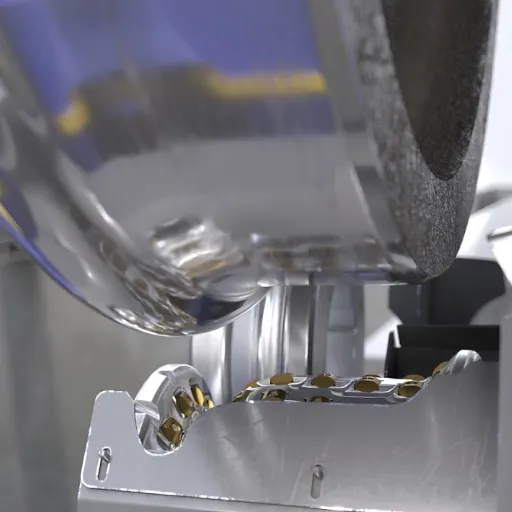
The wheel profiling machine comprises a special type of machinery meant to restore and re-profile the tread and flange of railway wheels by cutting or grinding to a prescribed shape. Normally the machine operates with a cutter or a grinding wheel that is attached to a portal or linear carriage that is moved by a ball screw and with hydraulic props that control the feed. The machine is equipped with a very high-resolution profile measuring system to match geometries and to assert the correct overall diameters, lengths and gauges.
It is necessary to re-profile the worn profiles that affect traction, braking, and ride quality. Wheels should be re-profiled if flange thickness, contour, or wheel diameter falls out of tolerance or if measurement system data or inspection points show defects such as shell cracks due to stress. Condition monitoring that tracks wear helps determine the optimum maintenance interval for wagons and traction motor assemblies.
Look for a reliable milling or cutting machine, dual or modular housings for parallel-operation heads, high-resolution profile measurement, and hydraulic clamping and feeding. Accuracy requires boring machines with linear guides, ball-screw drives, and stability in a portal frame or compact housing. Another key feature is compatibility with monitoring and inspection tools for measuring the gauge, diameter, breadth or contour.
Most machines in operation today integrate profile measurement systems, such as those using laser or sensors, to gain high-resolution contour data before cutting. Inspection data ensures the machine attempts to restore the correct profile in terms of wheel diameter, flange thickness, and gauge, within specifications. Condition monitoring also provides operational data for scheduling the next reprofiling or problem detection with evidence of shell cracks or irregular wear.
Yes. Many machines have been designed to serve a variety of wheel diameters and widths and can be set up for passenger wagons, freight wagons, and locomotive traction motor assemblies. Features such as adjustability in portal or machine centers, different cutters, and programmable profiles ensure any wheel set can be reprofiled.
Important safety considerations include cutter-guarding and guarding around the friction wheel assembly, ensuring proper wheel clamping, regular maintenance of the hydraulic system to maintain its effectiveness, and sticking to fitted working speed limits. Maintenance involves regular inspection of cutters and mill components, ball screw lubrication, calibration of the measurement system, and safeguarding against shell stress relief issues, thereby preventing catastrophic failure of the wheel and ensuring consistent quality reprofiling.
Condition monitoring practices track wear, thickness changes, and account for every measurement perturbation over time. This data-driven approach enhances the reprofiling interval, reduces accidental wagon downtime including that of the traction motors, and provides a precise understanding of wheel contour while they contribute to safety factors related to gauge and flange geometry.
New Support Roller Profile Design for Railway Wheel Re-Profiling – A study on innovative profile designs to enhance safety and efficiency in wheel profiling processes.
(PDF) Technological System for Profiling/Re-Profiling Railway Wheel Sets – A paper discussing the development of systems for profiling and re-profiling railway wheels.
Automated Wheelset Measurement System Enables Predictive Maintenance – Insights into automated systems for precise wheelset measurement and maintenance planning.
Wheel Profile Recorders / Gauges – Information on tools designed for measuring the tread profile of rolling stock wheels.
Wheel Profiling Processes in Relation to Wheel Climb in Switch Point Guard – A document exploring the relationship between wheel profiling processes and operational safety.