Revolutionary CNC Grinding Wheel Dresser
Transform your grinding operations with precision wheel dressing technology that delivers unmatched accuracy, reduces downtime, and maximizes productivity.


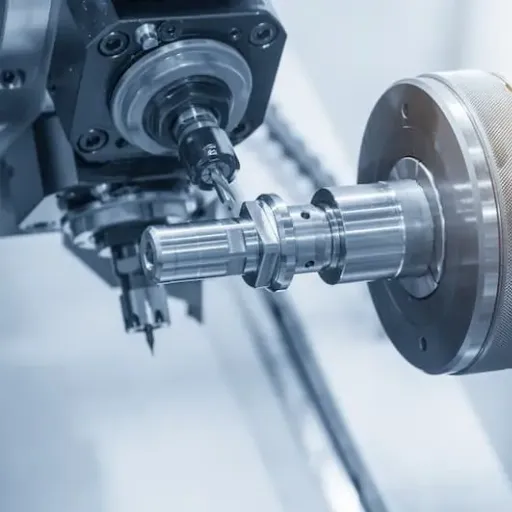
In regards to precision manufacturing, the argument between CNC milling and turning is often the focus. These two machining processes are necessary for the production of high-quality, complex parts but they differ completely in their operation. This article will compare CNC milling and turning by explaining their major differences, pros and cons, and applications, no matter if you are an expert in the field or a beginner wanting to know which method is more suitable for your needs. We will give a complete guide that will allow you to make well-informed decisions for your manufacturing projects by panoramic view from the operation of lathes and CNC mills to the very understanding of their unique positions in production. As we juxtapose these two potent technologies, the impact of each on modern machining already starts to reveal itself. So join us!
CNC milling and CNC turning are two basic and critical machining processes that are carried out by CNC mills and CNC lathes, respectively. Although both methods utilize computer numerical control (CNC) technology, which greatly increases the precision of the process, they are still very different in terms of operations and applications.
CNC mill employs a rotating cutting tool to eliminate the material from the stationary part. This machine is very versatile and it has a strong point in complex shapes, slots, and contours manufacturing on a wide range. CNC milling is very suitable for projects that require fine details, like the making of 3D components or parts that contain different features. Despite the fact that it works simultaneously on several planes, CNC milling is still the choice for high-quality and detailed manufacturing tasks.
Conversely, a CNC lathe gives rise to parts through the workpiece being rotated against fixed cutting tools. This technique is the best choice when dealing with items that are either cylindrical or symmetrical, such as shafts, bushings, and fittings. CNC turning can quick and accurately produce large amounts of identical parts, and its “throughput” and “accuracy” characteristics are the main reasons for its popularity in the production of precision components where round geometries are crucial.
Finally, the decision to use either CNC mills or CNC lathes rests on factors like design and production requirements specific to a project. CNC milling is the right option for intricate, non-circular components while CNC turning is the preferred method for cylindrical parts or production runs that require large quantities.
Everyone who is related to manufacturing or mechanical design should know milling and turning because these processes are the basis of producing a lot of the components. Milling creates complex shapes and non-circular parts, but it depends on a cutting tool that moves across a stationary workpiece. Turning, on the contrary, is perfectly suited to cylindrical shapes, as it rotates the workpiece while a stationary tool erodes material. Informed choice of processes can guarantee efficient and precise component manufacturing at the same time.
The importance of mastering these techniques goes beyond production efficiency. Both milling and turning possess distinct qualities that govern the outcome of cost, speed, and quality. For instance, turning is a quicker, more economical method for mass production of cylindrical parts, whereas milling is capable of producing the very intricate designs with very tight tolerances. Knowing the differences helps in the production process—no waste and no rework, which means more sustainable manufacturing practices.
Finally, the professionals’ in-depth knowledge of milling and turning will allow them to easily communicate and work together as a team across different departments—from design to production. The project requirements will be correctly understood and translated into the final product. Acquiring such knowledge is not merely a matter of gaining technical skills; it also nurtures problem-solving, decision-making, and the ability to innovate in the manufacturing process. This basic understanding is of great benefit to various sectors such as aerospace, automotive, etc.
CNC milling and turning are two typical methods that are widely applied in material shaping in modern manufacturing, but their techniques and applications are quite different. CNC milling is a process that employs rotating cutting tools to remove material from a workpiece that is not moving. The milling process is perfect for 3D, flat, and detailed shaping of different materials, like metals, plastics, and composites. The cutter controls the movement on several axes which are usually three; though, in advanced applications, it could be as many as five axes, all to get the desired final product.
In contrast, CNC turning is a method whereby the workpiece is clamped in a rotating chuck, and a stationary cutter then grinds away the undesired material. It is mainly reserved for cylindrical and symmetrical objects such as shafts, bolts, and other rounded parts. The cutting tool moves horizontally or vertically according to the desired feature to produce exact external and internal attributes.
The major difference is in the movement: CNC milling shifts the cutting tool, while CNC turning turns the workpiece. Both methods are indispensable in contemporary manufacturing and are selected according to the shape, function and material requirements of the product. The combination of these two techniques makes it possible for manufacturers to produce precision, high-quality, custom-made components.
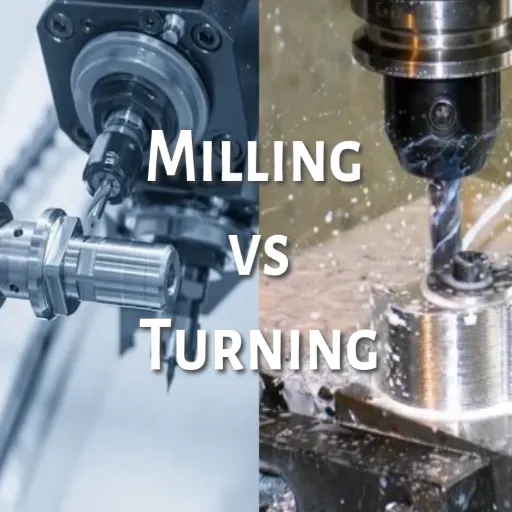
CNC milling is a technique that eliminates material from a workpiece using a cutting tool that rotates. The cutter is moving in different directions, frequently in three to five directions, cuts with high precision and can even yield complicated geometries. The process does best with creating geometrics, which are hard to do using other methods as it works by cutting flat, small details and even oddly shaped materials.
CNC milling enables engineers to make parts that are exact to the specifications and consistent, with dimensions from thousandths of an inch to tenths of a millimeter. It is also a consequence of computer-aided design (CAD) models, which specify the movement of the milling machine so precisely. The operator is also able to control the actual cut depth, speed, and feed rate to achieve the appearance that is even appearance across the whole spectrum of materials, including metals, plastics, and composites.
This method has gained its popularity across a variety of industries where precision and small components are most important, like aerospace, automotive, and electronics. Besides, CNC milling can be considered a technique that can be used for both prototyping and large-scale production runs, thereby allowing different parts with minimum error and waste to be produced while ensuring the quality of the entire batch.
The process of CNC turning is entirely governed by a computer. It involves rotating the workpiece around the spindle while the cutting tool is applied to the workpiece surface. The lathe is the main machine used for making cylindrical components. The cutting tool is managed by precise computer instructions, thus ensuring accurate dimensions and the possibility of maintaining the same quality over a large number of parts.
The material to be worked on, which can be either metal or plastic, is put into the lathe’s chuck that rotates it quickly. The cutting tool, which is under computer control, moves parallel and perpendicular to the workpiece, cutting it until the required shape is achieved. The technology of CNC turning allows for the production of very precise and uniform products, which is advantageous for both basic and complex designs.
CNC turning is a widely used method in many different industries, including automotive, aerospace, and medical, for producing parts such as shafts, pulleys, and fittings. Moreover, the production quality is very much controlled; thus, the parts produced are accurate and efficient, resulting in less waste, quicker production times, and guaranteed reliability. For this reason, CNC turning is counted as one of the essential processes of contemporary manufacturing.
Kinematic differences in the manufacturing processes are mainly denoted by the motion and coordination of tools and workpieces during the shaping of the material. Such differences impact the quality, efficiency, and range of the final product. A case in point is the CNC turning process, where the workpiece is rotated against stationary cutting tools, resulting in the production of cylindrical parts to a high standard of precision. In contrast, CNC milling has rotary tools performing on a stationary workpiece, hence the creation of intricate, multi-dimensional components is possible.
The motion’s direction and kind are of great importance in determining the processes too. Turning typically symmetrically and continuously moves around the axis, and this is the reason why circular or cylindrical shapes are best created. On the other hand, milling utilizes the combination of linear or helical tool paths with multidirectional movements to process irregular shapes, slots, and holes. The differences in kinematics highlight how these variations were tailored to the applications of each process.
The knowledge gained from the differences in kinematics would allow the manufacturers to go for the right method for the specific project. CNC turning still stands to be the best option for the mass production of standardized rotational parts, while milling is advanced in versatility for complex designs. When the kinematic factors of each process are matched to production needs, the industries can effectively increase efficiency, reduce costs, and enhance the quality of the products.
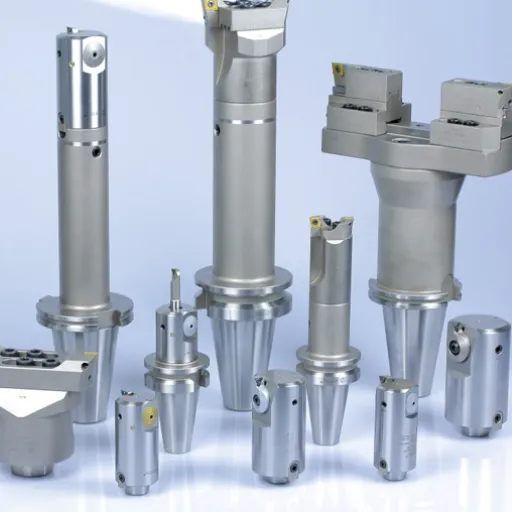
CNC milling is a process that uses different kinds of tools to perform various tasks with precision and speed. Each type of tool is purpose-built for specific operations, and it is important to choose the right tools to get the best results in production. Some of the widely used tools in CNC milling along with their performance and functionality are given below:
End mills are multi-purpose tools that can be used for cutting in every direction and performing various operations—contouring, slotting, and making intricate shapes. They come in various dimensions and forms, such as flat, ball-nose, and tapered end mills.
The main application of face mills is in the milling of oversized flat areas. With the capability of having several cutting edges, they can remove material quickly and effectively. One common characteristic of modern face mills is the use of easily changeable inserts made of either carbide or ceramic that boost the cutting speed and lower the replacement time.
In CNC milling, drill bits are used to either make new holes or make existing ones bigger. Due to their accuracy, they are also available with coatings and without, depending on the material penetrated. According to reports, HSS drill bits with cobalt can work on stainless steel, for instance, without losing their sharpness faster than their slower counterparts.
Chamfer mills are employed to make bevels, edges, or holes that are usually not visible to the naked eye. This practice is mainly performed to assure the safe disposal of sharp edges or to guide holes for subsequent operations such as thread cutting. The state-of-the-art in tooling technology has resulted in tighter tolerances, and a large number of manufacturers now offer chamfer mills that are capable of multi-axis machining.
These are tools for making internal or external threads in holes or rods. In contrast to traditional taps, thread mills cut threads in steps which makes them suitable for precision machining and hard-to-machine materials like titanium. Research indicates that thread milling can decrease operating torque by as much as 30%, thus reducing tool breakage.
Fly cutters are the tools used to give the surface of a part a smooth finish. They make use of a single cutting tool, which is rotated, to sweep across the surface. The newest design, which comes with adjustable heads, offers more flexibility and so is suitable for different types of materials.
These cutters are intended for making slots and grooves needed for intricate parts of the assembly. Tungsten carbide slotting cutters, besides being durable, also deliver a 20-30% efficiency increase in operations involving hard materials.
CNC turning is a process that utilizes a diverse range that each tailor-fit for each specific machining task to enhance precision and productivity. Incorporating the latest innovations, a detailed examination of the most commonly utilized tools and their applications is presented below:
The main tool for removing material by cutting on the rotating workpiece surface is the turning tool. The two main types of turning tools are high-speed steel (HSS) and carbide-tipped; both of these are widely accepted for their long life and high-temperature resistance. The introduction of new coating materials like titanium aluminum nitride (TiAlN) has been reported to increase tool life by as much as 45% in high-speed operations.
These tools are responsible for the enlargement of holes that have already been drilled into the workpiece. Currently, boring bars come with vibration-dampening capabilities, which is a great help in improving the accuracy of high-speed operations. According to research, vibrations reduced through boring bars lead to a maximum surface roughness decrease of 35%.
The word grooving stands for making narrow canals in the workpiece. Machining today grooving tools in the realm of modular designs allowing the machinists to configure width and depth according to their specifications. It has been confirmed by industry professionals that tungsten inserts in such tools can prolong tool life by 30%.
The tools that are the previously mentioned ones are intended to create the threads of the internal or external surfaces of a part. The present-day precision threading tools generally contain indexable inserts which are also provided with specialized coatings, hence they are very efficient in chip control and thread quality. The use of fine-pitch threading tools allows the machinists to perform tolerances of up to ±0.003 mm.
Parting tools separate tools are the ones that cut off a finished part from the leftover stock material. Micro-parting tools introduce a new era for intricate components; they are able to give much higher accuracy in small diameters. Amongst the studies that support the carbide parting tools’ facilitating of 25% increase in cutting efficiency for stainless steel, one study is particularly highlighted.
Form tools are typically used for mass production to create custom geometries where the mixture of complexities is required. Advancements in CNC software have made it possible to integrate CAD models directly with form tools, thus allowing a 40% reduction in production times, as per the latest industry data.
Turning operations integrate drilling as the basic step. Cutting-edge drill bits have self-centering tips that prevent the requirement of pilot holes and consequently enhance the overall accuracy by 20%.
Reamers make sure that drilled holes have the precise diameters and smooth finishes. The newest reamers have diamond coatings that give them excellent wear resistance and also lead to a 50% reduction in downtime.
During turning, insert holders are the ones that hold the cutting inserts in place. The latest quick-change insert holders have increased the efficiency of setup time by 60% while at the same time providing better clamping strength at high loads.
CNC mills excel in precision multi-axis cutting, while CNC lathes are ideal for creating cylindrical parts with high rotational symmetry.
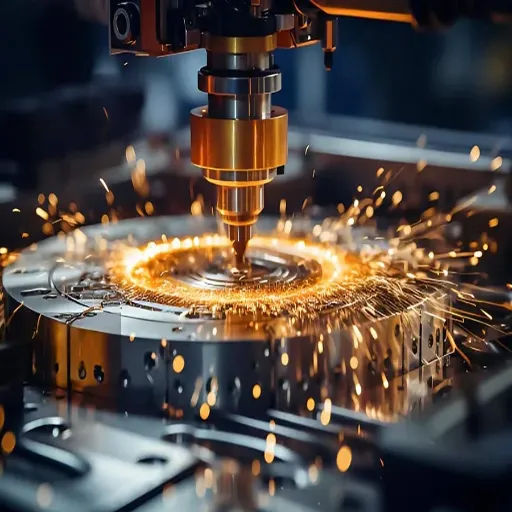
CNC milling is a process that can provide very high precision and accuracy and can therefore be used for the manufacturing of very complex and intricate parts with very tight tolerances. Moreover, it can be used with various materials such as metals, plastics, and composites which is a reason for the great versatility of the process in different industries. Besides, CNC milling reduces the possibility of human error thanks to computer automation, and thus provides the same quality of products in case of multiple productions. This method is also applicable to prototyping and small-scale production since it enables quick changes in designing and testing of the product.
CNC milling is not without some disadvantages despite the numerous benefits that it offers. The initial costs of equipment and programming can be quite high and small companies may have trouble with such investments. The time taken for production can also be longer in some cases as compared to other machining processes, particularly in high-volume manufacturing where time is really of the essence. Additionally, CNC milling literally drills out of the material, which creates a lot of material waste; hence, the process can be quite expensive for some materials. The possibilities of creating specific designs or geometries may also be limited by the capabilities of the machine.
CNC turning is a manufacturing process that is very efficient and precise, making it a great option for the production of cylindrical parts. One of the main benefits is the possibility to obtain extremely tight tolerances and uniformity of quality, which is essential for those industries, for example, aerospace and automotive, that use precision at its highest level. The process is also rather quick for producing symmetrical parts, which results in higher production rates and lower labor costs.
However, there are some drawbacks to CNC turning; for instance, the limitation of making only basic shapes or smooth designs, as it is directed mainly at circular forms. Moreover, like CNC milling, it generates scrap that can be a substantial amount when dealing with large raw materials. And, even after the waste is considered, costs may vary based on the material type for machining and the complexity of the design.
In spite of the above-mentioned drawbacks, CNC turning is still a dependable and versatile choice for the producers of round parts. Employing the right materials and modifying the designs wherever possible to match the process will let the manufacturers have the best of the quality and performance that this process gives, thus it becomes one of the main methods in the current manufacturing industries.
The right method of producing the parts for your project is very important, as it will be the key factor in getting the desired results both in terms of quality and cost. First of all, try to list all the requirements of the project really clearly like the choice of material, the level of complexity, the precision and so on the production volume. Find out which one of the processes best fits these considerations. For example, CNC turning is great for making accurately round parts and at the same time, fast too. Nevertheless, milling or additive manufacturing may be more appropriate if you are dealing with intricate shapes.
After that, consider your budget and timelines. CNC machining is among the most expensive processes in terms of initial setup but its offers high precision and uniformity for large-scale production. Conversely, 3D printing is a good method to use when the demand is for rapid prototyping or small-batch production in view of its flexible nature and little tooling requirement. Conduct an elaborate quality, speed, and budget balance assessment to uncover the perfect process for your requirements.
Lastly, think about the scalability and the future needs of your project. If the production requirements are likely to increase, select a method that can easily and quickly scale up without losing either quality or efficiency. Moreover, it is a good practice to rely on experts and to use trustworthy sources in order to get the best decision possible. In the end, choosing the right process calls for a careful weighing of present requirements and future ambitions.
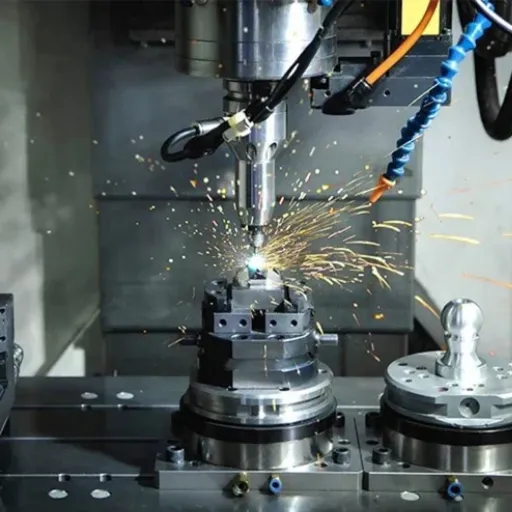
CNC milling is one of the main processes used in a great variety of industries due to the quality of the finished parts, the productivity gains, and the range of applications. The aerospace industry is one of the main users of CNC milling. It depends on CNC milling for the production of very complicated parts with very precise tolerances, such as turbine blades and structural parts, thereby ensuring safety and performance even in difficult conditions. The parts can be made uniformly and accurately by the CNC machines, which can fulfil the strict standards of teeth and aerospace applications.
The automotive industry is also a notable user of CNC milling. The process is used for the production of a wide variety of components such as the engine, parts of the transmission system, and custom-designed prototypes. The efficiency of both the production time and cost involved is one of the main advantages of the high-speed and cost-effective processing, which leads to the production of both standard and unique parts of good quality contributing to improved production times and costs without compromising quality.
Another key industry that uses CNC milling is the medical sector. Medical device manufacturers heavily depend on CNC milling techniques for the production of ultra-precise surgical instruments, implants, and components made from titanium or stainless steel. The ability to create intricate designs with accuracy is critical in medical applications, given the need for reliable and safe devices used in surgeries and treatments. From aerospace to medical, CNC milling remains a fundamental tool for producing high-quality and precise parts across industries.
The significant impact of CNC turning across a multitude of industries comes from the production of cylindrical parts with high precision at a fast rate. Among the most prominent users of CNC turning technology is the automotive industry, which employs it for the making of various parts such as engine components, shafts for driving, and gearbox parts. All these parts need to be manufactured with very exact tolerances and great consistency which are the main attributes of CNC turning. The process guarantees that the parts will be hardworking and safe, which are very necessary traits for cars and trucks that are to operate in different environments.
CNC turning is another process that plays a crucial role in the aerospace industry. It stops at nothing to give birth to the most intricate sometimes supercharged components such as turbine shafts, landing gear parts, and other crucial holding fixtures. These pieces are usually manufactured from specialty materials that are capable of fulfilling very rigorous safety and performance requirements. CNC turning keeps the standard of accuracy and replication that is indispensable for making these critical items in the aviation sector.
Moreover, the oil and gas industry applies CNC turning in the making of strong and reliable fixtures for pipelines, presses, and drilling rigs. Such practices demand the use of materials that can endure the rigors of high force and heat. CNC turning simplifies the making of custom designs and specific fittings that guarantee the proper operations of equipment in the harshest conditions. This adaptability has made CNC turning a highly valued manufacturing method in a number of major industries.
CNC turning has played an important role in the development of the oil and gas industry. For instance, during the construction of pipelines, CNC-turned fittings and fixtures are used to create accurate connections and prevent leakage even in extreme pressure. The developed parts are also used in drilling rigs to increase safety and efficiency, where precise and reliable components are vital for everyday operations in tough situations.
CNC turning is so versatile that it can be used in making medical instruments and implants. Surgical tools that need complex designs and high strength are usually made by CNC turning because it is the most accurate way. This accuracy guarantees that the pieces merge very well with the devices or the human body, which not only results in better patient care but also raises the benchmark for the medical field.
The aerospace industry relies a lot on CNC turning because, on the one hand, its components have to be high-performance and, on the other, they need to be very exact and resistant to extreme conditions. The critical components such as turbine blades and engine parts are produced by CNC turning to meet the strictest tolerances and endure harsh conditions. Thus, not only is the safety of the aircraft ensured but also the performance is maximized which in turn supports the reliability and innovation demands of the industry.
A: The difference between CNC milling and turning is in the operation of the different methods. CNC milling involves rotating the cutting tool and the workpiece is stationary, which enhances the production of complex shapes with thousands of designs made possible. The method of cutting, on the contrary, is to rotate the workpiece for it is the cutting tool that is stationary that is taking material away, thereby making part of the cylindrical technique simpler. Nonetheless, both operations are technical means of subtractive manufacturing but the preference in geometries is what distinguishes them.
A: The cutting tool used in CNC milling is a milling cutter and it takes away the workpiece material which is held still during the entire process. In contrast, the lathe cutting tool is used in CNC turning, and the cutting remains fixed while the workpiece rotates. This crucial difference in tooling is simply unavoidable when deciding on suitable processes for particular machining jobs.
A: Parts of complex shapes and with fine details of automotive and specialized tools are usually made by means of CNC milling. Of the components for the latter operation, cylindrical parts that are highly precise (like shafts and fittings) are the ones for which CNC turning is perfect. In modern manufacturing, both machining services are indispensable.
A: To have both processes done in one go is made possible by the fact that many advanced CNC machines like CNC turning centers are already equipped for milling and turning operations. Thus, efficiency is enhanced and production time is shortened since the manufacturers can do several machining processes on one workpiece.
A: The main types of CNC machines used for milling are CNC mills and multi-axis milling machines that can use 3-axis or even 5-axis configurations for complicated parts. In the case of turning, CNC lathes and CNC turning machines are usually the ones to provide the required precision control during cylindrical machining operations.
A: The two machining methods are capable of achieving high tolerances, but still, CNC turning is the one to go for in case very tight tolerances are required for parts of cylindrical shape. The close control over the rotation and cutting tool positioning in CNC turning leads to finer adjustments, thus making it the ideal process for applications where exact specifications are needed.
A: The cutting methods of CNC milling and turning cover a myriad of materials, for example, among metals are titanium and aluminum and also include plastics. The suitable material to forge the final product is mainly determined by the application to which it is intended and by the specific properties required in the finished product.
A: The use of CNC milling comes with several advantages such as the ability to produce very complex shapes and fine details that would be a turning challenge. CNC milling can also work on a wider range of shapes and sizes for the workpiece, therefore, it becomes a versatile option for many manufacturing processes.
A: A manufacturer can choose CNC turning for cylindrical (as the main shape) parts or pieces with threads/grooves, etc. The efficiency of turning is due to the nature of the process which is rotation which allows for quick production, therefore, tools last longer.
A: The improvements in CNC technology have also resulted in highly sophisticated machine tools that run faster, have superior precision, and require minimal human intervention. Automated processes have evolved into the realm of multi-axis milling and turning centers as a radical change in the techniques has been brought about by the technology advancements that enable manufacturers to cope with the ever-increasing production demands in terms of efficiency and accuracy.