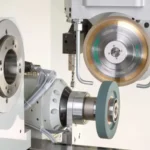
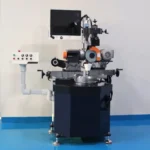
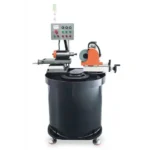
Revolutionary CNC Grinding Wheel Dresser
Transform your grinding operations with precision wheel dressing technology that delivers unmatched accuracy, reduces downtime, and maximizes productivity.


Grinding wheel dressers are very important instruments for the proper functioning and maintenance of your grinding machines. To the extent that you are using a bench grinder, surface grinder, or grinding wheel, these tools provide precision by re-establishing the wheel’s shape, texture, and cleanliness. Grinding wheels can lose their ability to cut, become uneven, and even get clogged up in the process of usage which not only deteriorates the quality of your work but also contributes to the process being slower and less efficient overall. This blog article will thoroughly investigate the importance of grinding wheel dressers‘ use, their operation, and the reasons they are irreplaceable in keeping grinding processes smooth and productive. Learn about their functionality, choose the right type of them for your grinding needs, the ultimate path to getting the most from your tools will be paved through this guide. Keep reading to see how grinding wheel dressers can take your artistry to the next level and still let your tools live long.

Wheel dressers are essential instruments in precision manufacturing, as they keep the grinding wheels accurate and effective. The wheels get worn out through grinding, or they may get clogged with dust and this will reduce their cutting capability as well as precision. The wheel dressing process rejuvenates the wheel surface making sure that it has a sharp and true edge, hence resulting in uniform and high-quality output.
Precision manufacturing often requires exact tolerances, and wheel dressers play a key role in meeting these demands. By maintaining the correct shape and balance of the grinding wheel, they create a smooth surface finish on workpieces and allow for the precise shaping of materials. This is especially important in industries such as aerospace, medical device production, and automotive engineering, where even minor imperfections can compromise the performance of the final product. When outsourcing the finished component, enquiries for precision metal machining from Zhenling should carry the same drawing-defined geometry, surface-finish and inspection requirements, so the supplier can review the complete machining and finishing scope.
Dressing a grinding wheel is an operation that gradually alters the wheel so that it returns to its original cutting surface and thus guarantees the efficient and precise operation of the grinding machines. Gradually, grinding wheels become either dull, clogged with residues, or lose their original shape because of the long period they have been in use. Dressing course reshapes the wheel and cleans it to keep up the wheel’s advantageous functions and remove the materials that have been worn off.
When it comes to carrying out effective dressing, special tools like diamond dressers or rotary dressers are employed, depending on which kind of wheel is used and what kind of result is required. Regular dressing is vital for the precision and efficiency of grinding processes, and it also happens to be a quality-enhancing factor of the final product. It is therefore among the major and most decisive steps in industrial grinding and a contributor to the manufacture of high-quality parts in a range of industries.
In essence, a grinding wheel dresser consists of different key parts. Each part plays a significant role in maintaining the efficiency and precision of grinding wheels. The components of the dressing tool work together to get back the sharpness, shape, and balance of the grinding wheel, which makes it suitable for industrial applications.
All these parts together make the grinding wheel dressing tools reliable for maintaining the grinding wheels’ condition and thus leading to high-quality results in various industries.
Grinding wheel dressers are tools that are extremely important for keeping grinding wheels in their best condition and for restoring their surfaces by reshaping and cleaning. There are different kinds of grinding wheel dressers according to the requirements and applications.
Features one diamond point that touches the grinding wheel to dress its surface.
Best For: Simple operations, small wheels, precise shapes
Advantages: High accuracy, long-lasting, efficient for uncomplicated tasks
Consists of several diamond tips attached to a single tool.
Best For: High-performance applications, heavy grinding work
Advantages: More robust, distributed wear, greater durability
Uses rotating tools, either abrasive-coated or diamond-studded.
Best For: Intricate shapes, high-volume production environments
Advantages: Highly efficient, continuous use, consistent results
Each of these dressers has its own distinct advantages, and the selection of one will depend on the specific grinding operations, material, and precision level required. Knowing what to use in different situations helps not just to get the best results but also to prolong the life of grinding equipment.

Diamond dressers are a tooling method that involves the application of diamonds to the surface of grinding wheels. The grinding wheel’s external surface will be refinished through the process of grinding and dressing. The procedure of rotating the diamond tool across the wheel’s surface is similar to sharpening a pencil with a knife. The diamond tool will often last longer than the wheel itself because it is so durable and effective in grinding operations.
In general, diamond dressers are the most important tool for grinding operations as they provide the most accurate cutting, bring the most out of the wheels and at the same time extend their life span. Their ability to give consistent output makes them an integral part of the industry where grinding needs to be precise and efficient. Knowing how these tools work will result in productivity increases and machining outcomes that are more excellent.
The grinding wheel has to be trued and dressed if it is to be efficient, accurate, and effective. Truing is the way that the wheel’s original shape is restored, and the surface is made to run in alignment with the spindle. This stage eliminates any runout or irregularities, thus making the grinding wheel rotate uninterrupted during use.
Dressing, on the other hand, is the procedure of cleaning and sharpening the grinding wheel’s surface to reveal the fresh abrasive grains. Slowly, the wheel can be loaded with material or ground to a state where its cutting efficiency is compromised. Dressing not only keeps the wheel cutting but also makes it sure that it is doing so accurately by eliminating the debris and wearing away any dull abrasive grains.
Important Note: Proper dressing increases the wheel’s efficiency and accessibility to an extent that it no longer overheats, which is one of the main causes of wheel and workpiece damage.
The processes of truing and dressing are both very important to the grinding operations if the optimal results are to be obtained. Regularly performing these processes will ensure the wheel retains its efficiency, offers a better quality surface finish, and has a longer life. It is very important to use the right tools and methods when truing and dressing in order to avoid any damage to the grinding wheel and to achieve consistent high-quality results.
The dressing process is a significant step in the life of a grinding wheel that keeps it working at its best. The dressing operation takes away all the dirt, the clogs, and the material that accumulates on the wheel surface during grinding. This process restores the wheel’s sharpness and makes it effective for cutting or grinding again.
One should not forget that the dressing is to be carried out at regular intervals according to the user’s need and the type of grinding operation. The frequency might vary because of the conditions of different factors like the material, the wheel’s condition, etc. If the dressing process is done properly, the grinding wheel will function efficiently and produce the quality results desired with minimum effort over a long period of operation.

The quality of surface finishes obtained from a surface grinder is significantly improved when the grinding wheel is dressed up in accordance with its proper shape and texture. When the wheel is correctly dressed, the abrasive particles are freshly exposed. As a result, the material is removed during grinding with precision and uniformity. The process produces smooth and fine surfaces that are necessary for many industrial applications requiring tight tolerances and high levels of accuracy.
The other benefit that comes with this is that the chatter marks on the finished surface are reduced. Chatter, which is often caused by an uneven or poorly dressed wheel, tends to lower both the aesthetic and functional quality of a product. Properly dressed wheels minimize vibrations during grinding and consequently lead to a more stable process and a better quality final result. Ultimately, regular maintenance with a surface grinder wheel dresser is what keeps the superior finishes and grinding wheels alive for longer, thus making it an indispensable tool for grinding performance at its peak.
The surface grinder wheel dressers introduce an important aspect of grinding, which is geometric accuracy. Through the dressing process, reshaping and restoring the wheel’s cutting surface, every quality dressing tool would not only prevent dimensional errors but also very much define the geometry of the grinding tool. This is critical for the production of the finished workpiece with accurate dimensions and tight tolerances, which is essential for industries that demand high-quality standards.
Dressing a surface grinder wheel dresser regularly as part of maintenance practice is the only guarantee that performance will be consistently good over time. Dressing regularly helps to counteract the process of wear and tear on the wheel and avoid precision divergences due to uneven surfaces. This simple yet very important practice serves as a guarantee for the quality of the grinding process, enabling the manufacture of products with geometric accuracy that is consistently reliable.
An essential part of prolonging the grinding wheel’s life is its maintenance. Dressing and cleaning the wheel regularly minimizes wear and tear and ensures that the wheel remains effective for longer periods. Among the advantages of this practice are the prevention of uneven surfaces and the retention of the wheel’s cutting capabilities, which directly lowers the frequency of replacements needed.
Reduced replacement frequency saves money on new grinding wheels
Properly maintained wheels consume less power during operations
Enhanced productivity through fewer operational stoppages
Uniform wear supports geometric accuracy throughout wheel life
The maintenance of the grinding wheel guarantees its accuracy in the grinding process, thus prolonging its life. A grinding wheel that has been properly maintained will be more effective, hence will consume less power and will cause fewer interruptions in the operations. This improved performance will eventually lead to cost savings, so applying regular maintenance is the only reasonable and economical way of prolonging the lifespan of the grinding wheel.

One of the foremost steps towards making a surface grinder wheel dresser last longer and work better is proper maintenance. The very first thing that a user should do is to inspect the dresser for any signs of wear or damage regularly.
By following these practices, you would not only be able to keep the surface grinder wheel dresser performing well but also extend its life significantly.
In the surface grinder wheel dresser troubleshooting regard, it is important to ascertain the symptoms and their associated causes first. Understanding common problems and their solutions can save time and prevent damage to both the dresser and the grinding wheel.
Pro Tip: A stable configuration will produce a minimum number of vibrations, thus leading to a more precise dressing operation. Regular cleaning and maintenance of the dressing tool are very important in preventing the accumulation of debris, which can impair accurate performance.
Surface grinder wheel dressers can be maximized in effectiveness if they are first and foremost used properly. Techniques appropriate for the tool, such as applying consistent pressure and having a steady hand while performing operations, should be used.
By taking care and giving proper technique, surface grinder wheel dressers can be a great help in the performance of various industrial and mechanical applications. The right dressing tool should be taken for the particular grinding application, with the choice in accordance with the grinder wheel material and the finish desired.

When picking a wheel dresser for industrial use, the wheel grinding material becomes a deciding factor. Each wheel material, be it aluminum oxide, silicon carbide, or diamond, necessitates dressing tools that will be compatible in order to keep them effective.
Moreover, the requirements of the specific grinding operation should also be taken into account when selecting a wheel dresser. For material removal there may be a need for coarser dressers while finer dressers will be used for precision tasks. By matching the dresser to the wheel material, bond type, and application, operators can enjoy the benefits of both efficiency and reliability in their industrial processes.
The grinding operation finish that is required will influence the kind of wheel dresser selected. Coarse dressers will be used in cases where a rough finish is acceptable, e.g., the cutting of workpieces to prepare for the next machining process. On the other hand, finer dressers are the ones that are used to make ultra-smooth and precise finishes, which become critical for high-quality applications such as in toolmaking or aerospace components where high accuracy is a must.
Finally, the grinding process parameters such as speed, pressure, and feed rate should also be considered in selecting a dressing tool. These factors affect both the dressing and the quality of the final product. Therefore, operators should undertake the use of recommended settings that fit both the capabilities of the dresser and the application outcomes they want, to get the best results under conditions of minimal wear and tear.
In the course of comparing various dressing tools for grinding operations, one must take into account their particular functions, the materials they are made of, and their appropriateness for different applications. Single-point or multi-point diamond dressers, impregnated dressers, and rotary dressers are the most commonly used types.
Selection Criteria: The selection of the most suitable dressing tool is always dependent on the individual operation’s demands, thus requiring a trade-off between performance, cost and application requirements.
A: The primary function of a surface grinder wheel dresser is to dress the wheel of a surface grinder, which in turn restores the grinding face, trues the diameter or radius, and reveals sharp abrasive grains. This tool gets rid of the wheel’s glazing and loading, thereby making it deliver a consistent surface finish, accurate size, and diamond grinding performance over time.
A: It is possible to dress a wheel using single-point dressers or diamond dressing sticks/holders. Single point dressers cut the wheel surface through abrasive action, whereas diamond dressing involves precision reconditioning of a wheel through a diamond stick or dressing head mounted in a holder or shank. Diamond dressing is more durable, and higher precision also makes it the preferred option for precision work.
A: In general, a shank-mounted stick has a single diamond or bonded stick that is in contact with the wheel to dress a wheel profile, while a multiple-point dresser is equipped with several smaller diamonds that are organized in a way that results in a more aggressive cut. The combination of shank/stick is an excellent method for precisely dressing specific wheel profiles or contours, whereas multi-point or rotary dressers are quicker for general dressing operations.
A: The control of radius and diameter is done by using specially ground dresser profiles or by following precise offsets on the dresser holder and table. It is feasible to adjust the dresser shank position, rotary movement and the table feed to dress a wheel to the needed diameter or create a contoured radius that will consistently make contact with the workpiece.
A: Yes, coolant is crucial in this process. It should be of the right amount because it will be used to reduce heat, take away metal chips, and stop the diamond from being subjected to excessive wear and tearing. It is also important to note that too much coolant pressure can either disrupt the dressing process or cause dressing particles to be washed away. Therefore, it is important to find a balance between coolant volume and direction to achieve the best results while safeguarding the diamond and wheel from damage.
A: The dressing action and surface finish are determined by the speed of the wheel, together with the feed rate of the table. The conditions of faster rotation of the wheel with the right contact of the dresser produce effective diamond dressing; however, at too high speeds or with aggressive table movement, diamond life might be shortened or chatter might be the result. The right match between rotation and table motion produces a stable profile and consistent grinding performance.
A: Always make sure that the shank of the dresser is securely placed in the holder or chuck, check the alignment and make use of guards to prevent the formation of debris. The use of eye and hand protection is essential, and the operator should never place hands near the rotating wheel. The wheel should be allowed to stop completely before an inspection is carried out. Dresser diamond tools should be regularly checked for wear, coolant should always be kept clean, and worn dressers should be replaced to keep up with effective dressing routines.
A: A diamond stick or holder should be changed when the dressing process is less efficient than before, when there is excessive wheel glazing, a very poor surface finish, or when there is an irregular profile on either the wheel’s diameter or radius. Indicators include taking more dressing passes than before, chattering sounds during dressing, and visible wear on the diamond. Frequent inspection and immediate replacement will result in regular diamond grinding and accurate grinding results.
Grinding wheel dressers are indispensable tools for maintaining the precision, efficiency, and longevity of grinding operations across various industries. From understanding the different types of dressers to implementing proper maintenance practices, this comprehensive guide has covered the essential aspects of selecting and using these critical tools. By following the best practices outlined here, operators can achieve superior surface finishes, enhanced geometric accuracy, and extended grinding wheel life, ultimately leading to improved productivity and cost savings in their manufacturing processes.